

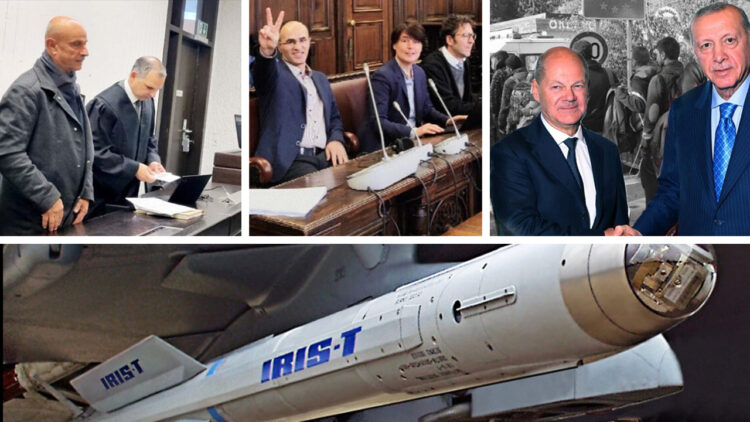
German Chancellor Olaf Scholz met with Turkish President Recep Tayyip Erdoğan in İstanbul on Saturday, to discuss the expansion of defence cooperation and deportation agreements. Despite Turkey’s deteriorating human rights record – particularly its repression of political opposition and the Kurdish population – Germany has continued to strengthen military ties with Erdoğan’s government.
Following the meeting, Scholz confirmed that both countries had agreed to strengthen their cooperation on security and defence. This comes shortly after Germany approved $336 million worth of weapons exports to Turkey, a move that has drawn sharp criticism from human rights groups. Turkey, which has been accused of war crimes in northern Syria and Iraq, regularly targets Kurdish populations in its military operations.
Kurdish rights groups, including KON-MED and Civaka Azad, denounced Scholz’s visit and the strengthening of ties with Turkey. “By supporting deportations and military deals with Turkey, the German government is complicit in Erdoğan’s repression,” Civaka Azad said in a statement. They also condemned Germany’s deportation policy, which has seen Kurdish asylum seekers sent back to Turkey, where they face the risk of torture and imprisonment.
Massive demonstration in Berlin challenges Germany’s ban on PKK activities
Germany to deport thousands of asylum seekers under new agreement with Turkey
“Deporting Kurdish refugees back to a country where they are systematically persecuted is a violation of human rights,” the statement added, urging Germany to halt deportations immediately. Over 84 percent of asylum applications made by Turkish citizens in Germany last year were from Kurds, many fleeing political repression.
Scholz’s visit also comes as Turkey faces growing international criticism for its treatment of political prisoners and activists. Thousands of Kurdish politicians, journalists, and activists remain imprisoned in Turkey, often under harsh conditions. The UN has documented rising cases of torture, and Turkey continues to rank poorly on global indices for rule of law and civil liberties.
During today’s talks, Erdoğan praised Germany’s commitment to bilateral ties, saying, “We are leaving behind our past challenges and advancing our partnership.” However, critics argue that Germany is prioritising economic and security cooperation over serious human rights concerns.
Kurdish political activist sentenced to 4 years 3 months imprisonment in Germany
The discussions also touched on Turkey’s military activities in the Middle East. Erdoğan reiterated his stance against the Kurdistan Workers’ Party (PKK), which he labelled a threat to both Turkey and Europe. Scholz did not publicly address human rights issues or Turkey’s internal crackdowns, which has led to frustration among human rights organisations.
Kurdish activists and political analysts have voiced concerns that Germany’s ongoing arms exports to Turkey will further destabilise the region and exacerbate the suffering of Kurdish populations. “By continuing to support Turkey militarily, Germany is enabling Erdoğan’s government to continue its oppression,” Civaka Azad’s statement read.
Emin Bayman: 70-year-old faces terrorism trial over fundraising activities


