Protests, panels, and public displays of solidarity are reverberating across Europe as part of the ‘Freedom for Abdullah Öcalan, a Political Solution to the Kurdish Question’ campaign, a movement to demand the release of Abdullah Öcalan, the imprisoned leader of the Kurdistan Workers’ Party (PKK). These actions, which took place in major cities across the continent, were coordinated to denounce the international plot against Öcalan, expose his prolonged isolation, and highlight his vision for a democratic, peaceful resolution to the Kurdish question.
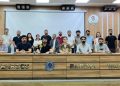
In Portugal, the Platform for Solidarity with Kurdistan organised a series of seminars in Lisbon and Coimbra. These discussions, focusing on Öcalan’s theory of Democratic Confederalism, tackled critical issues such as nation-states, women’s freedom, ecology, and radical democracy. The speakers stressed the importance of Öcalan’s paradigm in offering a viable solution to the ongoing conflict in the Middle East. Participants also underscored the global significance of the campaign, which has gained traction among youth movements and civil society organisations.
The Portuguese seminars were part of a broader global campaign to raise awareness of Öcalan’s plight. The Kurdish leader has been held in solitary confinement for 25 years and seven months in an F-Type high-security prison on Turkey’s İmralı Island in the Marmara Sea, with no contact from the outside world since March 2021, when he had a brief phone call with his brother which was cut-off by authorities. For the past three and a half years, the political prisoner has been denied access to both family and legal representatives, with no information released on his well-being. Activists emphasised that this extreme isolation constitutes a form of political repression aimed at weakening the Kurdish struggle for autonomy.
In Sweden, the movement took a more public turn with a boat trip in Stockholm. Organised by the Kurdish Democratic Society Centre- Scandinavia (NCDK), a Kurdish rights organisation, the event saw thousands of supporters gathered along the waterways to show their support for Öcalan’s release. The boat, which navigated through some of the city’s busiest canals, was greeted with cheers and victory signs. “We no longer accept that Öcalan has been in prison for 26 years [February 1999], without any communication for over four years [March 2021],” said Menice Yiğit, co-president of NCDK-Scandinavia. “We demand his immediate freedom.”
Yiğit, along with other speakers in Stockholm, called on international bodies, including the Swedish government, the Council of Europe, and the Committee for the Prevention of Torture (CPT), to intervene in Öcalan’s case. They urged these institutions to take a firm stance against Turkey’s isolation policy, which they argue is a violation of human rights and international law.
The Stockholm event was part of a larger series of actions in Sweden. Similar gatherings took place in the cities of Helsingborg and Västerås, where speakers condemned the international plot against Öcalan, which began on 9 October 1998 with his expulsion from Syria. These events highlighted Öcalan’s leading role in the women’s movement and his continued influence on Kurdish political thought, despite his decades-long imprisonment.
Meanwhile, in Switzerland, demonstrations were held in Fribourg, led by the Revolutionary Youth Movement (TCŞ) and the Fighting Young Women (TekoJIN). “For [c.] 26 years, an international plot has kept Öcalan in isolation,” said Orhan Hazar, co-president of the Kurdish Democratic Community Centre of Fribourg (CDK-Fr). “This plot was meant to extinguish the Kurdish people’s struggle, but Öcalan’s paradigm of democratic confederalism has kept the movement alive.” The protests in Switzerland culminated in a call to join large-scale marches in Basel and Cologne in the coming weeks, as part of the ongoing campaign for Öcalan’s freedom.
Germany also saw an outpouring of support for Öcalan, with events held in Saarbrücken and other cities. In Saarbrücken, a stand was set up to raise awareness of Öcalan’s plight, where leaflets were distributed to the public, detailing the 1998 plot and the subsequent isolation imposed on him. The event echoed calls for his release and for international solidarity with the Kurdish cause.
In Finland, the Kurdish Democratic Society Centre and the Kurdistan Support Network hosted a panel in Turku to discuss the plot against Öcalan. Participants highlighted the role of international actors in orchestrating the 1998 conspiracy and criticised local authorities for their complicity. The event attracted significant public interest, with many attendees engaging in discussions about Öcalan’s ideas and their potential to foster peace in the Middle East.
Similar events took place in Russia, where Kurdish activists in Saratov condemned Öcalan’s isolation in a statement delivered at Yershov People’s House. Ramazan Budakov, co-president of the local Kurdish organisation, urged the international community to take a stand against Turkey’s refusal to allow Öcalan contact with his family or lawyers. “We appeal to all of humanity to join us in condemning this isolation,” Budakov said. “We demand Öcalan’s immediate release.”
In addition, Langile Abertzaleen Batzordeak (LAB) in the Basque Autonomous Community (Euskadi) published a video on Tuesday about the international plot and said: “The freedom of Abdullah Öcalan is very important for the democratic solution of the Kurdish question”.
As the campaign spreads across continents, it continues to draw attention to the urgent need for a political solution to the Kurdish issue. Öcalan’s ideas on democratic confederalism, women’s rights, and ecological governance remain a cornerstone of the movement, offering a peaceful vision for the future of the region. His ongoing imprisonment is viewed by many as a symbol of the repression faced by the Kurdish people, and his release is seen as essential to achieving justice and stability.
The global campaign for Abdullah Öcalan’s freedom has gained momentum this week, as protests, panels, and actions continue with supporters determined to keep his vision alive and push for a political resolution to the Kurdish question.