

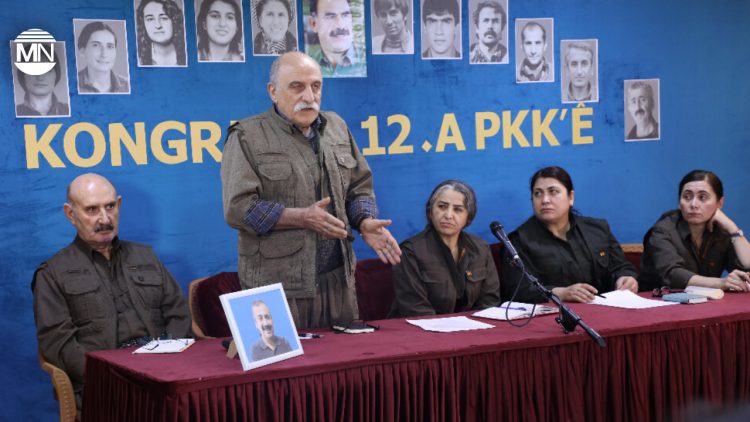
Duran Kalkan, a member of the Executive Committee of the Kurdistan Workers’ Party (PKK), has stated that the peace process initiated following the PKK’s decision to dissolve its organisational structure and cease armed activities cannot advance without reciprocal action from the Turkish government. His comments came in an interview with the Fırat News Agency published on Wednesday.
According to Kalkan, the recent developments were set in motion last year when Devlet Bahçeli, leader of the far-right Nationalist Movement Party (MHP), suggested that imprisoned Kurdish leader Abdullah Öcalan could address parliament if he called on the PKK to disband. Öcalan subsequently issued his February ‘Call for Peace and Democratic Society’, prompting the PKK’s formal declaration on 12 May.
Kalkan emphasised that the process requires mutual steps and cannot proceed through unilateral actions or goodwill statements alone. He highlighted the absence of concrete measures from the Turkish government, such as legal reforms or guarantees ensuring the safety and integrity of the process.
He also criticised Turkey’s continued military operations and the government’s overall stance. According to Kalkan, the ruling Justice and Development Party (AKP) continues to act according to a century-old state policy that denies Kurds their identity and rights. “There has been no change in the political mindset,” he said.
Referring to the National Oath (Misak-ı Millî) – a declaration made by the final Ottoman Parliament in 1920 that outlined what were considered the rightful borders of the Turkish homeland – Kalkan noted that these borders included regions with significant Kurdish populations, such as Mosul and Aleppo (Heleb).
He argued that the Turkish state had violated this founding commitment by allowing these areas to fall under British and French control in the early 20th century. Addressing these historical ruptures, he stressed, is essential to any genuine democratic resolution.
Kalkan concluded by stating that, without the release of Öcalan and the establishment of a legal and democratic framework recognising Kurdish identity and political agency, the process cannot move forward meaningfully.
He described Öcalan’s freedom as both a symbolic gesture and a structural necessity – one that would facilitate dialogue, enable institutional reform, and legitimise the transition from armed resistance to democratic politics.
He further emphasised that any sustainable resolution must include constitutional safeguards and the recognition of cultural and linguistic rights, and called for an end to repressive security measures targeting Kurdish communities.
Related articles :
‘Right to hope’ for Kurdish leader Abdullah Öcalan: debate grows in Turkey
100 years of Turkish betrayal – a weekly news review
Öcalan’s freedom key to peace, says DEM Party co-chair Hatimoğulları


