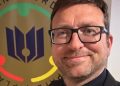
Award-winning novelist and PEN International President Burhan Sönmez has just published his first novel in his native Kurmanji Kurdish, joining five prior original works written in Turkish. Sönmez’ literary work has won the Vaclav Havel Library ‘Disturbing the Peace’ award, as well as the EBRD and Sedat Simivi Prizes, and been published in more than 40 countries. He joined freelance journalist Matt Broomfield to discuss the decision, process and politics behind writing ‘Lovers of Franz K.’ in Kurdish, the status of Kurdish literature, and his work to advocate for global writers in the face of censorship and repression.
You’ve written five books in Turkish. Why did you choose Kurdish for this project?
It was a long process. I had a dream of writing a novel in Kurdish for a long time, but I didn’t know which book I should start with, since I had so many projects in hand. At some point, when I started to think about this novel, ‘Lovers of Franz K.’, I had a feeling that I could write this book in Turkish, Kurdish or English – but I said, it’s time to return home. My home is the Kurdish language.
How was the process of writing in Kurdish? Did unexpected things happen as you put pen to paper?
It was not a natural [process], because my main language has been Turkish. Kurdish was limited to our oral discussions, in Turkey. I was born in a small village, then we moved to town; but we never saw a printed Kurdish text, a book or magazine, or anything on TV or radio in Kurdish. We can see this kind of thing in the last 10-15 years thanks to internet, thanks to social media. But when I was a young man, it was impossible to see such things. Our education was only in Turkish.
Returning from an oral to a written Kurdish language was a challenge. You have to adapt a new grammatical approach. In daily, oral language, grammar is totally free, there are not any rules; written, it’s totally different. And for Kurmanji, it’s a further problem, because we haven’t got a history of standard Kurdish. In the last decades, our writers and intellectuals have been building a wonderful common Kurmanji, which we can all use…. So it was a challenge for me. What should I adapt? The general, standard Kurdish, or the accent of my region? In many aspects, they’re totally different.
Have Kurdish language, culture, folklore played a role in your previous work?
Even though all the writers of my generation write in Turkish, we can’t call this a ‘pure’ Turkish. It comes naturally to us to put our spirit, our soul, our denied culture into our texts, even though it’s in a different language. Since Kurdish culture and language has been denied and forbidden, we find ways to recreate it in different shapes, in different voices. When I wrote my previous novels in Turkish, I mostly tried to reflect my own identity, own experiences, my own past, and of course, my worldview that is shaped around Kurdish culture, my time in my village, and the political and sociological problems of today around the Kurdish issue.
How do you think the Turkish literary establishment will respond to your decision to publish in Kurdish?
Because I live in Britain, I teach in English, it’s my language here, people expect me to write a book in English, rather than return to a small language like Kurdish, which is in the shadows. People say: ‘oh, you are ruining your own career. It’s a wrong turn, for a writer.’ But they don’t understand that in literature, there is not a good or bad language – only a good or bad story.
How are you working with PEN International to promote and protect marginalised literary voices?
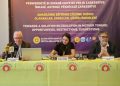
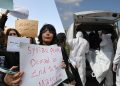
40,000 writers are working with PEN. We have about 130 centres in different countries. Our focus is freedom of expression; the freedom of writers, to help writers at risk, in different situations. The world we live in at the moment, unfortunately, is not a stable place. Every year we see a new crisis, a new conflict. The Kurdish issue, my own issue; now, what’s going in Palestine and Gaza; and in Ukraine, and before that in Afghanistan, when the Taliban came to power, or the military coup in Myanmar, the things going on in Eritrea. People, writers, journalists, have to work to defend our fellow writers. To give them opportunity to speak and to write as they wish….