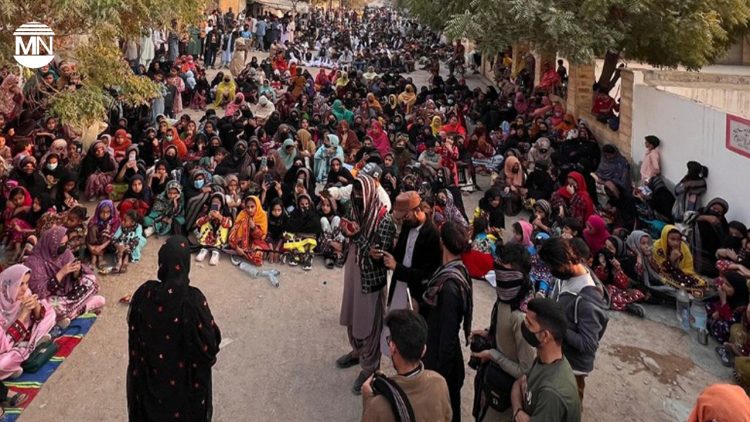
Activists in Balochistan are facing severe reprisals from the Pakistani state as they mark “Balochistan Genocide Remembrance Day”, the anniversary of mass graves discovered in the Khuzdar district on 25 January 2014. At the time, more than one hundred bodies were exhumed—most of them never identified—deepening public outrage over what many consider a systematic campaign of enforced disappearances and extrajudicial killings in the province.
I appeal to human rights organizations to immediately take notice of the internet blackout in Dalbandin and actively intervene to prevent a potential crackdown on the peaceful Baloch national gathering. Such actions not only stifle freedom of expression and assembly but also set… pic.twitter.com/HaBpbev6E9
— Mahrang Baloch (@MahrangBaloch_) January 24, 2025
The Baloch Yakjehti Committee (BYC), a civil-rights committee of Baloch people in southern Pakistan, led principally by women such as Mahrang Baloch and Sami Din Baloch, has called on activists in Pakistan and around the world to observe “Baloch Genocide Remembrance Day”. A government backed “death squad”, notoriously headed by Shafiq Mengal, raided the Baloch city of Tootak on 18 February 2011, kidnapping and torturing local residents. Shafiq Mengal is an extremist mercenary hired by the Pakistani secret services after he was discovered in Indian-occupied Kashmir. It was on 25 January 2014 that a shepherd discovered the mass graves of the at-least 170 Baloch who were abducted and massacred on that fateful February day, marking the origin of what is now called Baloch Genocide Remembrance Day. The annual demonstration takes place today in Dalbandin, a town in the Chagai region of Balochistan. Dalbandin, known historically for being the discordant site of both large fruit orchards and national nuclear testing, is located near the southern border of Afghanistan, and is home to a small refugee camp created for Afghans following the Soviet invasion of Afghanistan.
The BYC’s attempt to mobilise activists and patriots in Dalbandin has been met with severe repression before the protest even began, as Pakistani authorities have imposed an internet blackout to suppress media coverage of the historic demonstration. Leaders and activists of the movement have also been falsely accused of support for armed insurrection, while police have violently attacked and arrested members in an effort to suppress the protesters in Dalbandin. This comes in the wake of the abduction of eight Baloch people on 19 January, from different districts of Balochistan province.
A fact sheet released by the Human Rights Council of Balochistan (HRCB) earlier this week details how the Pakistani military and law enforcement agencies have ramped up efforts to derail the awareness campaign led by the BYC. Activists state that police have charged leaders on spurious grounds and there have been multiple incidents of violent dispersals at previous rallies, including one in Islamabad in late 2023 and another in Gwadar in August 2024. In both cases, women and children were among the protesters who were met with force and many prominent organisers faced arrest. Now, with the imminent internet shutdown in Dalbandin, there are fears that the state will seize this opportunity to further repress political dissent. Despite this, Baloch from Afghanistan and Iran are also attempting to attend the protest.
بلوچ نسل کشی یادگاری دن جلسہ: دالبندین میں جلسے کے تیاریوں کے مناظر
– دالبندین، چاغی، نوشکی سمیت دیگر علاقوں انٹرنیٹ سروس دوسرے روز بھی معطل
– آج رات لیڈیز فورسز اہلکاروں کی متوقع جبکہ بڑی تعداد میں فورسز اہلکار پہلے ہی دالبندین پہنچ چکی ہے۔
– ہزاروں کی تعداد میں بلوچستان بھر سے… pic.twitter.com/EIx4fMParP— The Balochistan Post (@BalochistanPost) January 24, 2025
On her personal X (formerly Twitter) account, Mahrang Baloch made an urgent appeal to human rights organisations to intervene against what she describes as “a deliberate attempt to silence voices” and stifle the peaceful gathering in remembrance of those who lost their lives. Sami Din Baloch reiterated this call while situating it in a historical and philosophical context, writing in the Balochistan post:
"History is a witness that only those nations in the world have succeeded in maintaining their existence are those which present their identity, honour, dignity, and survival through resistance. Without resistance, all the colours and beauties of the world fade, and the darkness of death and shadows of fear are found everywhere. This philosophy of resistance frees human beings from the chains of fear and gives new light and vigour to life. The Baloch nation has adopted this philosophy, and its sustenance has now become not only our responsibility but the sole purpose of our lives."
Critics are clear: major resource extraction projects in the area, such as the Sino-Pakistani Copper-Gold Project and the Reko Diq mining reserves, which are emblematic of “colonial exploitation” of Balochistan’s land and its people. The construction of the China-Pakistan Economic Corridor is a driving force for this blatant imperialism, and the port city of Gwadar is now virtually occupied by the Chinese military as a result of this, consequently destroying the local fishing economy.
Beyond Balochistan, voices of solidarity have emerged from across the Middle East. In a video message, representatives from the Democratic Youth Council of Syria, Nadiya Yousef and Nasser Nasero, drew parallels between the struggles of the Baloch and Kurdish communities. They highlighted their shared experiences of cultural repression, displacement and militarisation, emphasising that both peoples have faced denial of identity, language and basic rights by the states that govern them. “We stand with you,” the Syrian youth representatives declared, calling for a unified stand against oppression and emphasising that the path to freedom requires mutual recognition of each community’s right to self-determination and peaceful coexistence.
As 25 January unfolds, the question is whether the Pakistani government will respond with renewed violence or heed the calls for an open, peaceful observance of the day. International groups, including human rights organisations, have urged Pakistani authorities to restore internet services, noting that the blackout curtails freedom of expression and can enable unlawful acts against civilians to go unreported. For activists like Dr. Baloch and the members of the BYC, remembering the victims of past atrocities is not merely a symbolic gesture—it is also a call for accountability and an assertion of the Baloch people’s right to a dignified future. Observers are clear: unless global attention remains focused on the region, the silence imposed by digital censorship will embolden further crackdowns, diminishing hopes for transparency and justice in Balochistan.
“The resolve of our mothers and sisters (Lumma Eed Taa Juhd Pahek),” she (Dr. Sabiha) chanted loudly, her voice reverberating through the Shawani Stadium in Quetta – the capital and largest city of Pakistan’s Balochistan province. Thousands of Baloch men and women echoed: “Ours… pic.twitter.com/GT4hodsI0T
— Baloch Yakjehti Committee (@BalochYakjehtiC) January 25, 2025
“اس کاروان کے ہر فرد پر فرض ہے کہ وہ بلوچ قوم کے شہداء کے فلسفے کو آگے بڑھائیں” – ڈاکٹر ماہ رنگ بلوچ کا دالبندین جلسے سے خطاب pic.twitter.com/6nPdWS98QP
— The Balochistan Post (@BalochistanPost) January 25, 2025