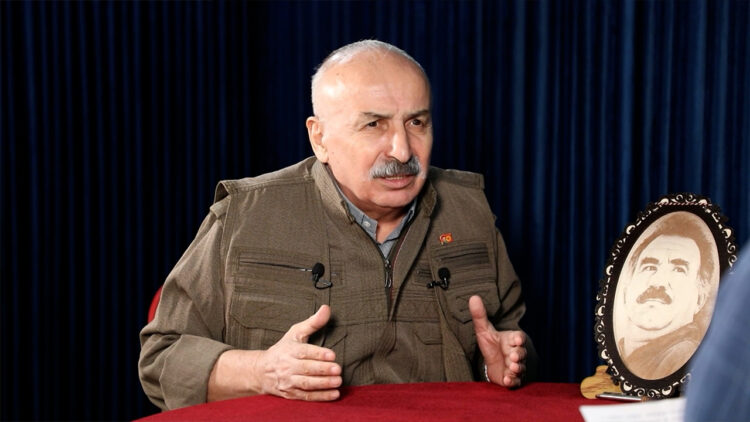
Abdullah Öcalan, the imprisoned leader of the Kurdistan Workers’ Party (PKK), described his living conditions in Turkey’s high-security F-Type İmralı Island Prison as “an attempt to turn [his] life into hell,” according to KCK Executive Mustafa Karasu, in an interview on 10 December. Öcalan’s October 2024 statement was passed to his nephew Ömer Öcalan during a recent family visit, and later disclosed by Karasu. This stark revelation underscores the ongoing isolation imposed by Turkey and its political implications for Kurdish resistance and the broader Middle East conflict.
Karasu highlighted the recent meeting between Abdullah Öcalan and his nephew Ömer, who is also an MP for the pro-Kurdish Peoples’ Equality and Democracy (DEM) Party, as a rare occurrence amid his prolonged isolation. This October meeting coincided with a controversial suggestion by Turkey’s far-right Nationalist Movement Party (MHP) leader Devlet Bahçeli that Öcalan should be brought to parliament to dissolve the PKK. Karasu clarified, however, that the Turkish state’s agenda for such engagements is laden with ulterior motives.
“They allow these meetings not for resolution but to impose pressure and blackmail,” Karasu said. “Öcalan was clear when he said, ‘They want to turn this place into hell for me.’ This is a calculated effort to normalise isolation and undermine the Kurdish freedom struggle.”
The conditions of Öcalan’s imprisonment have long been a focal point for Kurdish activists. Despite sporadic family visits, the leader remains isolated, with no regular access to legal or political representatives. Karasu argued that this reflects a broader policy of repression by the Turkish government, which has also intensified military operations in Kurdish regions and targeted Kurdish political entities.
Karasu linked Öcalan’s plight to the broader struggle for Kurdish autonomy, particularly in northern Syria (Rojava). He accused Turkey of using proxies, such as the rebel Syrian National Army (SNA) and Hay’at Tahrir al-Sham (HTS), to destabilise Kurdish-controlled areas in Syria. “The attacks on Rojava are part of a systematic effort to suppress the Kurdish people’s quest for freedom and democracy,” he said.
This revelation arrives amid heightened tensions in the region. Turkey’s military campaigns against Kurdish groups, coupled with its trusteeship policy replacing elected Kurdish mayors with government appointees, have drawn international criticism. Rights groups argue that these measures amount to the suppression of Kurdish identity and democratic governance.
Karasu emphasised the necessity of global solidarity. “The international community must recognise the danger of normalising Öcalan’s isolation and the broader special war being waged against Kurdish people. Resistance is not just a local issue; it is a global responsibility.”
As the campaign for Öcalan’s physical freedom continues, the Kurdish movement faces escalating challenges. Yet, Karasu stressed the resilience of the Kurdish struggle. “Freedom and democracy can only be won through unwavering resistance,” he concluded.