Christian communities throughout Kurdistan marked Easter on 20 April with vibrant celebrations honouring the resurrection of Jesus Christ. The events united followers of Eastern and Western Christian calendars, showcasing the region’s religious diversity.
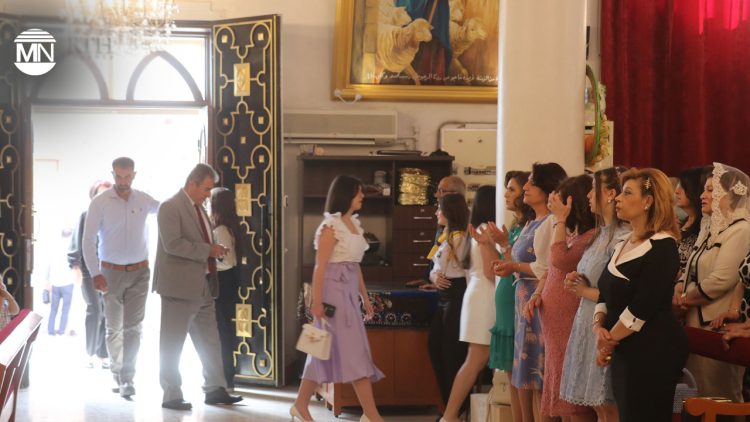
In Qamishli, a city in Kurdish-led northeastern Syria’s Jazira Canton, church bells rang as hundreds gathered for services featuring hymns, prayers and blessings. The rare alignment of Eastern and Western calendars amplified the significance of this year’s Easter, fostering a sense of shared identity among diverse Christian denominations.
Antoinette Kato, a Qamishli resident, described the atmosphere to the Hawar News Agency (ANHA) as “exceptional and distinctive”. “All Christian sects celebrated together with great joy,” she said, adding, “We hope this resurrection will be a good start for Syria and the entire world.”
The Kurdistan National Congress (KNK), a Brussels-based umbrella organisation representing Kurdish political parties, NGOs and intellectuals, extended congratulations to Christians across Kurdistan. Addressing Assyrians, Syriacs and Chaldeans—distinct Christian ethnic groups in the region with shared Aramaic heritage—the KNK framed Easter as a symbol of “resistance and unity”.
Assyrians and Syriacs, often confused, are closely related communities with historical roots in ancient Mesopotamia. Assyrians identify with the ancient Assyrian Empire, while Syriacs, also known as Arameans, are tied to the Syriac Orthodox Church and Aramaic language. Both groups share cultural and linguistic ties but maintain separate identities. Chaldeans, another related group, are primarily associated with the Chaldean Catholic Church.
“We hope this holiday will be a message of peace and safety worldwide,” the KNK statement concluded.
Turkey’s pro-Kurdish Peoples’ Equality and Democracy (DEM) Party joined local Christians in celebrating Easter, emphasising solidarity and coexistence. In a statement, the party declared, “We believe wholeheartedly in a future where peoples and faiths live freely in equality, practising their religions, cultures, languages and identities.” The DEM Party further expressed hopes that Easter would inspire “a new beginning for peace, justice and freedom” for all communities.
Kurdistan, spanning parts of Syria, Iraq, Turkey and Iran, is home to diverse communities, including significant Christian populations. In Syria’s Kurdish-administered North East region (also known as Rojava) where Qamishli is located, the Syrian conflict has posed ongoing challenges. Yet, Easter celebrations highlighted resilience and cultural coexistence, with churches serving as focal points for communal harmony. These events reflected broader aspirations for peace and stability across Kurdish regions.