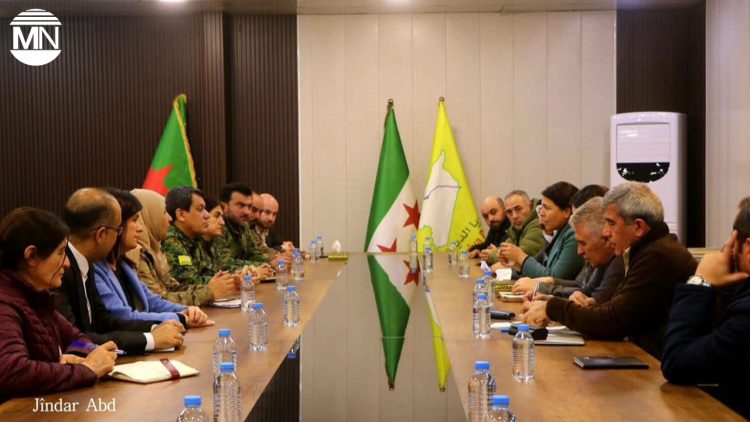
The Syrian Democratic Forces (SDF) have called on the Syrian government to take concrete steps towards securing a ceasefire and advancing dialogue, following a tripartite meeting with the Syrian Democratic Council (SDC) and the Autonomous Administration of North and East Syria (AANES) on Monday. The meeting, held amid shifting alliances and growing external pressures, underscored the need for the new administration in Damascus to engage seriously in discussions over the region’s future.
In a statement on Tuesday, the SDF reaffirmed its commitment to continued negotiations with the Syrian government, highlighting the necessity of addressing core issues such as the integration of military and administrative institutions, the return of forcibly displaced persons, and other unresolved disputes. The meeting also emphasised the importance of engaging local communities and societal elites across North and East Syria to ensure an inclusive political process.
“The importance of the ongoing dialogue with Damascus was reaffirmed, with participants expressing their commitment to making this dialogue successful,” the SDF statement read, adding that a ceasefire was an essential prerequisite for any further progress.
This latest development follows reports of an agreement between the SDF and Damascus, announced by Commander Abu Omar al-Idlibi of the SDF’s Northern Brigade. The SDF has yet to release an official statement about the agreement.
According to al-Idlibi, the agreement includes integrating security institutions into the structure of the Syrian army and reactivating state-affiliated civil and service institutions in North and East Syria. While this suggests increased cooperation between the Kurdish-led administration and the central government, concerns persist regarding minority rights and the long-term autonomy of the region.
Another key provision of the agreement calls for the withdrawal of all non-Syrian fighters from the ranks of the SDF, a move seen as an attempt to strengthen national sovereignty and limit foreign influence in the region. Additionally, the deal aims to facilitate the return of displaced persons under “suitable living conditions.”
Despite these steps, the Syrian government has yet to formally confirm the agreement or outline an implementation mechanism. Tensions remain high, particularly among Syria’s diverse ethnic and religious communities, who remain wary of Hayat Tahrir al-Sham’s (HTS) influence and the broader implications of deeper integration with Damascus.
The SDF’s statement signals a push for greater engagement from Damascus, setting the stage for what could be a crucial moment in Syria’s ongoing political negotiations.