

Delegations from Europe, the United States, and Progressive International visited North and East Syria as part of a fact-finding mission to understand the dynamics of the region and its ongoing struggles, as reported by Medya News correspondent Chris Den Hond. The delegation met with Syrian Democratic Forces (SDF) General Commander Mazloum Abdi to discuss critical issues, including Turkey’s continued aggression, the implications of the US political transition under President Donald Trump, and negotiations with Damascus over the region’s future.
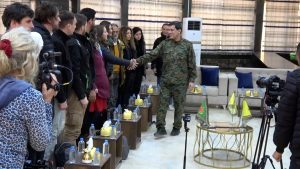
The delegation, which included representatives from France, Italy, Spain, the UK, and the US, raised questions about Turkey’s increasing influence, the integration of the SDF, Women’s Protection Units (YPJ), and People’s Protection Units (YPG) into a unified Syrian army, and resource management agreements.
Danielle Simonnet, representing the French delegation, asked pointed questions about Turkey’s intelligence activity in Damascus:
“Do you think Damascus is for Turkey like a second residence? Is Turkey planning to have more influence in Syria? What do you agree on and what are the points of disagreement in negotiations with Damascus?”
Progressive International’s representative raised concerns about the impact of the US governmental transition, asking what changes Commander Abdi and the Autonomous Administration of North and East Syria (AANES) expect under the new administration.
Mazloum Abdi responded:
“Turkey continues to exploit periods of political transition, such as the recent inauguration of President Donald Trump in the US, to further its aggression in North and East Syria. They have explicitly stated they will not accept any ceasefire until the new US administration is firmly in place. Meanwhile, they continue their attacks, targeting civilian infrastructure and destabilising the region.”
Abdi continued, “We have been trying to reach a ceasefire agreement for more than 50 days now, with many international actors attempting to mediate, including the global coalition, but Turkey refuses to engage in meaningful negotiations. As Syrian Democratic Forces, we are committed to resisting these attacks and protecting our region from further occupation. To achieve a ceasefire, we need sustained international pressure on Turkey at the highest level.”
On the negotiations with Damascus, Abdi elaborated:
“Our discussions with Damascus focus on creating a democratic, pluralistic Syria. We are committed to ensuring that the rights of North and East Syria are recognised in the new constitution. We have insisted on integrating the SDF, YPJ, and YPG into a unified Syrian army, with a key demand being the inclusion of women at all levels of the military structure. Gender equality has been one of the most significant achievements of the AANES, and it must be preserved.”
He continued, “Economic discussions have also been a priority. We aim to reach equitable agreements on managing vital resources like oil and gas, ensuring that the people of this region benefit from these resources rather than external actors. Our social contract is a progressive framework that has already demonstrated its success in fostering coexistence and equality, and we believe it should serve as a model for governance in Syria.”
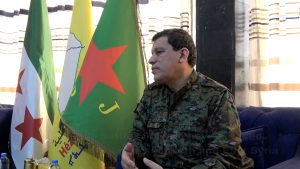
Abdi also addressed the broader geopolitical dynamics, expressing concerns about Turkey’s influence in Damascus. He noted that Turkish intelligence activities in Syria pose significant risks to the region’s stability and progress.
Related Articles :
French delegation visits northeast Syria amid Turkish aggression, AANES calls for global support
European delegations honour 10th anniversary of Kobani’s defeat of ISIS
Mazloum Abdi explained that Turkey has been exploiting the transitional period in the US to intensify its aggression in North and East Syria, emphasising that international pressure on Turkey is crucial to achieve a ceasefire. He also highlighted that discussions with Damascus focus on ensuring the political and economic achievements of AANES, including gender equality and a pluralistic governance model, are recognised in a new Syrian Constitution.

Medya News correspondent Chris Den Hond reports that the delegation expressed strong support for North and East Syria’s democratic governance model and recognised the challenges posed by both Turkish aggression and the uncertainties surrounding US foreign policy under the new administration.


