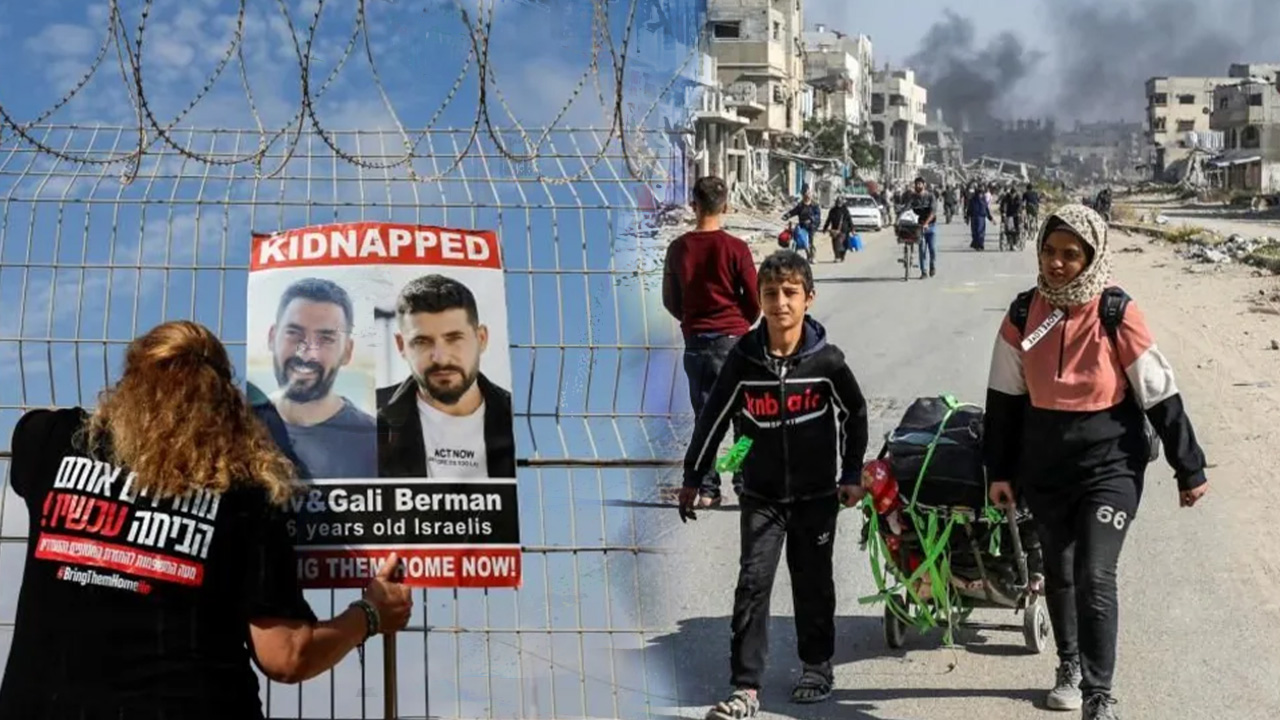
After 15 months of relentless conflict, marked by Hamas’s attack on Israel and the subsequent Israeli offensive on Gaza—which has displaced over 2.3 million people and claimed more than 46,000 lives—CBS News reports a surge in optimism regarding an imminent agreement. Sources indicate that Hamas is poised to agree to a caesefire and to release nearly 100 Israeli hostages this week.
Reuters also reported rising hopes for a ceasefire, citing a Palestinian source close to the talks who expects a swift conclusion if things proceed smoothly. An official involved in the negotiations said that the final draft of the agreement was handed to Israel and Hamas on 14 January, following “progress” made during discussions in Doha with representatives from the teams of both incumbent US President Joe Biden and President-elect Donald Trump.
Similarily, the Associated Press reported on 15 January that mediators claimed the ceasefire was “at its closest point yet”. However, CNN later quoted an Egyptian official stating that the mediating countries—Qatar, Egypt and the United States—had yet to receive a formal response from the Palestinian group Hamas.
Three-phase draft agreement
While full details of the proposed agreement have not been officially disclosed, various media outlets have highlighted its key components, citing sources involved in the discussions. According to reports, a three-phase plan, brokered by international mediators, seeks to secure the release of approximately 94 remaining hostages, while laying the groundwork for humanitarian relief and the prospect of long-term stability in the region.
The framework of the agreement is divided into three pivotal phases, designed to incrementally build toward peace and stability. The initial 42-day ceasefire will see the release of 33 vulnerable hostages—women, children and individuals over 50—in a reciprocal exchange for Palestinian prisoners, facilitated by international mediators. This phase also allows humanitarian aid organisations to resume rebuilding critical infrastructure in Gaza.
In the next phase, the focus will shift to the release of the remaining hostages and the potential withdrawal of the Israeli Defence Forces (IDF) from Gaza, laying the foundation for more comprehensive negotiations.
Finally, the third phase, partially shaped by earlier negotiations, will involve the exchange of the bodies of deceased hostages and prisoners, the commencement of Gaza’s reconstruction and the reopening of its borders. These steps aim to restore stability, enable recovery and foster long-term peace in the region.
However, Israel has firmly rejected Hamas’s request to include the body of Yahya Sinwar, the former Hamas leader killed in October, in the ongoing hostage and prisoner exchange negotiations. A senior Israeli government official, speaking to The Jerusalem Post, stated emphatically that “Israel will not hand over the body of Sinwar to Hamas as part of this agreement.”
Challenges to implementation
In Israel, opposition to the proposed ceasefire agreement is gaining momentum, especially among hardline members of Prime Minister Benjamin Netanyahu’s government. National Security Minister Itamar Ben-Gvir has vehemently criticised the deal, calling it a “surrender to Hamas”, and has urged Finance Minister Bezalel Smotrich, another far-right figure, to back him. Politica reported Ben-Gvir as later admitting he now lacked the power to prevent the deal going through.
Meanwhile, a group of 200 Israeli soldiers fighting in Gaza have petitioned for the ceasefire to be immediate, warning that they will down arms if no deal is reached, indicating internal divisions within the Israeli side.
The potential ceasefire between Israel and Hamas faces significant uncertainty due to mutual mistrust and resistance from hardliners on both sides. Though optimism is rising, whether a truce can be secured remains to be seen.