🎥 The US is unlikely to withdraw from Syria, and Kurdish forces remain a vital ally.
But how will Turkey’s ambitions clash with Washington’s plans for the region?🎙️ Watch our exclusive interview with Mutlu Çiviroğlu (@mutludc), a veteran journalist for VoA Kurdish (Denge… pic.twitter.com/NPLaXk2aYQ
— MedyaNews (@medyanews_) January 9, 2025
Interview by Emrah Erdoğan of Medya News
In this exclusive interview for Medya News, Washington-based journalist and expert on Kurdish affairs Mutlu Çiviroğlu offers an in-depth analysis of the dynamics shaping the coming Trump era. Çiviroğlu offers critical insights into how the cabinet of the US President-elect, known for its alignment with Israel and scepticism of the policies of Turkish President Recep Tayyip Erdoğan, might navigate the delicate balance between supporting Syrian Kurds – key allies in the fight against ISIS – and managing the strategic relationship with Turkey, a NATO member.
The inauguration of Donald Trump’s presidency on 20 January and the formation of his new cabinet signal a significant shift in US foreign policy, particularly in the Middle East. With a team that includes figures with experience in the region, such as Marco Rubio as Secretary of State, the Trump administration’s approach to Syria promises to affect not only the fate of the Kurdish forces, but also the broader US-Turkey relationship. Against a backdrop of regional tensions, Turkish military operations and the continuing threat of ISIS, these policies could redefine alliances and power structures in Syria.
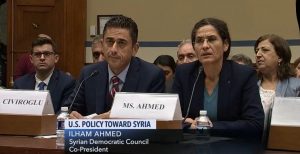
This conversation sheds light on the implications for Kurdish autonomy in Syria, the future of the US military presence, and the broader regional chessboard. It explores the potential outcomes of these developments, both for Kurdish aspirations in the post-Assad era and for the evolving dynamics of US-Turkish relations in one of the world’s most complex conflicts.
How might the recent appointments in the Trump administration influence the future of Kurdish autonomous structure in Syria? What insights have you gathered regarding the new team’s stance on the Kurdish issue?
So far, President Trump has announced several names in regards to the Middle East, and talking about your question in the specifics of Syria, I can tell that there are names that are familiar with the Middle East, that are familiar with the Syrian Kurdish question. So, of course, having names like this, Marco Rubio is named as the Secretary of State, and there are other names that… In Washington, almost less than two weeks remain for President-elect Donald Trump to officially start as the President. So far, we have seen several names that will take place in his cabinet.
Related Articles :
What does the return of Donald Trump mean for the Kurds and the Middle East?

AANES urges inclusive governance in post-Assad Syria

US’s New Orleans: New Year’s Eve massacre leaves at least 15 dead, police investigate ISIS links
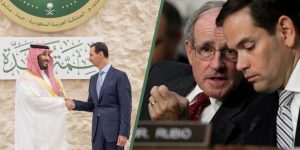
Secretary of State, Defence Secretary, National Security Advisor, National Intelligence Director, Middle East Envoy. These names are important for the Kurds, for the Middle East, for Syria, because they are knowledgeable about the Middle East. They are knowledgeable about the Kurdish issue. They are knowledgeable about Syria, and Syria looks like it’s going to be very important for the Trump administration. Today, President-elect Trump mentioned about Syria again, about the Kurds, how he defended the Kurds when Erdoğan wanted to attack the Kurds. But I can tell you that in Washington, the general view is that people who know about the Kurds, who are knowledgeable about the Kurdish issue, who know Turkey, Syria very well, like Marco Rubio, he has been named as the Secretary of State by Trump.
So Marco Rubio knows Syria very well, knows the SDF [Syrian Democratic Forces]very well. His criticism against Erdoğan is known very well. So, he is going to be Secretary of State. It’s important that somebody like him is taking over the State Department. And also, the new Secretary of Defence, he is known to be knowledgeable about the Middle East, and to have more military presence in the Middle East. Similarly, the National Security Advisor, Mike, has spoken to the media a few days ago.
He was talking about the danger of ISIS, the threat that ISIS possesses. And I can tell you that the names that are going to be in the new Trump administration, their experience about the Middle East, they either worked in Syria, in Iraq, or have direct knowledge about the region they visited. So, this creates some opportunity for Kurds that, after all, they might have enjoyed some good relationship with the new administration.
How do you anticipate the relationship between President Trump and President Erdoğan evolving? Particularly in light of the new appointments within Trump’s cabinet that pertain to Syria. This new appointment could harden or soften the relations between Turkey and the US?
President Trump enjoyed good relations with President Erdoğan of Turkey. And I think Erdoğan has long been waiting for Trump to start his job officially. Because Turkey believes that the special channel that exists between Trump and Erdoğan will be available again, and Turkey will be able to influence policies over President-elect Trump. And Trump today made a statement one day after the Congress certified his election as President. Trump spoke to the media. He mentioned about how he had good relations with Erdoğan, how he likes Erdoğan, and Erdoğan likes him, respects him. They respect each other mutually. That’s important.
This is nothing surprising. Everybody knows that these two individuals enjoyed a kind of relationship. But at the same time, President Trump is coming in second term. He’s more experienced. He comes with a stronger mandate. He feels very strong about himself in his second term.
And like we discussed earlier, his team is composed of people that are critical of Turkey, that are critical of Erdoğan, that are thinking highly of Syrian Kurds, the SDF, people that see Kurds as their allies, contrary to Erdoğan. Because Erdoğan and the Turkish government want to portray Syrian Kurds as terrorists, as the extension of the PKK [Kurdistan Workers’ Party]. So American public, American Congress, American decision makers don’t think like that.
So things may not be the way Erdoğan or Turkish government hope or expect. We could see today’s statement that President Trump refrained giving any clear answer about withdrawing from Syria. He said this is a military issue I’m not going to discuss with you. But at the same time, he talked about how Turkey has an eye on Syria for 2000 years, as per him. And that those who are in Damascus now, those who are ruling Syria, enter Syria from Turkey, by which he means that Turkey is behind HTS [Hay’at Tahrir al-Sham] and other people that are in power now. And President Trump also mentioned that he stopped Erdoğan from attacking Kurds last time.
So what we can see is that these points are important, that Trump feels comfortable working with Erdoğan. But at the same time, Trump knows that Syria is very important. The perception here in Washington is that Trump is well aware how important Syria is for American interests, American national security.
How do you think the recent ISIS attack on US soil could influence American public opinion and policy decisions regarding the continued US presence in Syria?
The very small number of American soldiers in Syria provides America, the US, a lot of diplomatic, political, military power. And also, I want your viewers, your readers to remember that a few days ago, we witnessed a terrorist attack in America in New Orleans, Louisiana. And the attacker, as per the FBI, is clearly a member of ISIS, inspired by ISIS. An ISIS flag was found. This also raises the question in the American public that the ISIS threat is real, strong. ISIS can even strike inside American soil. That makes Syria very important. Once more, that ISIS threat is real. And the main force fighting against ISIS are Kurds, the SDF. CENTCOM [Combatant Command of US Department of Defence covering the Middle East, Central and South Asia] has been warning for weeks that the ISIS threat is real. ISIS is making a comeback, especially after the Assad regime has gone. ISIS has seized some weapons, we hear, trying to reorganise, regroup themselves. So, these are important factors for administration. And again, although Trump and Erdoğan enjoys a good relationship on a personal level, indeed, in the US government, the Trump cabinet, there are many people think differently about Erdoğan. And the fact that ISIS threat is, like I mentioned, is there, it makes it difficult for Turkey to get what it wishes for in the new Trump era.
Related Article :
US’s New Orleans: New Year’s Eve massacre leaves at least 15 dead, police investigate ISIS links
I think the perception here in Washington, when I talk to the Turkey experts, Kurdish experts, Kurdish issue experts, they believe the US is going to be staying in Syria, no withdrawal, because it is important for the national security of US, for the safeguarding of ISIS members that are in prison, prevent ISIS from making a comeback, and also to make sure Syria, the new Syria, is represented fairly by all its components, and does not become a radicalised kind of administrative system. Therefore, it’s important for US to stay in Syria, and things may not go the way Turkey or Erdoğan wants. This is the picture spoken in Washington now.
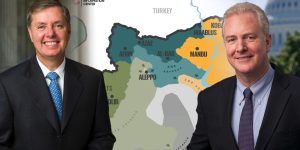
Following your words, I would like to ask a question about most whispered scenarios circulating in DC right now. Have there been any surprising plans or announcements related to Syria that could significantly impact both US public opinion and Turkey?
Remember, the current administration is temporary, it’s leaving, and the new administration has not started yet, so we don’t know anything yet. But what we can see, read from the statements, like I told you earlier, President Trump believes in making America great again. He believes American soldiers, American military should not be a police force for the world. Soldiers should come back home, American military, American soldiers should be home, protect their own borders, and American wealth, American capital, American money should be for the sake of American people. This is his policy. And people voted for him based on this idea.
However, like I said previously, Syria is very important, because Syria is the centre of the ISIS caliphate that was destroyed by the SDF. And ISIS was able to make an attack in the US a few days ago. So, like the senators in the US Congress are warning, US media is warning, US public is warning, the ISIS threat is real, it’s not gone yet. And American presence in Syria provides a kind of barrier, a bulwark against ISIS with the SDF. So, that work has been very effective. The military, Pentagon, CENTCOM, believe it’s very vital, and joint operations are ongoing. So, Syria is very important for the US national security. That’s why, from what we gather, the people that named for the cabinet, the expectation in Washington is that the US is not going to withdraw from Syria. And also, Syria is now, after Assad, it’s in the beginning of a new phase. And Syria can go any direction.
With the deterioration of conditions for minorities and women, do you think the US will prioritise humanitarian concerns in addition to security objectives in Syria?
The US’s being on the field, on the ground, provides Washington to [the oppoortunity to] have a say in the shaping of Syria’s future. Because right now, HTS is in power, and HTS is a terrorist for many countries, including the UN. So, now minorities, Alawites, Druze, Christians, in addition to Kurds, also gender-based, women are all complaining that their situation is deteriorating. So, by being in Syria, US also has its say in the future shaping of Syria. A US American delegation was in Damascus last week. A US embassy will probably open. So, the US’s being there provides Washington so many opportunities. That’s why the expectation in Washington is that the US is not going to be withdrawing from Syria. CENTCOM’s statement, implementation of 2254 decision of UN. That’s why many Syrian experts, experts of Middle East experts, they believe the US is going to be there for a while, continue working with Kurds, with the SDF. And in working with Kurds, provide Washington, Paris, Berlin, European capitals, saying in their policies, in terms of Syria, because again, Syria, a new Syria is being shaped right now. France, traditionally a strong country in Syria. The US, in terms of balancing Russian’s power in Syria. Israel, in terms of keeping Iran in check, not allowing Syria to be a launching ground against its borders.
Given Israel’s concerns about Iran’s presence in Syria, how do you see their influence shaping Trump’s policy towards both Syria and the Kurds?
These are so many factors. And the new president-elect Trump and his administration are known to be very pro-Israeli. So, that’s why Syria is very important. At the same time, Israel has been playing an active role in Syria, especially in terms of supporting Syrian Kurds. Israeli foreign minister, Gideon Nassar, very openly promoting for the protection of Kurdish rights, Kurdish status for Syrian Kurds, and as well as protecting other minorities. So it’s important for Israel as well who is coming to power in Syria, who is shaping, who is going to be the decision maker in Damascus, because Israel’s security is also at stake. And Israel is very eager for President Trump, because Israel believes Trump would support Israel’s decision in this. So, Syria is going to be an important diplomatic, military and political ground for regional and international forces. That’s why when I talk to people in Washington, I don’t hear that after Trump starts, the US is going to be withdrawing from Syria.
How has the shift from military to political engagement with the Kurds shaped the US approach to the region, particularly in the context of Syria’s reconstruction and future governance?
Related Article :
US Senator criticises Turkish policies which ‘support ISIS resurgence’
The US has been in partnership with the Kurds, Syrian Kurds, first YPG [People’s Protection Forces], YPJ [Women’s Protection Forces], now SDF. And the US military, US policymakers are very happy about that cooperation, this partnership. They always praise this partnership. And recently, you have also followed it, your viewers have also followed it, US Congress, US media, from the right, from the left, conservatives, liberals, they all talk positively about the Kurds. They consider Kurds as their friends, as their allies, American people, the American public. And the partnership with the SDF has been very effective. So, the US has been actively engaged with Kurds before, more militarily, but recently, more politically as well. Because, like I said earlier, the future of Syria is being shaped, post-Assad Syria is being shaped. There’s going to be new constitution, there are going to be conferences. There are so many negotiations, meetings will take place. And US’s biggest ally in Syria are the Kurds, because Kurds, they have an active partnership militarily. There are some State Department and US aid projects in the Kurdish-controlled Syria.
And the Kurdish model, the self-ruled administration in Syria, is really, is most close to a system of America, system of Europe. It’s like, power-sharing, based on, you know, ethnic power-sharing, different groups, Kurds have shared the power, have shared the power with Arabs, with Syriacs. All ethnic and religious identities are respected. It’s a gender-based, gender-equal society. Many leaders are women. So, especially an organisation like HTS, that comes from Al-Qaeda, Al-Qaeda made the biggest attack against the US. So there are so many people skeptical about the future of Syria. But the comparatively, the most stable part of Syria is the Kurdish-controlled [region of] Syria. People are not persecuted because of their religion, because of their belief, because of their gender.
That is a kind of working model for the rest of Syria. And US has been in Syria through the Kurds. And also, we saw the French and the German foreign ministers on 5 January, their statements were very strong as well in terms of Kurds being in the political process, Kurds having a strong say, Syrian Kurds, as well as the SDF, militarily and politically. They were very strong statements. President Macron of France [made a] very strong statement yesterday, that they’re not going to abandon freedom fighters like Kurds, SDF. So, these are very strong statements.
Despite Turkey’s efforts to prevent Kurdish gains, you have noted a clear policy divergence between Ankara and Western capitals. How might this divide affect Turkey’s role in shaping Syria’s future and its relations with its NATO allies?
They all point to one thing, that Kurds are going to be a major player in the new Syria, because Kurds are the group, because they’re not only the biggest ethnic minority in Syria, they’ve long been oppressed by the Baathist regime. And they need to be, their suffering, their loss needs to be compensated. Damascus should represent Kurds, the new administration needs to represent Kurdish identity, Kurdish culture.
And what Washington, Berlin, Tel Aviv, Paris are saying is this, that Kurds need to have a strong say in the new Syria, because Kurds, many of these countries see Kurds as a balancing factor in Syria, radicalism versus moderate, pluralism versus a single identity. So, when we put all this together, I can say that Kurds are seen as an important actor in the new Syria. Israel wants that, the US wants that, France wants that, Germany wants that.
That’s why, in the new Syria, despite all efforts by Turkey to prevent Kurds gaining any rights, but there is a huge policy difference between these capitals and Ankara. And just today, the Israeli foreign ministry had a statement once more, that the international community must pressure Turkey to stop attacks on Syrian Kurds, because regional powers like Israel, United Arab Emirates, and some others, Jordan, Egypt, they don’t want Syria to be a radicalised regime. They don’t want that, they have their own fears, concerns.
So, Kurdish political and military structure, establishment on the ground, provides them an with alternative. That’s why I personally believe the situation for Kurds in Syria, new Syria, will be good, and Kurds are one of the major, if not the most important, one of the most important actors in Washington. Many people see it this way.
But what about attacks by Turkish-backed mercenaries, and also Turkish war jets, war planes, in the Euphrates basin? You have been there, in Kobani. You are someone deeply familiar with the resistance and liberation of Kobani. And how would you assess the United States’ brokering efforts and their support for the Syrian democratic forces in this context?
So, Turkey is one of the biggest armies of NATO, has a deep relationship with the US, but they keep attacking on Kurds in the Euphrates basin. So, what would you say? Yes, there was very fierce fighting ongoing in the Euphrates basin, like you mentioned, to shrink them. I think Turkey’s expectation was that after Manbij [Minbîc], the forces under its control would advance towards Euphrates to Kobani.
Related Articles :
Iron fist in a velvet glove: Erdoğan’s aggressive stance on Kurds and Syria deepenYou mentioned the downing of several Bayraktar drones by the SDF. How do you assess the SDF's military capacity to counter Turkish-backed forces, and could this affect their standing with the US?
It looks like the SDF has prepared well for this kind of battle. They have been putting strong resistance on today, 7 January. Just before I was talking with you, I heard that the SDF brought down a fourth Bayraktar drone. Recently, they announced three, but today they announced the fourth. So, they are using drone technology. They are using trenches. So far, they have been putting up fierce resistance and the Turkish-backed forces could not advance. Here in Washington, again, the perception is that before 20 January, when President-elect Trump officially starts as the president, Turkey wanted to expand the regions under its control and to have more say in the future of Syria, maybe hoping to get the Syrian folder from the US, convincing the US to withdraw from Syria and take care of the Syrian case on behalf of NATO, on behalf of the US. There are some people believing in this. Hakan Fidan, the Turkish foreign minister, a few days ago, two days ago, suggested that these ISIS prisoners under SDF control should be handed to the HTS government. So, this is another means [by which] Turkey is trying to weaken the SDF’s position, the Syrian Kurdish position. But here in Washington, the Congress, the media, like I previously mentioned, are thinking highly of the Kurds, praising the Kurds. They see Syrian Kurds as their allies.
Related Articles :
New Year’s Day in Syria: SDF downs Turkish drone as Turkey strikesThe US has actively brokered ceasefires and defused tensions between Turkey and the Kurds. Do you see these efforts evolving into a more structured framework for long-term reconciliation, and if so, how?
This is from the left and right side of the political spectrum. And US diplomacy, the State Department, Secretary Blinken was in Turkey. Many believe the main agenda was to tell Turkey to stop doing any operations. Secretary of Defence Austin spoke with his Turkish counterpart, CENTCOM commander Eric Corrila was in Rojava talking with Mazlum Abdi. So, American diplomacy has been very active indeed, to broker a ceasefire, to bring some forces into Kobani, to try to diffuse the tension, to try to cool down the tension, because the US sees Turkey as an ally, sees the Kurds as a partner, and in the new Syria it’s going to be the Kurds that the US and the West will be able to work with. So of course the US wants these two sides to reconcile, to have a good relationship. That’s why US diplomacy is actively engaged in the region, militarily, politically, diplomatically. I think they have played an important role as far as the picture from Washington is concerned. So far, the US has been very active and very successful in cooling the situation.
Related Article :
Syrian Kurdish forces agree US-brokered ceasefire to protect civilians in Manbij
If a peace process between Turkey and the Kurds were to resume, what role do you see the US playing in facilitating such negotiations, given its interest in regional stability?
If there is ever a peace process in Turkey, which is something that experts here from Turkey, Turkish, Turkey experts or Kurdish issue experts believe, a peace process in Turkey is something that the US government would like to support. Again, the US doesn’t want tensions between Turkey and the Syrian Kurds. Trump also mentioned today that he stopped an operation against the Syrian Kurds. He told Erdoğan not to do that.
Related Article :
Turkey’s far-right nationalist leader Bahçeli: ‘Peaceful era beckons as barriers crumble’
And in Congress, some US senators have introduced a resolution asking the US administration to sanction Turkey if it launches a ground operation. So from Washington’s point of view, the Syrian Kurds are not something, someone that can be easily replaced, especially after Assad’s fall from power. The Kurds are now more important to Washington and the West.
It’s in their best interest to try to persuade Turkey to settle down politically. And if the peace process in Turkey succeeds, that is something that Washington would like to see, because then it will make Washington’s job easier instead of spending so much time trying to defuse the tensions that Turkey has created. Washington doesn’t see the Syrian Kurds as a threat, as a danger.
The Jordanian foreign minister was in Turkey yesterday. They all see the Syrian Kurds as part of Syria, part of Syrian society, part of the Syrian fabric. And they all take it for granted that the country’s largest ethnic minority is Kurdish.