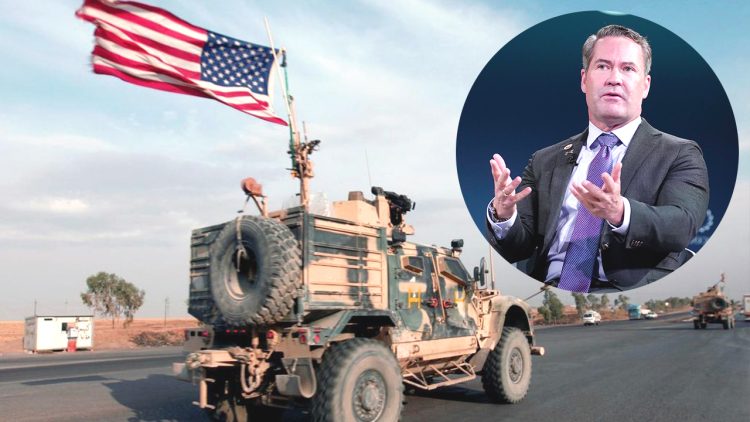
United States Congressman Mike Waltz, tapped to become National Security Advisor by President-elect Donald Trump, has reaffirmed Washington’s commitment to Kurdish forces as pivotal allies against ISIS, describing their role as “key to US interests.” At the same time, Waltz signalled the administration’s intent to further reduce the US military footprint in Syria.
“I want to be crystal clear. America’s interest here are the tens of thousands of ISIS fighters that are holed up right now,” Waltz said, speaking on the Ben Shapiro Show. “Literally tens of thousands of fighters and families are sitting in prison camps, guarded by our friends, the Kurds”, he added, referring to the Syrian Democratic Forces (SDF), the boots-on-the-ground in the US-led Global Coalition to Defeat Da’esh (ISIS). “That’s our key interest. Number one, ISIS, number two, Israel and its borders.”
President Trump’s designation for National Security Advisor, @michaelgwaltz on the #Syria policy of the new administration @BenShapiroShow
“I want to be crystal clear. America’s interest here are the tens of thousands of #ISIS fighters that are holed up right now thanks to the… pic.twitter.com/BLniqCfY1L
— Mutlu Civiroglu (@mutludc) December 23, 2024
The SDF, primarily composed of Kurdish fighters, has been a critical ground force in combating ISIS and safeguarding detention facilities holding ISIS affiliates. However, the diminishing US presence in northern Syria has cast doubt on the group’s capacity to maintain security.
Waltz’s remarks align with the Trump administration’s broader ‘America First’ foreign policy, which prioritises domestic interests and calls for a recalibration of US involvement overseas. This approach has driven significant troop withdrawals from northern Syria, diverting resources from counterterrorism operations.
Initially, American forces played a vital role in bolstering the SDF during the height of the anti-ISIS campaign, with the Global Coalition providing crucial military and logistical support. However, the US troop drawdown, announced in 2018 and 2019, left Kurdish forces exposed to Turkish military offensives. Ankara regards Kurdish groups linked to the SDF as extensions of the Kurdistan Workers’ Party (PKK), which it designates as a terrorist organisation.
The withdrawals have coincided with a surge in Turkish cross-border attacks and mounting instability in northern Syria, compounding the SDF’s challenges. Amid limited international backing, Kurdish forces have continued to confront ISIS remnants and manage sprawling camps housing ISIS-linked detainees, underscoring the fragility of security in the region.
Observers warn that diminished US engagement could embolden jihadist elements and destabilise regional security, leaving Kurdish forces to bear the brunt of ongoing threats.
The Global Coalition’s shifting role in anti-ISIS operations raises questions about the sustainability of counterterrorism efforts in Syria. A recent statement from US lawmakers, including Waltz, underscored the importance of continued support for the SDF.