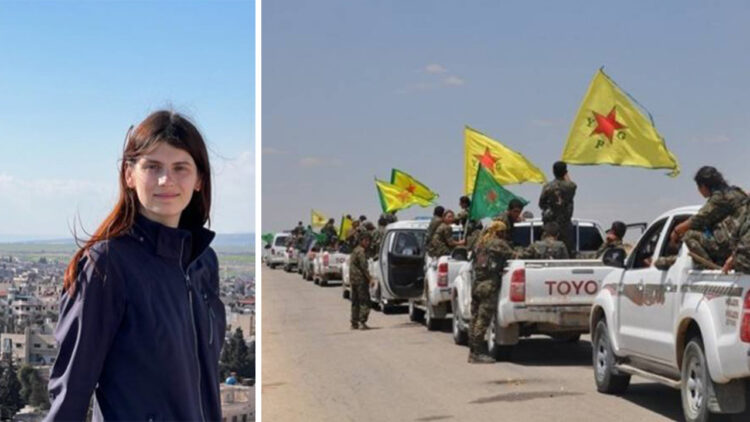
Meghan Bodette, Director of Research at the Kurdish Peace Institute and a contributer to MedyaNews, offered a compelling analysis of the Kurdish situation in Syria through a series of tweets on Saturday. Drawing from months spent in northeast Syria and Iraqi Kurdistan this year, Bodette highlighted key political and humanitarian challenges, revealing the Kurdish struggle for survival and autonomy amidst conflict and geopolitical pressures.
Bodette stressed that the Syrian Democratic Forces (SDF), led primarily by Kurdish elements such as the People’s Defence Units (YPG), Women’s Defence Units (YPJ) and Syria’s Democratic Union Party (PYD), are not “pro-regime”, but were deeply shaped by decades of oppression and cultural erasure before the Syrian Civil War began in 2011. She observed that the SDF’s inability to work with Syrian opposition forces stemmed from the opposition’s refusal to offer Kurds a fair deal, compounded by factions prioritising ethnic cleansing on Turkey’s behalf.
In Aleppo, Kurdish neighbourhoods remain calm but tense, with the YPG/J standing ready to defend against potential attacks. North of Aleppo, the Shahba (Şehba) region, which houses tens of thousands of residents of Afrin (Efrîn) displaced by Turkish bombardments, faces a more precarious situation due to threats from Turkish-backed Syrian National Army (SNA) forces. The civilians there endure harsh conditions in tent camps under Syrian government blockades.
Bodette described the SDF’s dual objectives: protecting their territories and Kurdish enclaves in the short term while seeking inclusion in a democratic, multi-ethnic resolution for Syria in the long term. However, recent discussions of a renewed Turkish-Kurdish peace process complicate these ambitions. She suggested that Turkish President Recep Tayyip Erdoğan might see military pressure on Kurdish-held areas as a tactic to force concessions.
Despite these challenges, Bodette stressed that no one in Syria desires further conflict, particularly in SDF-administered areas. Exhausted by war, residents yearn to rebuild, restore essential infrastructure and work towards a politically inclusive future. Her observations highlight the resilience of the Kurdish people and their aspiration for peace amid ongoing threats.