

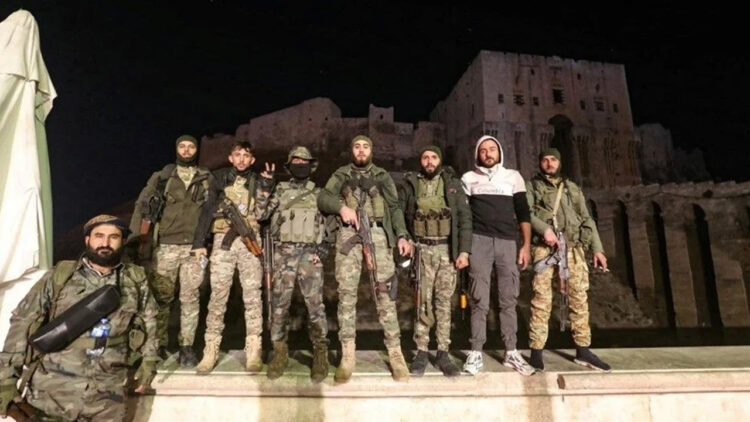
The Syrian army dispatched significant reinforcements to Hama on Saturday, aiming to counter Hayat Tahrir al-Sham (HTS) jihadist militants who have captured key towns in the region. Government troops were stationed in the strategic region of Jabal Zayn al-Abidin, north of Hama, as clashes threatened to further destabilise the already volatile area.
HTS, formerly affiliated with al-Qaeda, launched an offensive earlier this week, seizing areas in northern Hama, including Helfaya, Morik and Kafr Zita. These advances follow their takeover of key districts in Aleppo, heightening fears of expanded militant control.
The Arab League expressed grave concerns as the conflict intensified. “The resurgence of violence could be exploited by militant groups, further destabilising the region and exacerbating civilian suffering,” said Gamal Roshdy, spokesperson for the League’s Secretary-General Ahmed Aboul Gheit. The League reiterated its commitment to Syria’s sovereignty and territorial unity while calling for an end to hostilities.
The escalation prompted a flurry of diplomatic activity. Syrian President Bashar al-Assad held discussions with Iraqi Prime Minister Mohammed Shia’ al-Sudani and UAE President Mohammed bin Zayed al-Nahyan. Assad stressed his government’s determination to safeguard Syria’s territorial integrity, declaring, “Syria, with the help of its allies, has the capacity to defeat and eliminate all terrorist threats.”
Meanwhile, Russian airstrikes targeted HTS-controlled areas in Aleppo and Idlib, killing three militants in Aleppo’s Raousa neighbourhood and the Kiradiya area east of al-Bab. The aerial assault marks Russia’s continued involvement in bolstering Assad’s forces against insurgent factions.
HTS’s southward advance into Hama follows years of conflict in the region, which has seen fragile ceasefires repeatedly shattered. Their latest offensive not only threatens government strongholds but also endangers civilians caught in the crossfire. Displacement has surged, with families fleeing the violence in northern Syria.
The Arab League’s warning highlights concerns about the broader implications of the fighting. HTS’s resurgence risks undermining fragile regional stability, just months after Syria was readmitted to the League in the hopes of fostering peace. Observers note that the militant group’s actions could lead to prolonged instability, complicating efforts to rebuild Syria after over a decade of civil war.
Assad’s engagement with regional leaders, particularly the UAE, highlights the importance of the Arab states in addressing Syria’s challenges. However, experts caution that diplomatic efforts must be accompanied by tangible measures to counter militancy and support civilians impacted by the violence.
As Hama braces for further clashes, the situation underscores the fragile nature of peace in Syria. For the millions of Syrians affected by the ongoing conflict, the road to stability remains perilous and uncertain.


