

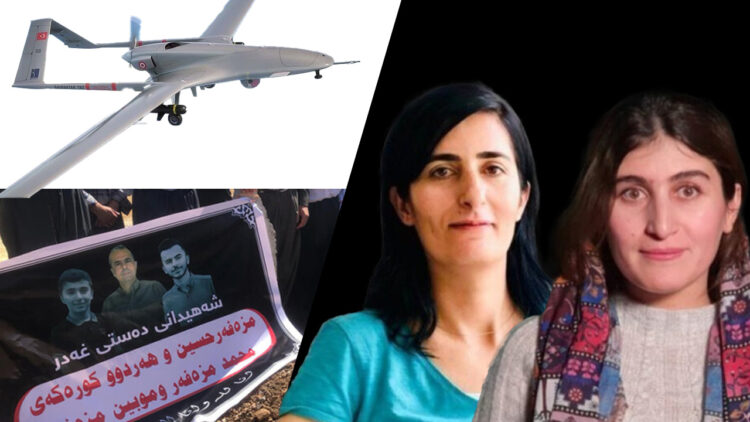
Recent Turkish military operations in Iraqi Kurdistan have raised serious concerns, particularly following a series of drone strikes that have resulted in civilian deaths. These intensified attacks have provoked strong reactions from human rights groups and local officials, especially after the deaths of two women journalists.
On Thursday 5 September, a Turkish drone strike killed three civilians, including a child, in Iraqi Kurdistan. This attack followed a similar incident the day before, which killed a father and his two teenage sons.
One of the most alarming attacks occurred on 23 August, when two Kurdish women journalists, Gulîstan Tara and Hêro Bahadîn, were killed in a Turkish drone strike. Their deaths have sparked widespread international reaction, including strong condemnation from media advocacy groups. The Kurdistan Journalists Syndicate and Reporters Without Borders have called for an end to Turkish operations, which they say are increasingly targeting civilians and journalists. Reporters Without Borders described the region as one of the most dangerous places for reporters due to the increased threat of drone strikes.
The latest incidents highlight a wider escalation in Turkish drone strikes, which have intensified since Turkey and Iraq’s Kurdistan Regional Government (KRG) reached a security agreement. However, this agreement has been met with opposition, most notably from KRG Deputy Prime Minister Qubad Talabani, who condemned one of the strikes as an ‘unjustifiable crime‘ and a violation of Iraqi sovereignty.
Although some Iraqi officials have expressed concern over Turkey’s incursions, the political and security dynamics between Ankara, Baghdad and Erbil remain complex, especially following the recent military cooperation agreements between Turkey and Iraq.
The Turkish government continues to justify its operations under the guise of fighting Kurdistan Workers’ Party (PKK) militants. The Turkish military reported that it had ‘neutralised‘ 17 individuals during operations in northern Iraq and Syria, a term that indicates the individuals were either killed, captured or surrendered. In a recent statement, the Turkish defence ministry also claimed to have hit 20 PKK targets, including caves, shelters and ammunition depots, in northern Iraq.
The strikes have been criticised by human rights groups, particularly for the rising number of civilian casualties. Ongoing military operations have forced the evacuation of hundreds of villages in Iraqi Kurdistan as civilians fear further attacks.
While local and international organisations have called for accountability, widespread international condemnation has been limited.
Turkey maintains that its actions are necessary for security reasons, but critics argue that the military campaign has disproportionately affected civilians and raises serious concerns about violations of Iraqi sovereignty.


