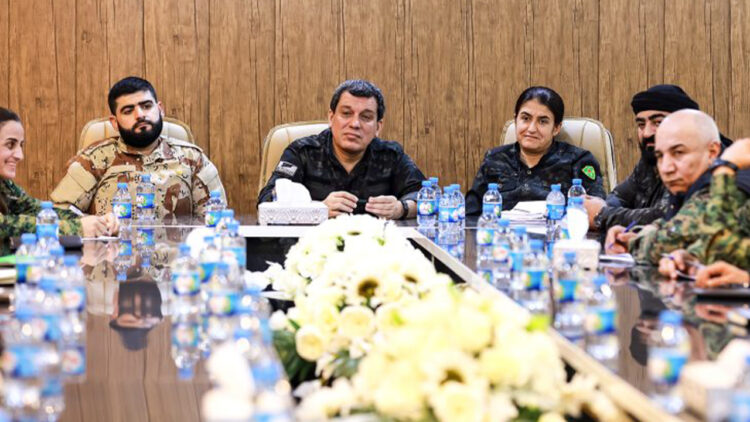
The latest meeting of the Syrian Democratic Forces (SDF) military council has taken place, centred on analysing current military dynamics, including the threat of Turkish aggression in North and East Syria, and reaffirming diplomatic efforts to deter such actions while emphasising continued collaboration with the US-led Coalition against ISIS.
The military council began its latest meeting with the customary moment of silence for fallen martyrs.
SDF Commander-in-chief Mazloum Abdi attended the meeting, alongside leaders of military councils representing provinces, factions and regions. Also in attendance were military officials and representatives of military institutions.
Proceedings began with an analysis of the current military situation and an assessment of the recent performance of the SDF. Reports were heard from several different sources.
Central to the discussions was the potential for future Turkish aggression in North and East Syria, and how the recent agreement between Turkish President Recep Tayyip Erdoğan and authorities in Iraq and Iraqi Kurdistan relate to the attacks within Syria. The agreement, made in April as part of a package which included water, oil and infrastructure deals, consented to Turkish attacks against the Kurdistan Workers’ Party (PKK) on Iraqi soil, and laid the way for collaboration between Iraqi forces and the Turkish military.
The SDF representatives emphasised the importance of diplomacy in deterring future Turkish attacks on North and East Syria. According to the SDF website, diplomatic initiatives “with influential international players involved in the Syrian situation” should be considered. The report emphasised that “the meeting urged these parties to resist Turkish pressure and blackmail”. It was further “highlighted that Turkish military action without international support is unlikely to succeed, and resorting to military action without such support would be reckless.”
The Deir ez-Zor Military Council presented a report to the meeting, detailing attacks by mercenaries working for the Syrian regime. Those attending the meeting “reaffirmed the right to defend the region and decisively counter any aggression”, and commended the “unwavering support of the Deir ez-Zor people and tribal leaders in standing with our forces against destabilization efforts”.
The importance of “continued engagement with community leaders” was also emphasised, in order to address “security and service needs for regional stability”.
The SDF representatives renewed their commitment to collaborate with the US-led Coalition in the struggle against ISIS. There was also discussion of pre-emptive military action against ISIS sleeper cells.
The meeting heard reports about the success of “intellectual and military” training within the SDF itself, and of the importance of retaining a strong connection with civil society. This connection would help to counter “subversion” and resist “unconventional warfare tactics”.
The issue of deserters from self defence forces was discussed, as was the importance of protecting the 2024 agricultural harvest in North and East Syria.