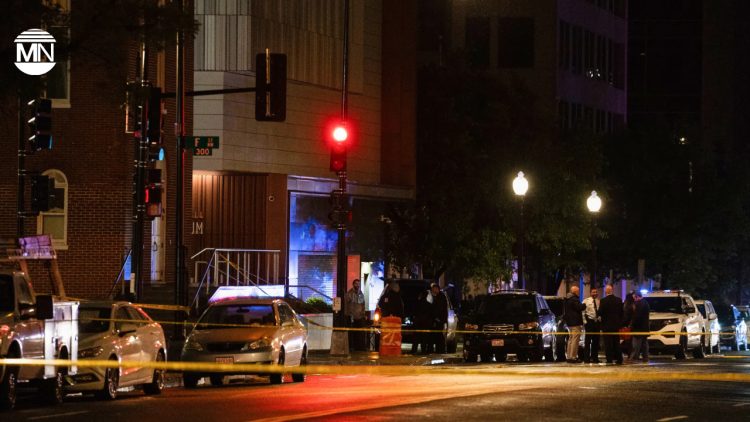
Federal charges have been filed against Elias Rodriguez (31), who fatally shot two Israeli diplomats at a diplomatic event held at the Jewish National Museum in Washington D.C. on 21 May. The victims, Yaron Lischinsky (30) and Sarah Milgrim (26), were a couple engaged to be married the following week.
Milgrim, an American Jew, had recently completed a degree in international affairs at American University and held a certificate in religious engagement and peacebuilding from the United States Institute of Peace. She previously worked with Tech2Peace, an organisation promoting dialogue between Israelis and Palestinians, before joining the Israeli embassy in Washington D.C. after the Hamas-led attacks on Israel on 7 October 2023.
Lischinsky, a German national, moved to Israel aged 16 and later served in the Israel Defense Forces (IDF). There are conflicting reports about his religion: one unnamed Israeli official described him as Jewish, while Israeli ambassador Ron Prosor stated on X that Lischinsky was Christian. He joined the Israeli embassy in Washington D.C. in 2022.
The couple, reportedly known for their interest in interfaith dialogue, were attending a peace-focused event when they were killed.
Rodriguez, a Chicago-based osteopath with a history of political activism, has been charged with multiple offences, including first-degree murder and the killing of foreign officials. He had previously been associated with the Party for Socialism and Liberation, which has condemned the attack.
A “Justice for Wadea” sign was found during a search of Rodriguez’s home, referencing a 2023 hate crime in which a six-year-old Palestinian-American boy was killed. Witnesses say Rodriguez shouted “Free, Free Palestine” after opening fire and later admitted guilt during his arrest.
Rodriguez left behind a short manifesto outlining his motivations. The text, advocating armed action, has been widely condemned. In response, Israel has increased security at its diplomatic missions.
The killings have stirred political tensions in Israel. Government supporters framed the murders as antisemitic terrorism and cited them to justify Israel’s ground operations in Gaza. Critics argue that the government’s policies are fuelling global backlash.
Far-right Minister Itamar Ben-Gvir blamed anti-war politicians, stating: “The blood of the victims is on their hands.”
Attacks on Israeli diplomatic missions are not new. In 1992, 29 people were killed in a Hezbollah-linked bombing of the Israeli embassy in Buenos Aires. Last month, a man was arrested outside the Israeli embassy in London while allegedly planning a knife attack.
With the humanitarian toll in Gaza worsening and famine looming, the incident has highlighted the polarising effects of Israel’s current policies. How justice will be served in this case remains to be seen — and whether Milgrim and Lischinsky’s peacebuilding vision will endure.