

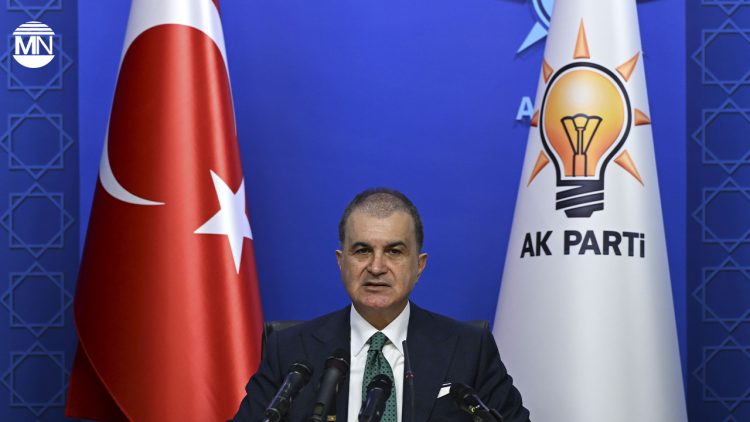
Ömer Çelik, spokesperson for Turkey’s ruling Justice and Development Party (AKP), has called a directive by jailed Kurdistan Workers’ Party (PKK) leader Abdullah Öcalan for the group’s disarmament and dissolution a historic step toward a “terror-free Turkey”, yet offered no concrete plans for democratic reforms to address longstanding Kurdish grievances.
On 27 February, Öcalan, imprisoned since 1999, urged the PKK to disarm and dissolve, responding to a call by Nationalist Movement Party (MHP) leader Devlet Bahçeli on 22 October. The PKK, which has fought a four-decade insurgency for Kurdish autonomy, declared a ceasefire on 1 March and committed to following Öcalan’s directive. Çelik, speaking in Ankara on Friday, described the process as a “state policy” endorsed by President Recep Tayyip Erdoğan and Bahçeli, aimed at ending “proxy wars” orchestrated by foreign powers.
“Every positive step towards the terrorist organisation’s disarmament and dissolution will pave the way for further positive steps,” Çelik stated, underscoring the potential for regional stability. He suggested that a “terror-free Turkey” would enhance the country’s democratic capacity and foster dialogue among ethnic groups in the Middle East, but provided no specifics on reforms, such as revising Turkey’s sweeping anti-terror laws or halting the replacement of elected mayors with state-appointed trustees (kayyum) in Kurdish-majority cities like Diyarbakır (Amed) and Van (Wan).
Ongoing scepticism from Kurdish politicians, voiced earlier by Gülistan Kılıç Koçyiğit, co-chair of the pro-Kurdish Peoples’ Equality and Democracy (DEM) Party, on 14 April, has been reinforced by the lack of a clear reform roadmap in Çelik’s statement. Koçyiğit noted that government officials have been “evasive” about addressing democratic demands in recent discussions.
The AKP’s history, including the collapse of the 2013–2015 peace talks and subsequent crackdowns on Kurdish politicians, fuels doubts about its commitment to liberalisation. Since 2015, hundreds of Kurdish activists and elected officials have faced detention or prosecution under anti-terror laws, according to Human Rights Watch.
Çelik’s emphasis on countering “proxy wars” reflects Turkey’s strategic priorities, particularly its campaign against Kurdish groups in Syria and Iraq, such as the People’s Protection Units (YPG). By framing the PKK’s disarmament as a blow to foreign interference, Çelik signalled that geopolitical goals may take precedence over domestic democratic reforms.
Earlier international reactions highlighted the need for broader inclusion. On 28 February, Germany’s Foreign Ministry welcomed Öcalan’s call but urged Turkey to ensure the cultural and democratic rights of Kurds, a stance that has not been publicly reiterated in recent weeks.


