

Sütun 1
Sütun 2
Sütun 3
Medya News
Daily News
Breaking News
Subscribe
No Result
View All Result
  • Home
  • All News
  • Opinion
  • Kurdistan
  • Women
  • Politics
  • Human Rights
  • Ecology
  • More
    • WORLD
    • Audio Articles
    • Economy
    • Culture & Art
    • Newsletter
    • Daily News
MULTIMEDIA
PODCAST
LIVE BLOG
  • Home
  • All News
  • Opinion
  • Kurdistan
  • Women
  • Politics
  • Human Rights
  • Ecology
  • More
    • WORLD
    • Audio Articles
    • Economy
    • Culture & Art
    • Newsletter
    • Daily News
MULTIMEDIA
PODCAST
No Result
View All Result
Medya News

Turkey’s politics still overshadowed by 1980 coup 42 years on

On its 42nd anniversary, the effects of the 1980 military coup still live on in the current political imbalance in Turkey.

2:59 pm 12/09/2022
A A
Turkey’s politics still overshadowed by 1980 coup 42 years on
Share post

Turkey’s modern history has seen frequent coups and military interventions in politics, the most severe of which took place 42 years ago on 12 September 1980. With this coup General Kenan Evren launched a period of repression that saw political parties closed and banned, hundreds of thousands of people detained and tried, and hundreds executed, shot in extrajudicial killings or tortured to death.

The 1961 constitution, which had been prepared in the aftermath of the military coup on 27 May 1960, brought an atmosphere of relative freedom due to its liberal character and focus on pluralistic democracy.

However, the decades after it was written were marred by political instability and violence. In 1971, after reciprocal political violence by left-wing and, particularly, right-wing groups, the military intervened once again, deposing the government of the time and replacing it with conservative appointees.

But the new government was unable to solve the country’s simmering issues during the decade before the 1980 coup, with political instability, economic crises, and security problems worsening during that period. At the same time, the growth of left-wing movements is believed to have unnerved NATO, which saw Turkey as a key bulwark for its influence throughout a crucial region.

In addition to this, Turkey saw several instances of severe upheaval caused by the far-right. One of the most infamous occasions came in 1978, when ultra-nationalists massacred members of Turkey’s Alevi minority in Maraş and Çorum.

At the same time, the period saw a wave of political assassinations, with politicians and journalists targeted, and the Kurdish political movement began to mobilise.

The crisis came to a head in the early hours of 12 September 1980, when the Turkish Armed Forces seized Turkey’s official television channel and other offices of communication. The coup was announced in a statement read out at 4am.
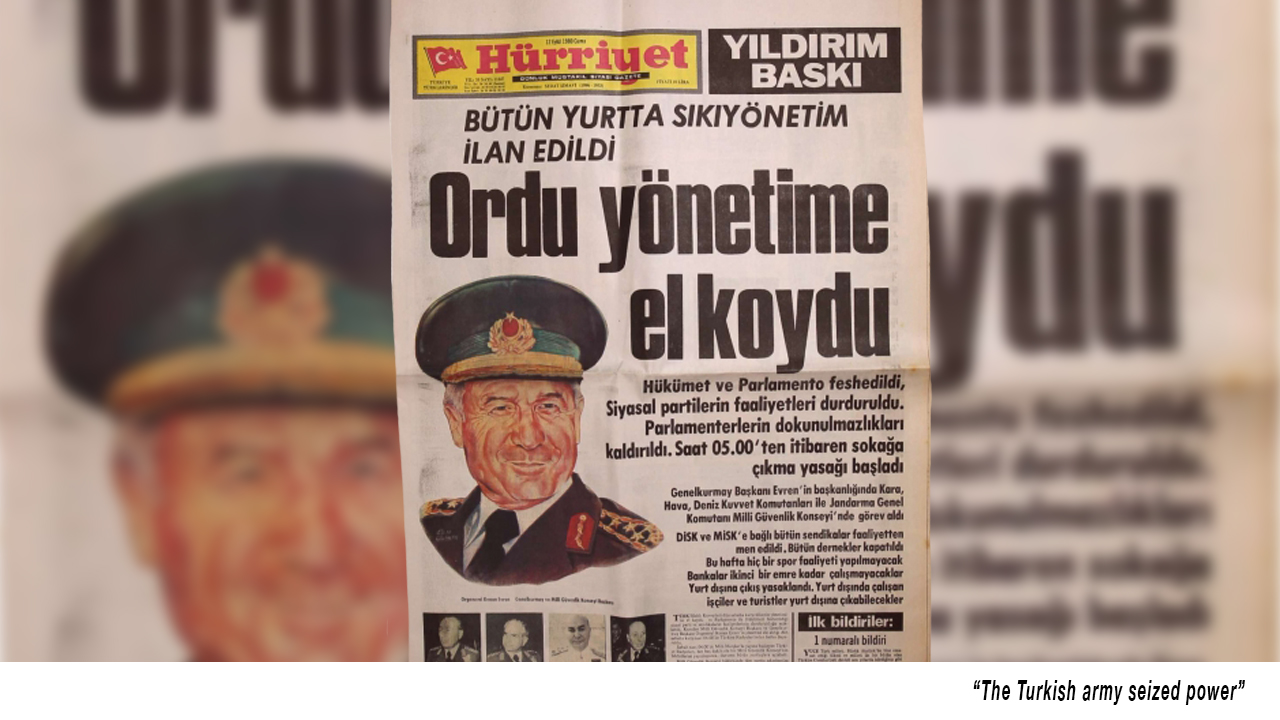
After the coup, with martial law in place across the country, 517 defendants were sentenced to the death penalty, nearly 1.7 million people were placed on a political blacklist, and 230,000 people were put on trial. Some 98,000 people were tried for “membership of a terrorist organisation”, and 388,000 people had their passports confiscated. Around 14,000 people were stripped of their citizenship, and 30,000 people fled the country as “political refugees”.

There were also 171 documented cases of detainees “dying under torture”, according to a report produced by a Turkish parliamentary commission in 2012.

The repression and torture that characterised the 1980 military junta was a strong presence in Diyarbakır (Amed) Prison, which was opened in 1980 after the coup and is among the “10 most notorious prisons in the world” according to the Times.
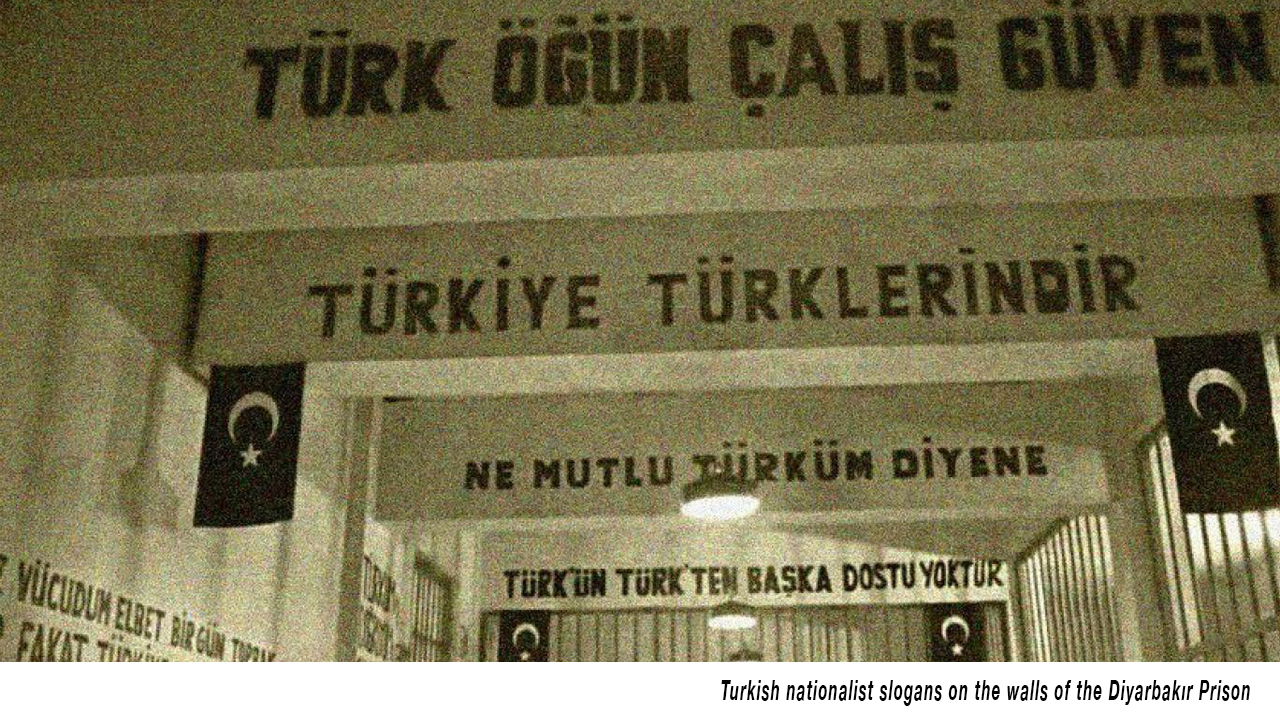
Thirty-four people who were subjected to torture in the prison died and hundreds were left with debilitating injuries. Kemal Pir, one of the founding members of the Kurdistan Workers’ Party (PKK), died as a result of a hunger strike. PKK Central Committee Member Mazlum Doğan was among several prisoners who committed suicide. Women prisoners suffered torture and rape. In Çayan Demirel’s 2011 documentary ‘Prison No. 5’, former convicts from the prison said they were still suffering from the trauma they experienced under captivity during this period.

And, some who lived through the period say that the trauma and repression have continued thanks to the legacy of the post-coup constitution written in 1982, which is still the basis of today’s Turkish constitution.

Fikret Melih Çolakoğulları, one of the witnesses to the coup, told Medyanews that “the coup of 12 September displayed the violence in every aspect of life, and the Justice and Development Party (AKP) is the product of the 12 September constitution.”

“There was a grim cruelty in prisons. Inmates in Diyarbakır Prison used to be tortured every single day,” said Ayşe Çiçek, the sister of a Kurdish convict, Ali Çiçek, who lost his life in a hunger strike to protest the brutality in the prison.


Share post
Tags: Trending

Related Posts

Daily News : 06 November 2024

Daily News : 06 November 2024

November 6, 2024
Daily News : 05 November 2024

Daily News : 05 November 2024

November 5, 2024
Daily News : 03 SEPTEMBER 2024

Daily News : 03 SEPTEMBER 2024

September 3, 2024
Fifty more detainees released under amnesty for internal peace in North and East Syria

Fifty more detainees released under amnesty for internal peace in North and East Syria

September 3, 2024
Uncle of missing child in Turkey arrested as case exposes broader child safety issues

Uncle of missing child in Turkey arrested as case exposes broader child safety issues

September 3, 2024
Turkey’s bid to join BRICS raises questions within NATO

Turkey’s bid to join BRICS raises questions within NATO

September 3, 2024

Impressum

About us

Privacy Policy

Subscribe


Welcome Back!

Login to your account below

Forgotten Password?

Retrieve your password

Please enter your username or email address to reset your password.

Log In
We use cookies on our website to give you the most relevant experience by remembering your preferences and repeat visits. By clicking “Accept All”, you consent to the use of ALL the cookies. However, you may visit "Cookie Settings" to provide a controlled consent.
Cookie SettingsAccept All
Manage consent

Privacy Overview

This website uses cookies to improve your experience while you navigate through the website. Out of these, the cookies that are categorized as necessary are stored on your browser as they are essential for the working of basic functionalities of the website. We also use third-party cookies that help us analyze and understand how you use this website. These cookies will be stored in your browser only with your consent. You also have the option to opt-out of these cookies. But opting out of some of these cookies may affect your browsing experience.
Necessary
Always Enabled
Necessary cookies are absolutely essential for the website to function properly. These cookies ensure basic functionalities and security features of the website, anonymously.
CookieDurationDescription
cookielawinfo-checkbox-analytics11 monthsThis cookie is set by GDPR Cookie Consent plugin. The cookie is used to store the user consent for the cookies in the category "Analytics".
cookielawinfo-checkbox-functional11 monthsThe cookie is set by GDPR cookie consent to record the user consent for the cookies in the category "Functional".
cookielawinfo-checkbox-necessary11 monthsThis cookie is set by GDPR Cookie Consent plugin. The cookies is used to store the user consent for the cookies in the category "Necessary".
cookielawinfo-checkbox-others11 monthsThis cookie is set by GDPR Cookie Consent plugin. The cookie is used to store the user consent for the cookies in the category "Other.
cookielawinfo-checkbox-performance11 monthsThis cookie is set by GDPR Cookie Consent plugin. The cookie is used to store the user consent for the cookies in the category "Performance".
viewed_cookie_policy11 monthsThe cookie is set by the GDPR Cookie Consent plugin and is used to store whether or not user has consented to the use of cookies. It does not store any personal data.
Functional
Functional cookies help to perform certain functionalities like sharing the content of the website on social media platforms, collect feedbacks, and other third-party features.
Performance
Performance cookies are used to understand and analyze the key performance indexes of the website which helps in delivering a better user experience for the visitors.
Analytics
Analytical cookies are used to understand how visitors interact with the website. These cookies help provide information on metrics the number of visitors, bounce rate, traffic source, etc.
Advertisement
Advertisement cookies are used to provide visitors with relevant ads and marketing campaigns. These cookies track visitors across websites and collect information to provide customized ads.
Others
Other uncategorized cookies are those that are being analyzed and have not been classified into a category as yet.
SAVE & ACCEPT

Add New Playlist

[email-subscribers-form id=”1″]

Contact


    No Result
    View All Result
    • All News
    • Kurdistan
    • Women
    • Politics
    • Human Rights
    • World
    • Ecology
    • Economy
    • Culture & Art
    • Daily News
    • Breaking News
    • Newsletter
    • Opinion
    • Authors
    • Podcast
    • LIVE BLOG