

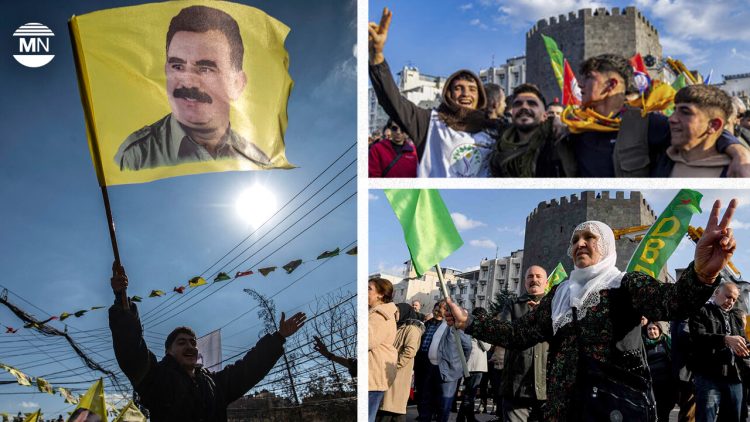
The reconciliation process between the Turkish state and the Kurdish movement has entered a new and decisive phase after Abdullah Öcalan, the imprisoned founder of the Kurdistan Workers’ Party (PKK), called on the group to dissolve and abandon their armed struggle. The 27 February announcement marked a watershed moment in one of the world’s longest-running conflicts, offering a renewed opportunity for peace. In response, PKK leadership declared a unilateral ceasefire just two days later, signaling a willingness to engage with this new trajectory.
According to a detailed report by Crisis Group, a globally respected think tank specialising in conflict prevention and resolution, Ankara has carefully curated and executed this process, incorporating actors who historically opposed peace initiatives. Crisis Group, known for its in-depth analyses and policy recommendations on global conflicts, has a longstanding record of assessing Turkish-Kurdish affairs, including past peace efforts and military escalations. Their reports have frequently been referenced by policymakers, journalists, and international institutions seeking objective insights into Turkey’s internal and regional conflicts.
The first visible sign of this shift came in October 2024 when Devlet Bahçeli, leader of the Nationalist Movement Party (MHP) and a coalition partner of President Recep Tayyip Erdoğan, signaled a softening of his stance by shaking hands with members of the pro-Kurdish Peoples’ Equality and Democracy Party (DEM) during a parliamentary session. This unexpected gesture was soon followed by Bahçeli’s proposal to allow Öcalan to address DEM lawmakers to announce the PKK’s dissolution, an idea that seemed inconceivable just a year ago.
Shortly thereafter, the Turkish government permitted the first visits to Öcalan in more than a decade, laying the groundwork for his 27 February statement. Öcalan’s message was clear: the PKK’s ideological foundation no longer held relevance, as the emergence of a democratic society provided the framework for Kurdish self-expression and political participation. This call was the most unequivocal from Öcalan to date, leaving little ambiguity about his stance on ending the armed struggle.
Despite Turkish officials publicly maintaining that no concessions have been offered, Crisis Group’s report suggests that potential measures under discussion include the release of imprisoned DEM Party politicians, the conditional release of Öcalan, or at least improved visitation rights, as well as potential amnesty for non-combatant PKK members. Moreover, there are discussions about reversing the crackdown on DEM municipalities and introducing constitutional amendments to recognise long-standing Kurdish demands, such as Kurdish-language education.
The PKK conflict has long transcended Turkey’s borders, spreading into northern Iraq and Syria, complicating regional dynamics. Since the breakdown of the last ceasefire in 2015, Ankara has shifted its military focus beyond its borders, with significant incursions into Iraq and Syria. Turkey’s support for Syrian opposition forces and its direct military campaigns have targeted Kurdish-led governance structures, particularly the Syrian Democratic Forces (SDF), whom Ankara views as an extension of the PKK. However, recent developments—including Turkey’s tacit support for the 10 March Syrian Kurdish-Damascus agreement—indicate a recalibration of Ankara’s approach to Kurdish politics both at home and in the region.
Crisis Group also highlights the geopolitical rationale behind Turkey’s strategic shift. Ankara’s ongoing conflict with the PKK has been a persistent source of tension with its Western allies, particularly the United States and the European Union. Turkey’s EU accession talks have remained frozen since 2018 due to concerns over human rights and democratic backsliding. By advancing a peace process, Turkey could seek to improve its standing in Europe and alleviate pressures on its economy, which has been struggling with inflation and declining investor confidence. Additionally, resolving the PKK issue could facilitate better relations with Iraq and Syria, enabling Turkey to consolidate its regional influence and improve economic cooperation, particularly through the ambitious Development Road project with Baghdad.
While these steps present significant opportunities, Crisis Group warns that considerable challenges remain. Hardline opposition within Turkey could obstruct key reforms, while any sign of backtracking from Ankara or the PKK could unravel the fragile momentum. Moreover, regional actors such as Iran and Israel may seek to exploit the process to counterbalance Turkey’s growing influence.
The upcoming PKK congress, expected to be held in the coming months, will be a crucial moment in determining whether the armed movement formally disbands. If successful, this could mark the definitive end of a decades-long insurgency, paving the way for a new era in Turkey’s Kurdish policy. However, whether Erdoğan’s government is fully committed to democratic reforms or merely using the reconciliation process as a political maneuver remains a key question.


