

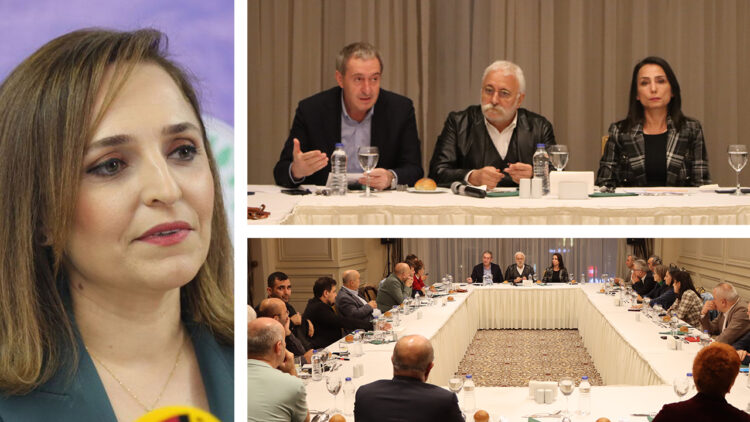
Peoples’ Equality and Democracy (DEM) Party spokeswoman Ayşegül Doğan has hit back at presidential advisor Mehmet Uçum’s recent comments dismissing the possibility of a new peace process in Turkey, labelling him “Advisor of Evil” in a social media post. Uçum had said on his X account that a new peace process was neither possible nor necessary, warning that if the pro-Kurdish DEM Party did not distance itself from “terrorist tutelage,” it would be eliminated through legal means.
“Mehmet Uçum has spoken out, once again leaning on the privileges of his position,” Doğan wrote on Friday, referring to Uçum’s statement. “We know your kind of oppressors very well. We understand your fear and anxiety. This country urgently needs to free itself from the tutelage of people like you.”
Uçum had earlier declared: “There can be no peace process in Turkey, either like we had in the past, or in any other form,” calling previous efforts “a thing of the past.” He also argued that if the DEM Party failed to seize the opportunity to break free from “terrorist tutelage,” legal measures would be taken to eliminate this influence from parliament.
Responding directly to these remarks, Doğan accused Uçum of perpetuating manipulative narratives and misrepresenting the situation. She stressed that genuine peace required dialogue and democratic reform, not threats and legal pressure. “Your rhetoric only deepens the divisions in this country,” she added.
In his post, Uçum denied that any future negotiations or constitutional changes would be related to preparing the way for President Recep Tayyip Erdoğan once again becoming a presidential candidate. Instead, he claimed that recent gestures of peace, such as calls for the DEM Party to become a “party of Turkey,” were opportunities for DEM to break away from what he described as “terrorist tutelage.”
Uçum further claimed that the government’s current strategy was more effective than past attempts at a peace process, citing the post-2016 military operations and political moves to neutralise threats both inside Turkey and beyond its borders. “When methods that have failed to yield results, the state does not try the same methods again. It finds other, more effective strategies,” he said.
Doğan’s forceful response highlights the deep tensions between the ruling government and the DEM Party, with both sides accusing the other of undermining genuine efforts for peace and reform in Turkey. While Uçum has doubled down on his position that no new peace process is possible, DEM leaders continue to call for more meaningful dialogue and an end to legal and political suppression.
This latest exchange comes amid ongoing debate on constitutional reform and efforts to address Turkey’s decades-long Kurdish issue. Despite Uçum’s firm stance, Doğan and other DEM leaders maintain that real peace will require more than rhetoric – it will demand sincere political action and inclusive dialogue.
Proposing an example of such action, Doğan later went on to call for the lifting of the isolation imposed on imprisoned Kurdistan Workers’ Party leader Abdullah Öcalan so that he could be included in discussions around a potential peace process. “If you don’t open the doors of Imrali, if you don’t lift the isolation [imposed on Öcalan], if you don’t include Öcalan in these discussions, they will remain just that – discussions,” she said.


