

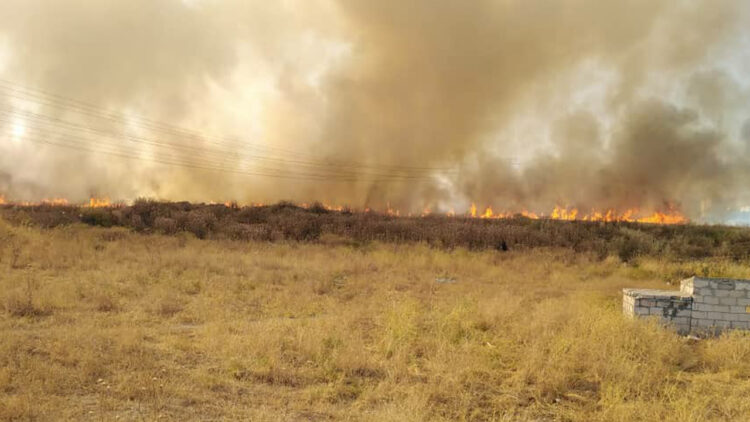
Turkey fired over 200 artillery shells into North and East Syria on 23 May alone, according to a report based on witness testimonies and local sources by Rise Up for Rojava (R4R), an international activist network supporting the autonomous administration in the region.
These attacks targeted not only civilian areas but also included another act considered a war crime under international law: the deliberate targeting of agricultural lands.
Throughout May, according to information gathered by R4R, Turkey and its allied forces bombed more than 30 locations. R4R claims these attacks specifically aimed to destroy agricultural lands. At least 500 hectares of crops and 18,000 olive trees were destroyed, a devastating blow to a region that relies heavily on agricultural production. In response, the local population is on high alert. The Civil Defense Forces (HPC), composed of militia groups, have set up observation points to monitor fires in agricultural areas. According to R4R, these observation points are necessary because Turkey and the armed groups it supports have been setting fire to agricultural lands along the front lines. The burning of fields near Zarghan village in Hesekê (Al Hasakah) canton is cited by R4R as the work of Turkey-backed groups.
R4R interprets these developments as Turkey’s efforts to destabilise Autonomous Administration of North and East Syria (AANES) ahead of the elections on 11 June, speculating that Turkey might attempt to sabotage the process. Devlet Bahçeli, the leader of Erdoğan’s key ally, the Nationalist Movement Party (MHP), has called on the Erdoğan government to collaborate with Bashar al-Assad against the People’s Defence Units (YPG). This call may be influenced by Assad’s recent statements opening the door for dialogue.
There is no strong indication yet of a major attack planned by Erdoğan on the autonomous regions before the summer of 2024. However, Bashar al-Assad’s positive statements about setting a date for a political resolution could open the door for a de facto dialogue with the AANES. This potential for a political solution might push Erdoğan to do more than just destabilise the region.
In May 2023, Turkey left a four-party meeting in Moscow without achieving its goals and decided to expedite its plans for establishing a buffer zone. Ankara’s condition for starting a political resolution process with Damascus was the dissolution of the AANES under the joint management of Turkey and Syria. However, this proposal was not met favourably by Damascus. As a result, the Erdoğan government opted to escalate attacks to destabilise the region. Over the past year, Turkish Armed Forces have been responsible for civilian deaths in both Syria and the Kurdistan Region of Iraq due to drone strikes.
In October, the Erdoğan administration saw the unrest in the city of Deir ez-Zor as an opportunity to further its buffer zone plans. The government, through official state media and pro-government news outlets, kept the unrest in the spotlight to deepen the conflict.


