

Sütun 1
Sütun 2
Sütun 3
Medya News
Daily News
Breaking News
Subscribe
No Result
View All Result
  • Home
  • All News
  • Opinion
  • Kurdistan
  • Women
  • Politics
  • Human Rights
  • INTERVIEW
  • More
    • SPECIAL REPORTS
    • ECOLOGY
    • WORLD
    • AUDIO ARTICLES
    • JOURNALISM
    • ECONOMY
    • CULTURE & ART
    • LONG READS
    • NEWSLETTER
    • DAILY NEWS
MULTIMEDIA
PODCAST
LIVE BLOG
  • Home
  • All News
  • Opinion
  • Kurdistan
  • Women
  • Politics
  • Human Rights
  • INTERVIEW
  • More
    • SPECIAL REPORTS
    • ECOLOGY
    • WORLD
    • AUDIO ARTICLES
    • JOURNALISM
    • ECONOMY
    • CULTURE & ART
    • LONG READS
    • NEWSLETTER
    • DAILY NEWS
MULTIMEDIA
PODCAST
No Result
View All Result
Medya News

Towards a new social contract: Öcalan’s vision for a democratic constitution

As Turkey reopens the constitutional debate, Öcalan’s references to the 1921 Law and the Kurdish Reform Proposal draw attention to long-buried legal traditions which defined sovereignty as unconditionally resting with the people.

4:34 pm 30/05/2025
A A
Towards a new social contract: Öcalan’s vision for a democratic constitution
Share post

Abdullah Öcalan’s recent call for a ‘new social contract’ has reignited the long-standing debate over constitutional reform in Turkey. Following his historic ‘Call for Peace and Democratic Society’, issued in February 2025, recent developments have refocused attention on the resolution of the Kurdish issue and the democratisation of the country.

Related Article:

Rethinking coexistence in Turkey: Öcalan’s call for a new Social Contract

During a meeting with the İmralı Delegation of the pro-Kurdish Peoples’ Equality and Democracy (DEM) Party on 18 May, Öcalan stressed the need for a legal framework to guide Kurdish–Turkish relations and reaffirmed the necessity of a new constitutional arrangement. His remarks prompted responses from senior government figures. AKP Deputy Chairman Efkan Ala described the current constitution as a remnant of the politics of the coup era, and President Recep Tayyip Erdoğan subsequently announced that efforts were underway to replace what he termed the ‘shame of the coup constitution’.

Related Articles:

Abdullah Öcalan calls for ‘new social contract’ following İmralı meeting

Erdoğan announces commission of ten lawyers to draft new constitution

The idea of constitutional reform has long featured in Öcalan’s political thinking. Throughout the 2013 to 2015 peace process, he repeatedly called for a new legal framework. Central to his proposal was a return to the 1921 Constitution, alongside the “Kurdish Reform Proposal”, both of which, he argued, could serve as building blocks for a more democratic and pluralistic political order.

Revisiting Öcalan’s constitutional proposal

Öcalan’s vision has been revisited in a recent article by journalist Özgür Paksoy, published by Mezopotamya Ajansı, in which he explores the relevance of the 1921 Constitution to current constitutional debates. In his review of Öcalan’s past proposals, Paksoy outlines how the imprisoned Kurdish leader consistently highlighted the 1921 Constitution as a model for inclusive governance. According to Paksoy, Öcalan regarded this 1921 founding document as the only legal text in Turkish history that recognised cultural and ethnic plurality, offering space for regional autonomy and multi-ethnic governance.

Paksoy emphasises that Öcalan viewed the 1921 Constitution not merely as a legal artifact but as a political tool capable of addressing structural problems in Turkish society, especially the Kurdish issue. During the 2013 to 2015 peace negotiations, Öcalan suggested that this foundational document could inspire a constitutional framework rooted in decentralisation and cultural inclusion.

Importantly, Paksoy reports that Öcalan drew comparisons to multinational constitutional arrangements elsewhere, particularly citing the Spanish Constitution, which provides for autonomous regional governments. He called for similar constitutional guarantees in Turkey that would ensure legal protections for cultural organisation, education and political participation based on distinct community identities.

A forgotten framework: The Kurdish reform proposal

In addition to the 1921 model, Paksoy notes Öcalan’s insistence on what he called the ‘Kurdish Reform Proposal’, a 20-article document drafted in earlier years that promotes cultural and political rights for all of Turkey’s communities. Öcalan argued that national unity should not require cultural uniformity, and instead proposed a citizenship model that affirms the legitimacy of diverse historical and ethnic identities.

The relevance of the Kurdish Reform Proposal is further illuminated by commentary from authors including Ümit Kardaş and Murat İnceoğlu. As Kardaş explains, the proposal was brought before the Turkish Grand National Assembly in 1922 and included measures for local Kurdish governance, bilingual education and cultural rights. Though it was approved, it was later erased from official records, reflecting the central state’s discomfort with decentralisation. İnceoğlu notes that this episode remains a critical yet suppressed moment in the constitutional history of the republic.

The 1921 law as a blueprint for pluralism

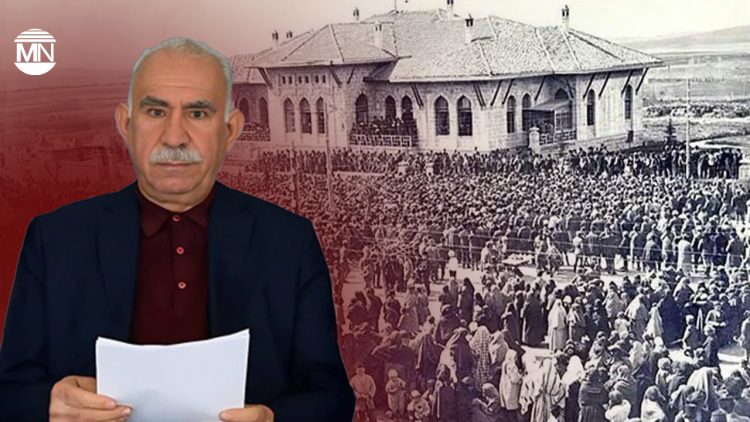
A clearer understanding of the historical context and political intent behind the 1921 legal text helps explain its relevance today, particularly in a moment when a half-century of armed conflict has given way to calls for peace and a democratic, inclusive state. Although commonly referred to as a constitution, the document was originally titled the Law on Fundamental Organisation (Teşkilat-ı Esasiye) and adopted in January 1921 by the first Grand National Assembly in Ankara during the War of Independence*. At the time, Ottoman state officials loyal to the Sultan in Istanbul sought to dismantle the emerging Ankara-based movement. The 1921 law signalled a break from imperial rule and aimed to legitimise power through popular will.

Unlike the period following the republic’s declaration in 1923, which entrenched Turkish nation-state identity, Ankara’s earlier leadership sought to represent a broader concept of popular will. Figures like Mustafa Kemal actively sought public legitimacy, engaging with both Sunni religious leaders, Alevi-Bektashi communities, as well as Kurds. In this context, the name of the 1921 law was itself a political gesture. Naming it the Law on Fundamental Organisation underlined the intention to create a legal framework not merely for state institutions, but for a new political order based on the collective will of various communities. It aimed to provide a legal foundation for a pluralistic order made up of various political and religious communities. In practice, the 1921 law served as the de facto constitution of the resistance, operating within the Ottoman legal tradition of 1876 (amended in 1909) and enabling Ankara to exercise pluralist republican authority before the formal establishment of the republic.

As constitutional debates resurface in Turkey, revisiting the pluralist foundations of the 1921 law and Öcalan’s proposals offers more than historical reflection. It brings renewed attention to a legal vision rooted in the very first clause of the 1921 Law: “Sovereignty rests unconditionally with the people.” (Egemenlik kayıtsız şartsız milletindir) This foundational principle, once used to legitimise a resistance against imperial rule, now resonates in efforts to establish an inclusive and participatory constitutional order.

Whether this moment will lead to meaningful reform depends not only on political negotiations, but on the willingness to engage with the democratic impulses embedded in Turkey’s own legal and historical legacy.

* Erik Jan Zürcher, Turkey: A modern History, I.B. Tauris, 2004.


Share post
Tags: 1921 ConstitutionAbdullah ÖcalanConstitutional reformDEM Partyjudicial reformKurdish IssueKurdish Reform ProposalKurdish Rightslegal historyMurat İnceoğluÖzgür PaksoyPeoples’ Equality and Democracy PartyPluralismpolitical inclusionsovereigntyTeşkilat-ı Esasiyethe Law on Fundamental OrganisationTurkish ConstitutionTurkish RepublicÜmit Kardaş

Related Posts

After the war the crackdown: in this week’s Kurdish news

After the war the crackdown: in this week’s Kurdish news

June 29, 2025
Turkey’s Pro-Kurdish DEM Party delegation engages US officials on peace, democratic reforms

Turkey’s Pro-Kurdish DEM Party delegation engages US officials on peace, democratic reforms

June 29, 2025
Mezopotamya Cultural Centre opens new İstanbul venue on 35th anniversary

Mezopotamya Cultural Centre opens new İstanbul venue on 35th anniversary

June 29, 2025
Sayın: Only Öcalan’s model can resolve war driven by corridor competition

Sayın: Only Öcalan’s model can resolve war driven by corridor competition

June 29, 2025
Kurdish politician says regional unrest urges Turkey to resolve internal conflicts

Kurdish politician says regional unrest urges Turkey to resolve internal conflicts

June 29, 2025
EPF condemns repression of activists in Iran; Reports highlight heavy impact on Kurds

EPF condemns repression of activists in Iran; Reports highlight heavy impact on Kurds

June 28, 2025

The news content on our website cannot be quoted without permission, even by citing the source. It cannot be copied or published elsewhere, contrary to the law or without permission.

Follow Medya News

Categories

  • All News
  • Politics
  • Human Rights
  • Opinion
  • Kurdistan
  • Human Rights
  • Interview
  • Women
  • Audio Articles
  • Special Report

Quick Menu

  • Daily News
  • Live Blog
  • Podcast
  • Videos
  • Breaking News

About

Impressum

About us

Privacy Policy

Welcome Back!

Login to your account below

Forgotten Password?

Retrieve your password

Please enter your username or email address to reset your password.

Log In
We use cookies on our website to give you the most relevant experience by remembering your preferences and repeat visits. By clicking “Accept All”, you consent to the use of ALL the cookies. However, you may visit "Cookie Settings" to provide a controlled consent.
Cookie SettingsAccept All
Manage consent

Privacy Overview

This website uses cookies to improve your experience while you navigate through the website. Out of these, the cookies that are categorized as necessary are stored on your browser as they are essential for the working of basic functionalities of the website. We also use third-party cookies that help us analyze and understand how you use this website. These cookies will be stored in your browser only with your consent. You also have the option to opt-out of these cookies. But opting out of some of these cookies may affect your browsing experience.
Necessary
Always Enabled
Necessary cookies are absolutely essential for the website to function properly. These cookies ensure basic functionalities and security features of the website, anonymously.
CookieDurationDescription
cookielawinfo-checkbox-analytics11 monthsThis cookie is set by GDPR Cookie Consent plugin. The cookie is used to store the user consent for the cookies in the category "Analytics".
cookielawinfo-checkbox-functional11 monthsThe cookie is set by GDPR cookie consent to record the user consent for the cookies in the category "Functional".
cookielawinfo-checkbox-necessary11 monthsThis cookie is set by GDPR Cookie Consent plugin. The cookies is used to store the user consent for the cookies in the category "Necessary".
cookielawinfo-checkbox-others11 monthsThis cookie is set by GDPR Cookie Consent plugin. The cookie is used to store the user consent for the cookies in the category "Other.
cookielawinfo-checkbox-performance11 monthsThis cookie is set by GDPR Cookie Consent plugin. The cookie is used to store the user consent for the cookies in the category "Performance".
viewed_cookie_policy11 monthsThe cookie is set by the GDPR Cookie Consent plugin and is used to store whether or not user has consented to the use of cookies. It does not store any personal data.
Functional
Functional cookies help to perform certain functionalities like sharing the content of the website on social media platforms, collect feedbacks, and other third-party features.
Performance
Performance cookies are used to understand and analyze the key performance indexes of the website which helps in delivering a better user experience for the visitors.
Analytics
Analytical cookies are used to understand how visitors interact with the website. These cookies help provide information on metrics the number of visitors, bounce rate, traffic source, etc.
Advertisement
Advertisement cookies are used to provide visitors with relevant ads and marketing campaigns. These cookies track visitors across websites and collect information to provide customized ads.
Others
Other uncategorized cookies are those that are being analyzed and have not been classified into a category as yet.
SAVE & ACCEPT

Add New Playlist

Contact

[contact-form-7 id=”18690″ title=”Contact form 1″]

[email-subscribers-form id=”1″]

No Result
View All Result
  • All News
  • Kurdistan
  • Women
  • Politics
  • Human Rights
  • Interview
  • Long Reads
  • World
  • Journalism
  • Ecology
  • Economy
  • Culture & Art
  • Daily News
  • Breaking News
  • Newsletter
  • Opinion
  • Authors
  • Podcast
  • LIVE BLOG

© 2020 Medyanews. All Rights Reserved