

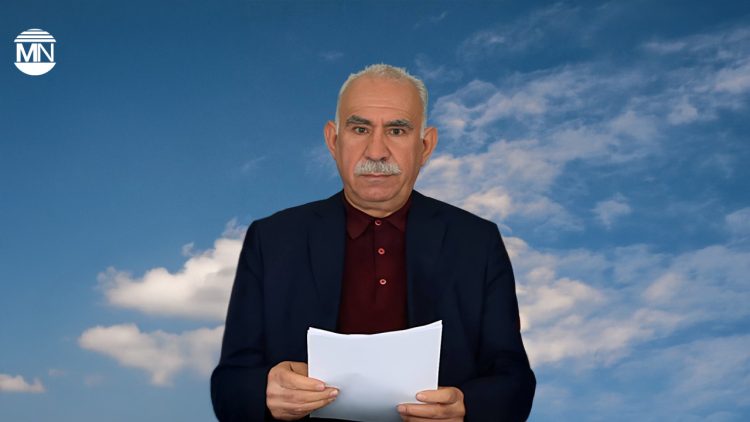
Abdullah Öcalan, the imprisoned Kurdish leader and founder of the Kurdistan Workers’ Party (PKK), has issued a public message from İmralı Prison, calling for “a new social contract based on the law of brotherhood.” The statement follows a visit by a pro-Kurdish political delegation and comes amid renewed efforts to revive peace talks between the Turkish state and the Kurdish movement.
The statement was shared on 18 May by a delegation from the pro-Kurdish Peoples’ Equality and Democracy (DEM) Party, whose members Pervin Buldan and Faik Özgür Erol met with Öcalan at the high-security İmralı Island Prison. It marked the fifth such contact since the current round of peace talks began.
“There is a need for a new social contract based on the law of brotherhood,” Öcalan said. “What we are doing reflects a major paradigm shift. The nature of the Turkish-Kurdish relationship is unique—what has broken is the bond between brothers.”
He added that this transformation is not confined to the Kurdish issue alone, but should be seen as an effort to democratise Turkey more broadly. “We are not simply addressing a Kurdish issue. We are laying the foundations for a broader democratic solution for all peoples of Turkey,” he said.
Öcalan also paid tribute to Sırrı Süreyya Önder, a former parliamentarian and key figure in both earlier and ongoing peace initiatives, who died recently after suffering a heart attack. “I deeply regret not being able to speak with him one last time,” Öcalan said. “He was a wise figure for Turkey. We will not allow his absence to be felt.”
He also expressed appreciation for international solidarity, thanking philosophers Alain Badiou and Slavoj Žižek by name for their messages of support. “I hope to meet in shared internationalist and socialist efforts,” he said.
Addressing the wider public, Öcalan called on all sides to approach the current process with seriousness and dignity, urging “patience, wisdom, and calm” during a delicate phase. He noted that historical opportunities were often missed due to political recklessness and narrow calculations, adding: “This time, we must not fail.”


