

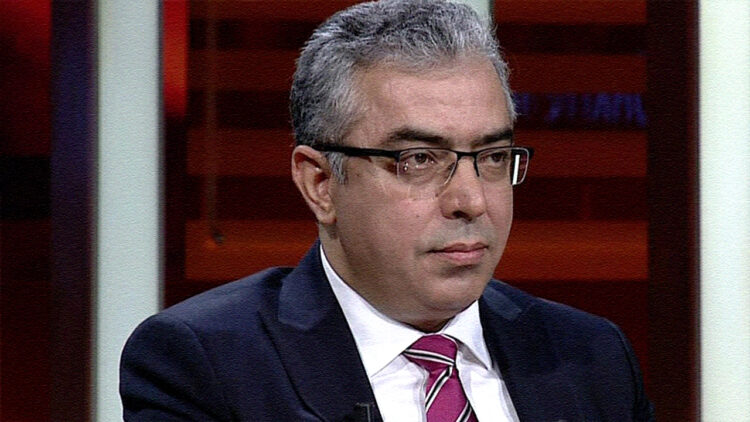
Mehmet Uçum, a senior advisor to the Turkish president, defended Turkey’s stance against Kurdish autonomy movements, calling them “paid paramilitary forces” used by foreign powers like the United States to destabilise Turkey.
Writing on social media platform X on Sunday, Uçum framed recent Turkish military attacks in North and East Syria and Iraq as essential steps to secure Turkey’s national unity, asserting that Kurdish groups allegedly linked to the Kurdistan Workers’ Party (PKK) lack legitimacy within Turkey’s democratic framework. He described Turkey’s counter-terrorism policy as a “historical window” of opportunity that must not be compromised by negotiation, suggesting that any appearance of “terrorist” legitimacy among Kurdish groups was an illusion that would soon “dissipate”.
Uçum argued that Kurdish self-governance movements are a “manipulation of Kurdish identity” designed to destabilise Turkey. He contended that foreign powers, particularly the US, seek to exploit Kurdish populations for geopolitical ends by funding and arming groups he labelled as “imperialist paramilitary forces”. This view supports Turkey’s broader strategy of rejecting separate approaches for operations in Syria and Iraq, framing both regions as extensions of Turkey’s internal policy. In Sinjar (Şengal), a Yazidi-majority area that has established an autonomous administration, Uçum criticised local governance as a “threat” to Turkey’s territorial integrity and national security.
Turkey’s DEM Party slams “evil” presidential advisor for dismissing possibility of peace process
Addressing Nationalist Movement Party (MHP) leader Devlet Bahçeli’s recent hypothetical suggestion that imprisoned PKK leader Abdullah Öcalan may someday speak in Turkish Parliament, Uçum downplayed the remark, characterising it as an “extreme analogy”. Uçum insisted that Turkey’s strategy of eliminating armed Kurdish groups does not involve negotiation or peace talks, only “total elimination”. He clarified that Bahçeli’s “right to hope” comment was contingent on “the complete disbanding of the PKK” and an end to all armed resistance against the Turkish state, emphasising that Turkey’s anti-terror policy under the Republic Alliance prioritises military force over any form of political compromise.
Uçum went further to outline a vision for a “terror-free” Turkey, claiming that true stability would open the way for Turkey to implement a new constitution embodying democratic ideals and the unity of “Turkish and Kurdish citizens” under a strengthened Republic. He cited President Erdoğan’s call to maintain the “historical window of opportunity” created by the Republic Alliance, framing it as a national duty that transcends individual agendas. His statement ends by affirming that Turkey’s uncompromising stance will lead to a nation free from “terrorist” threats.
In his closing remarks, Uçum framed the ideal of a “terror-free” Turkey as essential for ensuring that Kurdish communities align with state-defined national values, positioning Turkey as a leader in stabilising the region against any threats that challenge its “territorial integrity”.
From communist roots to conservative nationalism: Uçum’s journey into Erdoğan’s inner circle
Mehmet Uçum had a leftist and even communist background earlier in his career. He was once affiliated with the Communist Party in Turkey and reportedly involved in the United Communist Party of Turkey (TBKP) after its merger with the Workers Party of Turkey in the late 1980s. His legal work in those years included advocating against state abuses like torture and enforced disappearances, and he even participated in efforts for human rights under the İstanbul Bar Association.
However, Uçum’s political stance shifted significantly over the years. In the early 2000s, he aligned himself with Erdoğan’s Justice and Development Party (AKP) and later became one of the chief architects behind the presidential system introduced by the 2017 constitutional amendments, designed to consolidate power within the executive branch. Since joining the AKP, Uçum has taken a notably conservative-nationalist stance, often critiquing Western influences and supporting Turkey’s security policies, including harsh measures against Kurdish groups. His transformation from a Marxist-Leninist background to a pro-establishment advisor has sparked discussions on how his ideological stance evolved to align with Erdoğan’s administration.
Uçum is not alone in representing a unique cadre within the Turkish government: former leftists who once challenged state structures and Western influence but who now support President Erdoğan’s nationalist and anti-Western policies. Doğu Perinçek, a veteran nationalist with a leftist background, is another prominent figure who embodies this shift.
In the 1970s and 1980s, figures like Uçum and Perinçek were associated with anti-imperialist and leftist movements critical of NATO and US influence in Turkey. Perinçek, for example, was known for his anti-Western stance within the Maoist-inspired Workers’ Party of Turkey and has historically positioned himself as a critic of both Western capitalism and Turkish elites aligned with Western interests. However, in recent years, Perinçek’s views, too, have aligned closely with Erdoğan’s administration, especially on issues concerning Kurdish autonomy and Western influence, which he now sees as threats to Turkish sovereignty.
While Uçum doesn’t explicitly reject Devlet Bahçeli’s ‘extreme’ proposals, such as Abdullah Öcalan hypothetically addressing Parliament, he frames these ideas within the rigid boundaries of national security and anti-terrorism. This approach aligns with Erdoğan’s strategy, wherein Bahçeli, an ultranationalist, serves as a key ally who helps shape a strong nationalist narrative for public opinion. Uçum refines and reinforces this by framing these extreme ideas as conditional on an absolute dismantling of armed Kurdish groups and total submission to state authority.
Erdoğan appears to leverage Bahçeli’s hardline stance to appeal to nationalist sentiments without fully committing to the radical elements of Bahçeli’s rhetoric. In this dynamic, Uçum acts as the strategist who legitimises these ideas within a nationalist framework, softening the potential backlash by making such concessions appear as theoretical or contingent. For example, Uçum’s insistence that any “right to hope” is only possible after the complete dissolution of the PKK subtly signals alignment with Bahçeli’s stance without directly endorsing all of its implications.


