

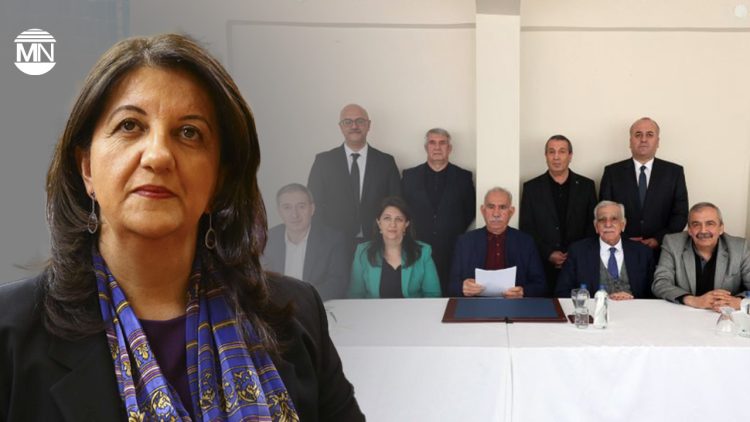
“This is the last chance. Turks, Kurds, women, young people—let us all embrace the ‘Call for Peace and a Democratic Society’,” said pro-Kurdish Peoples’ Equality and Democracy (DEM) Party MP Pervin Buldan in an interview with Rozerin Gültekin and Elfazi Toral of Jin News on Monday, as she conveyed details of the heartfelt message of Kurdistan Workers’ Party (PKK) leader Abdullah Öcalan from his prison in Turkey. Buldan, a seasoned politician and member of the İmralı Delegation, a shuttle delegation between İmralı Prison and political leaders outside, shared insights from the delegation’s recent meetings with Öcalan, shedding light on his vision for Turkey’s future.
After a decade-long hiatus in peace talks, the İmralı Delegation resumed dialogue with Öcalan on 28 December. Buldan, who had previously visited İmralı Prison 33 times during the previous talks between 2011 and 2015, described the role of delegate as “a sacred duty”, and talked of the significance of contributing to Turkey’s peace process. “Being part of the delegation at a time when peace seems so close was truly gratifying for me,” she said.
The delegation’s subsequent visits, on 22 January and 27 February, included key political figures and legal representatives. These meetings aimed to foster dialogue and explore avenues for a peaceful resolution to the longstanding Kurdish question.
Central to Öcalan’s message is the cessation of conflict and the establishment of a democratic society. He stressed the importance of a building a Turkish-Kurdish alliance, drawing parallels to historical collaborations during the early years of the republic. Buldan: “He said that war benefits no one, all it does is repeat itself endlessly. He said that now is the time for democratisation, for a democratic society, and that it is important for Turks and Kurds to work together at this time towards a shared future.”
Buldan noted that Öcalan had been surprised at and appreciative of the supportive stance of Devlet Bahçeli, leader of the far-right Nationalist Movement Party (MHP). “He stressed that his approach was significant and expressed his gratitude,” she said. Öcalan viewed Bahçeli’s shift as indicative of broader potential transformation within Turkish politics, stating, “If Mr Bahçeli has changed, then anyone in Turkey can change and transform.”
Öcalan addressed the alarming rates of femicide and violence against women in Turkey, expressing deep sorrow over these incidents and stressing the need to combat the underlying mindset that perpetuates such violence. “He said that we need to fight against this mindset, to prevent femicides and child murders,” Buldan noted. She also said that Öcalan’s International Women’s Day message, to be read out publicly, is to be “a milestone, a renaissance for women”.
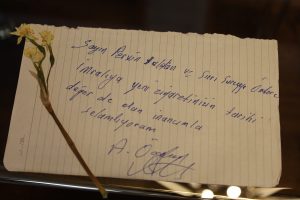
Öcalan stressed that for there to be meaningful progress there must be synchronised steps on all sides and comprehensive legal and judicial reforms. He warned that without a solid legal framework, calls for peace would lack substance, Buldan: “He said, ‘Without a legal framework and judicial foundation, this call will just be meaningless.'” The delegation echoed this sentiment, urging the government to take bold and sincere action to facilitate the peace process.
Buldan spoke of the delegation’s engagement with leaders from South Kurdistan, officially known as the Kurdistan Region of Iraq (KRI), as they extended their efforts beyond Turkey. Both KRI President Nechirvan Barzani and Kurdistan Democratic Party (KDP) leader Masoud Barzani responded positively to the messages conveyed by the delegation, expressing full support for the peace initiative. They agreed that weapons are not a solution in the modern era, advocating for a democratic and lawful system benefitting all, and the Kurds in particular. The delegation conveyed Öcalan’s appreciation for their support, noting the importance of regional backing for the peace process.
Buldan reflected on the emotional weight of delivering Öcalan’s historic call. She described the experience as both significant and valuable, highlighting the profound impact of the message, and stressing the importance of seizing this opportunity to end decades of suffering and loss, which could help create a future where all citizens could coexist peacefully. “As I read this, such a significant historic call, I kept imagining one thing: people will no longer die. That is what matters most to us,” she said.


