

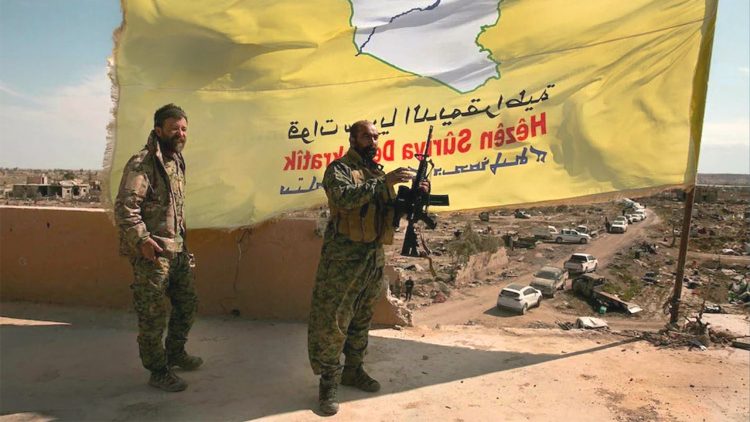
The Syrian Democratic Forces (SDF) have launched a significant counteroffensive near the Tishreen Dam, reclaiming strategic areas from Turkish-backed Syrian National Army (SNA) forces amid ongoing clashes, announced by SDF spokesperson Farhad Shami on Monday.
Shami detailed the developments through multiple updates, revealing the extent of the SDF’s operations. “During the counterattack conducted this morning by the Manbij (Minbîc) Military Council, our forces seized ten bodies of eliminated Turkish occupation mercenaries, captured one, and destroyed five military vehicles belonging to the Turkish occupation mercenaries,” Shami stated on X, formerly Twitter.
The SDF also reported destroying a tank near Manbij and several other military vehicles near the Tishreen Dam. The clashes are ongoing, with the SDF taking the offensive for the first time after weeks of defensive posturing.
The Tishreen Dam, located on the Euphrates River, is vital for the region, providing electricity and water to millions. Recent attacks by Turkish-backed forces have damaged its structure, disrupting services. UNICEF warned that at least two million residents in Aleppo and its eastern countryside are experiencing severe water shortages, exacerbated by the dam’s compromised status and the suspension of critical water stations. The SDF’s counteroffensive comes as a response to Turkish-backed forces attempting to capture the dam and surrounding areas, including strategic crossings such as the Qara Quzak (Qere Qozaq) Bridge.
The Rojava Information Center (RIC) has provided further insight into the deteriorating situation, highlighting the broader implications of the conflict. According to the RIC, the SDF’s counteroffensive has retaken several villages between the Euphrates River and Manbij city. “The situation of the fight has changed,” an SDF source told RIC. “The Manbij Military Council has begun attacking the SNA. We are no longer operating from a defensive position. We have also re-taken several positions.”
This shift underscores the SDF’s determination to push back against what it perceives as aggression by Turkish-backed forces, which the SDF accuses of systematic human rights violations and attempts to force demographic changes in the region.
The conflict is not only military in nature but also has a profound impact on civilians. In SNA-controlled Manbij, conditions have reportedly worsened, with abuses by SNA factions leading to tribal uprisings. The RIC documented the rape of a seven-year-old girl by members of the Suleiman Shah faction, leading to retaliation by the al-Bubna tribe. Rights groups, including Hevdesti/Synergy, have recorded extra-judicial executions, looting, and other violations by SNA factions, including those led by US-sanctioned figures such as Abu Amsha and Abu Bakir. The ongoing clashes have caused widespread displacement, with families fleeing violence only to face dire conditions in overcrowded shelters.
Solin, a displaced resident from Shehba (Şehba), shared her story with the RIC, describing the misery of shelter life. “We arrived with nothing. My daughters help me stand, but even buying medicine feels impossible,” she said. Rights groups have repeatedly called for immediate humanitarian aid, warning of an impending disaster should fighting escalate further. UNICEF has also highlighted the risk of another wave of displacement, particularly if Kobani (Kobanê) comes under attack.
Amed Dicle, a Kurdish journalist, offered a detailed analysis of the military situation and its broader implications. According to Dicle, the SDF’s counteroffensive near Manbij is part of a broader strategy to prevent Turkish-backed forces from encircling Kobani and gaining further territorial leverage. Dicle explained that the Turkish-backed forces, despite their aggressive tactics, have faced significant setbacks, including the loss of personnel and morale. He pointed to the SDF’s strategic use of tunnels, air surveillance, and targeted strikes to disrupt the SNA’s operations. “The psychological advantage lies with the SDF,” Dicle noted, adding that the SNA factions are increasingly questioning their role in the conflict, given their diminishing gains and mounting losses.
The SDF has named its counteroffensive in Manbij the “Martyr Aziz Arab Campaign”, honouring a local fighter who died in previous clashes. This operation aims not only to secure the Tishreen Dam but also to address calls from Manbij’s residents for liberation from SNA factions. The RIC reported growing discontent among the local population, with tribes such as Bin Asid openly opposing the SNA’s presence and vowing resistance against further violations.
The broader geopolitical context further complicates the situation. The United States, which brokered a temporary ceasefire, has been criticised for its inability to enforce compliance. While the SDF adhered to the terms, Turkey denied any agreement, continuing its military operations. Ankara considers the People’s Protection Units (YPG), the backbone of the SDF, as an extension of the Kurdistan Workers’ Party (PKK), which it designates as a terrorist organisation. This accusation has been a central justification for Turkey’s actions in northern Syria, despite widespread condemnation from international human rights organisations.
As the conflict intensifies, the stakes remain high. Strategic military targets like Tishreen Dam are lifelines for millions of civilians. The SDF’s counteroffensive, while successful in reclaiming key positions, underscores the fragile balance in the region, where infrastructure, human rights, and lives hang in the balance. Farhad Shami summed up the urgency of the situation, stating, “The counterattack is still ongoing across multiple axes.”
The evolving dynamics, as documented by the RIC and corroborated by independent analysts such as Amed Dicle, reflect the complexity of the conflict. The SDF’s resilience, coupled with growing civilian resistance against the SNA, signals a prolonged and challenging battle ahead. However, without immediate international intervention to address the humanitarian crisis and ensure the protection of vital infrastructure, the consequences could be devastating for the region.


