Peter M. Johansen
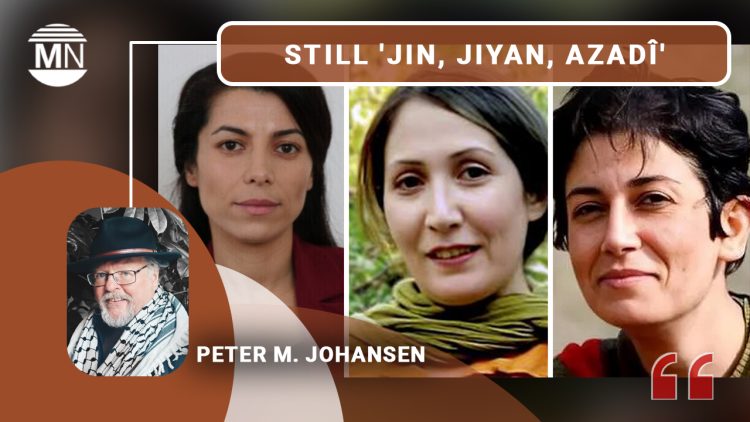
Amnesty International has issued a high-level alert concerning the precarious situation of three Kurdish women activists—Warisheh Moradi, Pakhshan Azizi, and Sharifeh Mohammadi—coinciding with International Women’s Day. Echoing this concern, Nobel Peace Laureate Shirin Ebadi made a compelling plea during the European Parliament’s EUTCC conference, advocating for international intervention. This appeal is rendered all the more urgent by escalating geopolitical tensions involving Iran, the United States, and Israel, with a critical deadline imposed by former President Donald Trump looming over Tehran. The call to action is embedded not only in concerns for human rights but also in fears that the Iranian state may exploit international distractions to carry out irreversible punitive actions.
Movement under siege
The activists’ circumstances are considered life-threatening, with Amnesty calling for immediate and robust international action. The Iranian authorities have once again escalated their suppression of the “Woman, Life, Freedom” movement, known globally by its Kurdish rallying cry “Jin, Jîyan, Azadî” (Persian: “Zan, Zendegi, Azadi”). This popular movement has come to symbolise a broader resistance against authoritarianism, patriarchy, and ethnic marginalisation in Iran.
This movement emerged in direct response to the 16 September 2022 death of 22-year-old Kurdish woman Jina (Mahsa) Amini, who died in custody following her arrest by the morality police (Gašt-e Eršâd) for allegedly not wearing her hijab according to state-imposed standards. These standards remain arbitrarily defined and enforced by the morality police, a force only institutionalised in 2005. Amini’s death sparked widespread outrage not only within Iran but globally, and her name has since become a symbol of defiance.

In recent months, a surge in state executions has further exacerbated public fear, clearly aimed at deterring civic unrest amidst mounting regional tensions. Azizi, a humanitarian worker, has been sentenced to death for aiding women and children displaced by Daesh (Islamic State) in Syria. Her sentencing reflects the regime’s increasing criminalisation of humanitarian aid when provided by ethnic or political dissidents.
Warisheh Moradi, also known by her Kurdish name Ciwana Sine, is affiliated with the Free Women’s Community of Eastern Kurdistan (KJAR), the ideological successor to the Eastern Kurdistan Women’s Union (YJRK). The latter established a women’s self-defence force in 2010—Hêzên Jinên Rojhilatê Kurdistanê (HJRK)—which was later expanded into the Women’s Defence Forces (HPJ), providing both ideological education and military training for women resisting state oppression.
Moradi was detained at a checkpoint in Sanandaj (Sine) on 1 August 2023 and subsequently transferred to Ward 209 of Tehran’s infamous Evin Prison. Reports from the Kurdistan Human Rights Network, a France-based organisation, indicate she was subjected to torture while in custody. Moradi’s death sentence is tied to alleged membership in PJAK (Kurdistan Free Life Party), a group associated with the PKK and deemed terrorist by both the US and EU, although human rights defenders challenge such designations when used to justify executions.

Abdul Rahman Haji Ahmadi, PJAK’s co-chair, died in exile in Cologne on 18 March at the age of 84. He was never extradited, despite the organisation’s proscription, reflecting a long-standing dispute between European human rights frameworks and anti-terrorism listings.
8 March testimonies
Moradi and Azizi have publicly testified—through a jointly authored open letter—to enduring torture, threats of execution, and gender-based violence in detention. Their testimonies are chilling in detail and provide first-hand insight into the systemic use of gendered repression. Sharifeh Mohammadi has reported similar treatment and also faces the death penalty.
On International Women’s Day, multiple imprisoned Iranian women—including Narges Mohammadi, 2023 Nobel Peace Prize laureate—issued letters stressing the indispensable role of women in Iran’s social and political struggles. These letters were circulated internationally, amplifying the voices of imprisoned activists and drawing connections between local struggles and universal human rights.
They appealed for international mobilisation against capital punishment, particularly for female detainees whose arrests often intersect with their ethnic and political identities. In a statement disseminated by Medya News, Moradi addressed:
“All revolutionary and visionary women worldwide,” affirming her belief in a growing transnational feminist movement: “Wherever I look, I see the scent of women’s victories.”
Citing the deepening crises across the Middle East, she linked the death sentences facing herself and fellow activists to a broader campaign against resistance. She called upon the international feminist movement to recognise these executions as part of a wider suppression of dissent.
She invoked the symbolic significance of prison as both a site of repression and a crucible for ideological resilience: “Prisons have become schools of thought, fortresses of resistance.” She rejected passive suffering, insisting on the ethical necessity of continued defiance: “To see the pain in the eyes of the oppressed and retreat would betray the historical imperative of our struggle.” Moradi affirmed unwavering solidarity with the “Jin, Jiyan, Azadî” ethos and the broader resistance linked to 8 March. She stressed the timeless, borderless nature of the struggle for women’s emancipation, arguing that every corner of the world shares in the responsibility to support freedom movements.
Dual laureates: Ebadi and Mohammadi
Shirin Ebadi addressed the 19th International Conference on the EU, Turkey, the Middle East, and the Kurds in Brussels with a renewed plea to halt the executions and secure the release of the three Kurdish women and Narges Mohammadi, who is currently on medical furlough from Evin. Her intervention reaffirmed her ongoing role as an international voice for justice in Iran.
Ebadi was awarded the Nobel Peace Prize in 2003 for her foundational work in advancing democracy and the rights of women, children, and refugees—becoming the first Muslim woman and the first Iranian to be so honoured. Her legal and academic work has laid the foundation for multiple generations of human rights defenders.
Her successor, Mohammadi, received the 2023 Prize for her leadership in civil disobedience opposing the compulsory hijab, the chador, and the broader apparatus of Iran’s morality policing. She currently serves as vice-president of the Centre for the Defence of Human Rights (DHRC), established in 2002 under Ebadi’s leadership. Together, these laureates represent a legacy of resistance from within the carceral boundaries of the Islamic Republic.
Gender apartheid and ethnonationalism
Ebadi, living in exile in London since 2009, continues to monitor developments in Iran, particularly the regime’s persecution of Kurdish women. “The regime assaults Kurds not only within Iran but across its borders,” she said. “Is it a crime to be Kurdish? Why are Kurdish parents forbidden from giving their children Kurdish names?” Similar restrictions, she noted, are imposed on the Baluch people. These remarks underline how cultural erasure complements legal and physical repression.
According to Haji Ahmadi, the Kurdish women’s movement catalysed a broader feminist uprising that gained national scope in 2022. This mobilisation has since resonated among other marginalised ethnic groups including Ahwazi Arabs, Azerbaijanis, Baluchis, and Lurs. He voiced these insights at the Kurdistan National Congress (KNK) in Brussels—a key node of the PKK-aligned political network advocating Abdullah Öcalan’s democratic confederalism. KNK’s presence in Europe further illustrates the transnational dimensions of Kurdish resistance.
Ebadi further argued: “Democracy is not majoritarianism; it is the recognition of minority rights and the dignity of the politically defeated.” This perspective cuts to the heart of liberal democratic theory and demands international accountability for regimes that disguise repression in procedural legality.
Mohammadi has declared that Iranian women live under “systemic gender apartheid” and that the state exercises all mechanisms of control to dominate women’s lives. Yet, women not only resist—they lead. “We seek democracy, freedom, and equality,” she affirms, concluding that genuine democracy is impossible without full gender inclusion. She also reminded the public of the global responsibility owed to the three Kurdish women facing capital punishment. Her message is one of hope but also of moral urgency.
Escalating ethnic tensions
The New Year (Newroz), falling this year on 21 March during Ramadan, prompted pre-emptive crackdowns by Iranian security forces. Officials feared that the regional instability exacerbated by US-Israel tensions would spark unrest. Kurdish activists were killed, and the state issued dire warnings against politicising New Year celebrations. The climate surrounding Newroz revealed the government’s broader anxiety about symbolic gatherings that blend cultural heritage with political expression.
Women’s rights groups in Sanandaj and Marivan, including the Kurdistan Women’s Alliance and Daykan Ashti (Mothers for Peace), were explicitly targeted. In West Azerbaijan, which is home to both Kurds and Azerbaijani Turks, pan-Turkic demonstrations emerged in the wake of Newroz. These events, allegedly orchestrated by security forces and the Islamic Revolutionary Guard Corps (IRGC), framed Kurds as “immigrants” in Urmia—a border city linking Iran with Azerbaijan, Iraq, and Turkey.
The atmosphere quickly turned incendiary. Demonstrators issued ethnically charged threats, with demands for state-sanctioned interventions against the Kurdish population. These tensions are not solely domestic; they are actively stoked by Ankara and Baku, whose pan-Turkic agenda intensified after Azerbaijan’s military victory over Armenia in Nagorno-Karabakh, a campaign decisively supported by Turkish drone warfare. The convergence of ethno-nationalist ambitions and state militarism threatens to regionalise what began as an internal human rights crisis.
On 22 March, approximately 100,000 demonstrators reportedly filled the streets of Urmia. The march was led by Nader Ghazipour, a former MP and former IRGC commander infamous for his anti-Kurdish rhetoric. His presence lent official endorsement to the hateful messages being disseminated.
Although law enforcement eventually intervened, they were criticised for enabling racist and fascist slogans. PJAK, in response, issued a statement rejecting extremism and advocating for coexistence and pluralism: “Peace, freedom, and mutual recognition are the only path forward.” Their statement extended beyond mere rhetoric—it proposed a vision of inclusive governance in stark contrast to the prevailing political order.
Komala, a Trotskyist organisation associated with the International Socialists, condemned the rallies as state-sponsored provocations aimed at destabilisation. It urged all groups—Kurdish and Turkic alike—to resist division and direct critique towards the Islamic Republic. Komala’s intervention reminds observers that internationalism and anti-sectarianism remain vital to any sustainable solution.
The Democratic Party of Iranian Kurdistan (KDPI), a historic offshoot of the Moscow-aligned Tudeh Party, also denounced the regime’s ethno-nationalist alignments and called for interethnic solidarity. Their statements served to reiterate the dangers of state-driven division and to promote grassroots unity in resistance.
Women’s rights groups in Sanandaj and Marivan, including the Kurdistan Women’s Alliance and Daykan Ashti (Mothers for Peace), were explicitly targeted.
Finally, a joint statement by multiple human rights bodies—including the Association for the Defence of Azerbaijani Political Prisoners in Iran (ADAP), the Kurdistan Human Rights Society, KHRN, and the Kurdpa Human Rights Organisation—called for collective vigilance against Tehran’s escalating “scorched-earth” policies in Urmia and beyond. These organisations highlight the urgent need for international observers, policymakers, and civil society to recognise the intersection of gender, ethnicity, and authoritarianism that defines the current moment in Iran.
*Peter M. Johansen is a Norwegian journalist and political analyst renowned for his decades-long work in international solidarity, particularly with the Kurdish cause. A dedicated voice for the Kurdish liberation movement, he collaborated closely with the late veteran activist Erling Folkvord. He has covered Middle Eastern politics with exceptional depth and integrity since the 1980s. As a veteran contributor to both mainstream and alternative platforms, Johansen has persistently foregrounded human rights, anti-imperialism, and stateless struggles. His analyses often bridge grassroots activism with global policy critique, and he remains one of Norway’s most respected intellectual voices in the defence of oppressed peoples’ self-determination.