

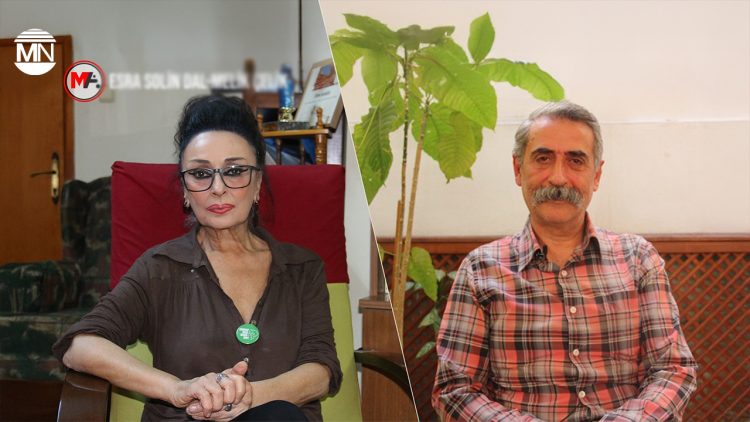
Human rights organisations and legal experts in Turkey have called for sweeping judicial reforms following the Kurdistan Workers’ Party’s (PKK) recent congress and a high-profile peace call from its jailed leader Abdullah Öcalan, warning that without legal guarantees, political progress could quickly stall.
Lawyer and long-time human rights advocate Eren Keskin described the moment as an opportunity to end decades of repression rooted in what she termed “enemy law” — a legal approach that criminalises political dissent and treats entire groups as hostile threats to the state.
“We have supported non-violent solutions from the beginning,” said Keskin. “Now the state must abandon the language and practice of hostility. This is a chance to transition to equal justice.”
Her comments followed the PKK’s announcement on 9 May that it had held its 12th congress between 5 and 7 May, in response to Öcalan’s February “Call for Peace and Democratic Society.” While the group did not reveal the full outcomes of the congress, it confirmed that Öcalan’s proposal for disarmament and transition to legal-political channels was discussed.
Keskin urged the Turkish government to act swiftly, starting with the release of political prisoners, especially those in poor health. She also called for the repeal of the country’s anti-terror legislation, which has been widely criticised for its broad definitions and frequent use against activists, journalists, and elected officials.
Ahmet Faruk Ünsal, a former member of Turkey’s “Wise Persons Committee” from the failed 2013–2015 peace process, echoed the call for state action. “We are at a turning point. The PKK has convened as requested. Now it is the state’s turn to act,” he said.
Ünsal added that Öcalan’s influence within the Kurdish movement remained vital and that conditions must be created for his continued communication with both the public and his political base. “Amnesty, mother-tongue education, and local governance rights must all be part of the solution,” he said.
Keskin also warned that without addressing the legal system, any peace process would remain vulnerable. She pointed to the continued imprisonment of thousands under anti-terror charges and highlighted the need for ‘equal sentencing rights’, meaning an end to discriminatory practices that deny political prisoners access to reduced sentences, parole, or early release.
The “enemy law” framework has long been criticised by rights defenders in Turkey for targeting groups associated with the Kurdish political movement. Under this model, detainees face harsher legal treatment, often without adequate evidence, and experience disproportionate punishments.
Keskin said real peace required the state to stop treating dissidents as enemies and to embrace the principles of rule of law. “Civil society must not remain silent. This is a time to raise the voice of peace and justice,” she added.
Turkey is a signatory to several international human rights treaties, but Keskin noted that its domestic laws often fall short of these obligations. “The justice system has collapsed because these commitments are not respected. If the government chooses to uphold them, this country can finally breathe,” she said.
The PKK’s congress and Öcalan’s statement have prompted guarded responses from government figures. While the ruling Justice and Development Party (AKP) has expressed willingness to consider the PKK’s next steps, no concrete reforms have yet been announced.
Observers say meaningful progress will depend not just on political dialogue but also on whether the Turkish state reforms the legal architecture that has underpinned decades of conflict.
Eren Keskin concluded that any failure to do so would undermine the fragile optimism sparked by the recent developments. “We are closer to peace than we have been in years,” she said. “But without justice, there can be no peace.”


