

A rare interview with Abdullah Öcalan has gained new prominence amid recent political discussions sparked by Nationalist Movement Party (MHP) leader Devlet Bahçeli’s call in parliament for a solution to the Kurdish question. The interview – conducted by journalist Mehmet Ali Birand in 1988 – provides insight into Öcalan’s long-standing focus on political solutions and underlines the Kurdistan Workers’ Party’s (PKK) willingness to engage in dialogue if genuine steps are taken by the Turkish authorities.
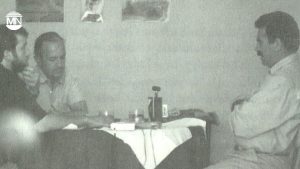
This renewed interest follows behind-the-scenes meetings between the Peoples’ Equality and Democracy (DEM) Party and Abdullah Öcalan, the Kurdish leader imprisoned in İmralı Island Prison since February 1999, as well as discussions with various political groups, civil society organisations and other Kurdish representatives. The PKK’s executive council also issued a statement yesterday hinting at possible announcements in the coming days. Political observers say these developments could mark a turning point in the resolution of Turkey’s decades-long conflict.
In the interview, Öcalan attributes the PKK’s armed struggle to what he describes as the Turkish state’s refusal to recognise Kurdish identity and its historical use of violence against the Kurdish population. He insists that the PKK does not “worship violence”, but has resorted to armed means in response to systematic oppression and forced assimilation policies.
"We are not in favour of solving problems through violence, We believe in the power of politics. We would stop armed actions immediately if there was a real dialogue and recognition of Kurdish rights".
He also argues that the PKK’s initial mobilisation was rooted in a deep sense of injustice, citing the state’s denial of the very existence of a Kurdish identity. Despite numerous military operations and widespread crackdowns over the years, Öcalan maintains that the fundamental aspirations of the Kurdish people – self-expression, cultural rights and equal political participation – remain unchanged.
Observers suggest that Öcalan’s statements, together with the PKK’s recent call for meaningful negotiations, signal a renewed willingness to move away from armed struggle if the Turkish government commits to inclusive political reforms. The DEM Party’s ongoing consultations with both Kurdish political groups and mainstream Turkish parties appear to be laying the groundwork for a peace process, even if it still lacks a formal framework.
"I am not saying, 'I worship this method in the marathon; I will use it until the end.' No. Our approach depends on how problems can be resolved. I firmly believe in the power of politics—politics should be seen as an elevating art, the main method for solving many problems. Especially in Turkey, where people often sneer, 'Is he a politician? Toss him aside, he’s worthless.' No, I strongly disagree. We need solid politicians to emerge. Politics must be recognised as a noble art. We need to have truly political approaches to these issues. And if that happens, we will certainly respond in kind, and there can be a good solution."
Expectations are high that Öcalan’s forthcoming statement will clarify whether dialogue can replace confrontation, a possibility further fuelled by Bahçeli’s parliamentary intervention. If these diplomatic manoeuvres bear fruit, analysts say Turkey could see its most significant steps towards peace in years.
As the Kurdish issue returns to the forefront of Turkish politics, Öcalan’s own words underline the crucial role that political engagement could play in resolving a conflict that has shaped the country’s modern history. All eyes are now on the next announcement, in the hope that it will pave the way for lasting peace and reconciliation.


