

Sofya Alağaş, the co-mayor of Siirt (Sêrt), has been sentenced to six years and three months in prison on charges of “membership in a terrorist organisation”, prompting an outcry among Kurdish political circles and human rights advocates who described the ruling as politically motivated. Alağaş, who previously worked as a journalist, said, “This country has no justice, and Kurds never had any,” after her conviction.
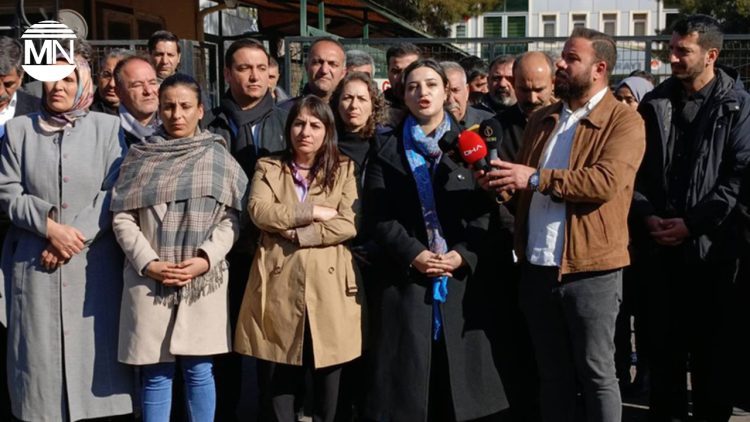
The verdict, delivered by the 5th Diyarbakır Heavy Penal Court on Monday, drew criticism from Alağaş’s lawyers, who argued that the trial was built on dubious evidence, including testimony from a controversial secret witness. Alağaş did not attend the court hearing, but members of the Democratic Regions Party (DBP), Peoples’ Equality and Democracy (DEM) Party, and her legal representatives were present to express solidarity.
Her lawyer, Resul Tamur, accused the court of conducting a politically driven trial, claiming the evidence was fabricated to silence Alağaş’s political and journalistic activities. “This is not a legal case but a political trial,” Tamur stated, noting that the prosecution had relied on the testimony of a secret witness who had previously admitted in another case to working for the state. Tamur described the proceedings as a violation of judicial norms, citing the irregular use of anonymous witnesses to justify the charges.
The ruling comes amid an intensifying crackdown on Kurdish political figures and journalists in Turkey. Alağaş’s legal team argued that the charges were based on her past journalistic work, which included articles critical of government policies on Kurdish issues and the isolation of imprisoned Kurdish leader Abdullah Öcalan.
Human rights organisations and Kurdish political leaders condemned the sentencing as part of a broader campaign to suppress dissent. Outside the courthouse, DEM Party MP Sabahat Sarıtaş called the ruling a “political coup”, vowing to continue the fight for justice. “We will resist this injustice. It’s clear this trial was not about the law but about silencing Kurdish political leaders,” Sarıtaş said.
The verdict has drawn the attention of international observers, with representatives from the German Embassy monitoring the trial, and organisations such as the Media and Law Studies Association (MLSA) criticising the decision as emblematic of shrinking press freedoms in Turkey. MLSA co-director Veysel Ok highlighted inconsistencies in the prosecution’s case, pointing to a rushed indictment and reliance on generic accusations linked to the outlawed Kurdistan Communities Union (KCK). “The government applies one set of laws for Turkish journalists and another for Kurds,” Ok said.
Alağaş’s defence team plans to appeal the verdict, insisting that the case not only violates her rights but also undermines Turkey’s commitment to the rule of law. Tamur urged the judiciary to adhere to constitutional and international legal standards, describing the trial as emblematic of the state’s systemic bias against Kurdish voices.
The case has reignited concerns about freedom of expression in Turkey, particularly for journalists and activists advocating for Kurdish rights. Alağaş, responding to the ruling, described her sentence as yet another reminder of the systemic repression faced by Kurds. “This is not justice. This is repression,” she said.


