

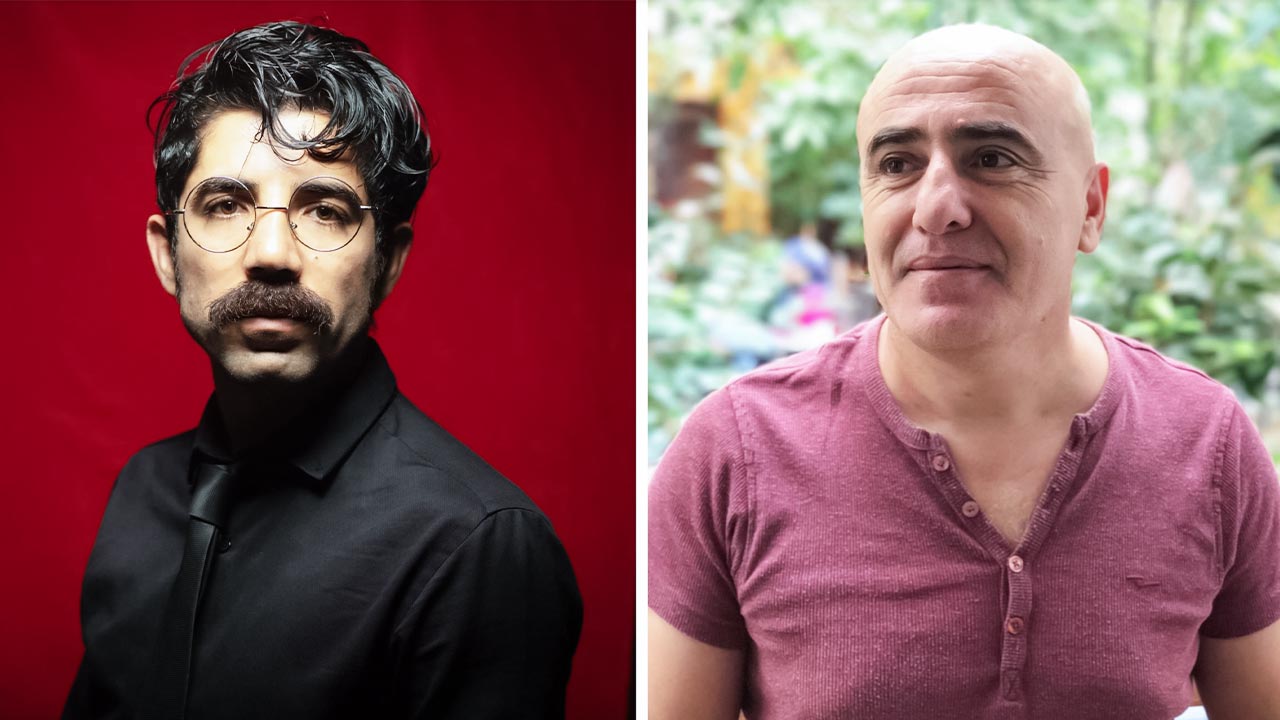
Eylül Deniz Yaşar
Not all actors able to stay at their ‘luxury’ homes, striving artists remind
ANKARA – As screens and stages everywhere have been hit hard by the corona virus lockdown, the lack of state funding and support—which has already crippled the art industry in Turkey— has doubled the strength of the blow, Kurdish actors and filmmakers say.
COVID-19 has brought the global film industry to a standstill. The release date of many films has been postponed and movie theaters are on the verge of closing for good. In Turkey, supporting actors, independent filmmakers and set workers, whose only sources of income are precarious ongoing projects, have been hit the hardest.
Film, TV series and commercial sets in Turkey have already struggled with workplace homicides, unsecured and uninsured working conditions, and exploitative eighteen-hour days. With the pandemic, the problem of bad working conditions gave way to a rather existential question of how to survive.
On one hand, the casts and crews of most television shows, which are seen as the chief pillar of the Turkish commercial film industry, kept working—even though many members of the Actors’ Union of Turkey called for production to be suspended. Turkey’s Art Directors Association also released a statement in late March, saying that workers and actors have been put at risk in the crowded sets, which do not allow for social distancing.
Kurdish filmmakers and actors try hard to insist on art amid pandemic
“The TV industry has been more vibrant compared to cinema and theatre, but here is the thing: for a three-hour episode of one series, people need to work intensely for a week, which was a huge risk of health amid a pandemic. It is not only the health of actors in question here, but behind the camera, there is a whole team of set workers. The lives of set workers were put at risk, but workers in the TV industry went to work every single day, because they were afraid to lose their jobs,” explains Erdal Ayna, a theatre player and actor in Turkish TV-cinema industry.
On the other hand, Turkish Health Ministry featured actor Burak Özçivit, a famous figure known to be pro-government, and his actress wife Fahriye Evcen in its “Life Fits Home” campaign which has sparked criticism among TV-film circles.

“There are some famous names in Turkish movie industry, who are in great demand, who were sharing posts of ‘stay home’, at their luxury homes and villas. Not every actor is a leading actor like Burak Özçivit. When Altan Erkekli opened up the discussion on the harsh conditions of actors, Okan Bayülgen, which I highly admire, shared a statement saying things like ‘The actors should not cry, what can the state do, many industries have collapsed’. I don’t agree with that opinion. The Ministry of Culture and all related Turkish authorities have to take responsibility; it is not actors’ shame to demand their rights. What are the actors going to eat when all their movies and projects are cancelled?” argues Ayna.

The pandemic is a source of uncertainty for many actors and filmmakers, who have found themselves suddenly facing cancelled film and stage projects, according to Ayna. “The funds are still expected, they tell us to wait, but until when? They have organized concerts to promote the ‘stay home’ call, and the state spent up to 30 million TRY on those singers, but they did not have the fund to support actors and theatre players. I have never seen any financial support from any state institution during the pandemic.”
The biggest short-term risk for non-leading actors seems to be earning a living as they try to cope with the fact that their careers have come to a grinding halt. “The pandemic had a huge impact on stages as well as TV productions. Two international movie projects of mine were postponed for an indefinite period of time, along with a national theatre play project. All movie and stage play projects were suddenly cancelled by the arrival of the pandemic, but the Turkish art industry in particular was highly affected.”
“Well, we do not have a regular income. We earn money from the plays that we act in, and many actors and actresses are employed precariously. This is itself a problem which has doubled the effects of the pandemic crisis. During the pandemic we could not even receive payments from many projects in which we were involved, because the films themselves could not be shown in theatres. Many actors and actresses have come to the edge of quitting acting and begin working in other jobs to survive,” he adds.
The country suffers from a relative dearth of independent media and culture, the actor emphasizes. “As theatre has never been fully supported by Turkish authorities, the Ministry and the related public institutions were less than effective at supporting artists,” Ayna says.
According to him, “the pandemic showed that non-famous, non-popular actors are invisible in Turkey. The people who applauded your plays on stage do not see you. There could be various ways to support the stages and the many independent theatre groups whose all plays were cancelled, but we have seen none. Many theatre players had to protest in front of their own stages, chanting ‘do not let our theatre die’. Many industries were given funds, but when it comes to art, there is no money in the state’s pocket.”

Currently living in İstanbul, the Kurdish actor considers himself as an “unprivileged” member of Turkey’s art circles. He was born in a village of Diyarbakır to a family of nine children, and his parents worked as seasonal agricultural workers. He had never seen a play on stage before high school.
His working-class peasant background is meaningful to him, and he works hard to acknowledge his roots. “The theatre has always had an existential role in my life, shaping my identity and ideals to change the social reality I grew up in. Modern society makes individual realities disappear, and this has a socio-economic background in Turkish society. I was not accepted to conservatory because of my ‘Kurdish’ accent. We launch our career from one-step back, because we never had the comfort to grow up with art, to have the proper art education. Therefore, acting is some kind of an awakening for our society among the poverty and the oppression we suffer. I believe theatre may be a way to get through the problems we face in our society, it can change the fate of the society.”
When asked about if he would ever give up acting under such difficult circumstances, his reply came without hesitation: “I never lose my hope in art, even during the pandemic. I believe in the famous motto of in Noviembre – Art is a weapon loaded with the future. If they invested in art more than they invested in weapons, the world would have become a better place for sure. Despite all these challenges we face, we should insist on art.”
At a time when even the Cannes Film Festival has been cancelled, the global film industry seems to be upended. Among Turkey’s filmmaking circles, the scarcity of independent cinema is seen as the root of an even greater problem.. Independent filmmakers in general have suffered from a lack of funding for years— and Kurdish filmmakers in particular have become a critical witness to the Turkish state’s attitude towards independent cinema.
Political fluctuations, which have never eased off in Eastern-Turkey even during the humanitarian crisis of pandemic, affect the cinematic productions of the region deeply. “Kurdish cinema has been greatly affected by the pandemic. Normally, Kurdish film festivals would be organized with the support of local municipalities. The last example of this is Yılmaz Güney Film Festival in Batman. We had finished all the preparations for the festival. Just when we were about to launch, the pandemic hit Turkey. Therefore, we decided to postpone the festival—but right after that, a trustee was appointed to Batman Municipality and they cancelled it. They have never paid our expenses, as they also did not show any justification for the cancellation. In the (Kurdish) region, there has already been an embargo laid for young filmmakers,” explained İlham Bakır, a documentary filmmaker also teaching cinema at Middle East Cinema Academy Association in Diyarbakır.

The pandemic seems to add a secondary layer of crisis for Kurdish filmmakers, who were struggling for funds already before pandemic made it even harder to reach the cross-boundary networks which are vital for funding for their movies. As Bakır describes, “I have been shooting a documentary film for 5 years. During this period of time I never applied to the Ministry of Culture for funding. I know that they would never fund me. A travel ban has also been imposed on me. This has already hit my connections abroad—most of my funding comes from international programs. One of my documentaries was selected for a festival in Belgium— but the first time I could not attend the event due to my ban, and the second time I was not able to travel due to the pandemic restrictions. So the pandemic destroyed our chances of attending international events and our networks, such as residence programs, which have been our primary funding sources that enable us to make films despite state pressure.”
When the Kurdish filmmaker is asked about his expectations on “normalization”, he recalls the fact that even when things were “normal,” for the Turkish film industry, they were never quite normal for Kurdish artists. The kind of pressures Kurdish filmmakers have been facing have varied over the years. They find it hard to find not just funding for their films, but even venues to screen them. “Let’s assume that you find some funding from the state by chance, then your film would most probably suffer constraints and oppression in the national festivals. A documentary-film of mine was selected for the Antalya Film Festival, where we had a crisis of ‘Kurdish’. They would not let us present the film in the Kurdish language. State authorities never support Kurdish cinema financially if they feel uneasy with the critical content of your films, which may disturb the government. The use of the Kurdish language is also not favorable for the state,” argues Middle East Cinema Academy’s Bakır.

According to Bakır, what mattered for the government was making sure that the wheels of capital kept rotating despite the pandemic. He believes that this applies in cinema circles as well. Despite the double impact of pandemic shutdowns and lack of institutional support on Kurdish cinema in Turkey, Bakır offers a cooperative-internationalist perspective for a solution: “The pandemic process showed that we can only survive with solidarity. Not only Kurdish filmmakers, but also all filmmakers around the world can create their art with a collective spirit in a cooperative manner. Unless there is an organized cinema power corresponding to such organized state powers, we do not have the chance to distribute and play our movies in theatres. If we can create a solidarity network with a cooperative structure with European filmmakers and filmmakers outside Turkey, we would be able to produce our movies.”


