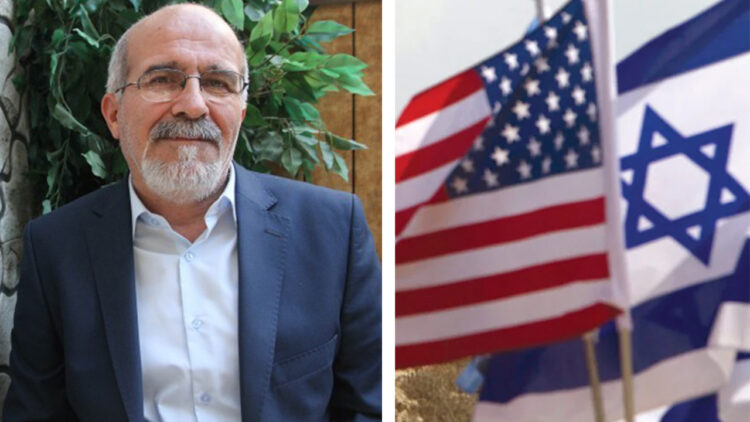
The escalating tensions between Israel and Hezbollah following the death of Hezbollah leader Hassan Nasrallah in an Israeli airstrike have raised questions about the region’s future. Speaking to Mezopotamya Agency’s Delal Akyüz on Sunday, political scientist Dr Mustafa Peköz* explained that the ongoing conflict does not align with US interests. “Whether Trump or Harris wins the upcoming election, there will not be a regional war in US Middle East politics,” he stated.
Peköz noted that Lebanon’s strategic location is central to the current conflict, particularly in the context of the eastern Mediterranean’s gas reserves. Israel’s actions, according to Peköz, are part of a broader plan to control these reserves. However, he cautioned that a ground invasion would be likely to backfire, as it did in 2006 when Israel attempted to dismantle Hezbollah. “Lebanon has been a battleground for decades because of its geopolitical importance,” Peköz said, adding that Hezbollah, remains a powerful military and political force in Lebanon despite the recent Israeli airstrikes.
Reflecting on the broader regional implications, Peköz highlighted the delicate balance of power in Lebanon, where religious groups play a significant role in its political system. He noted that the conflict between Israel and Hezbollah has broader ramifications, particularly as Hezbollah maintains strong ties with Iran. He does not foresee a direct US military intervention in the region, however.
(*) Mustafa Peköz is an investigative journalist and author with a master’s degree in Political Science and a PhD in social sciences from France. He has published eight books in Turkish, covering topics such as the Middle East, counter-guerrillas, political Islam, etc. His book Developpement de l’Islam Politique is also published in French. He currently resides in France.