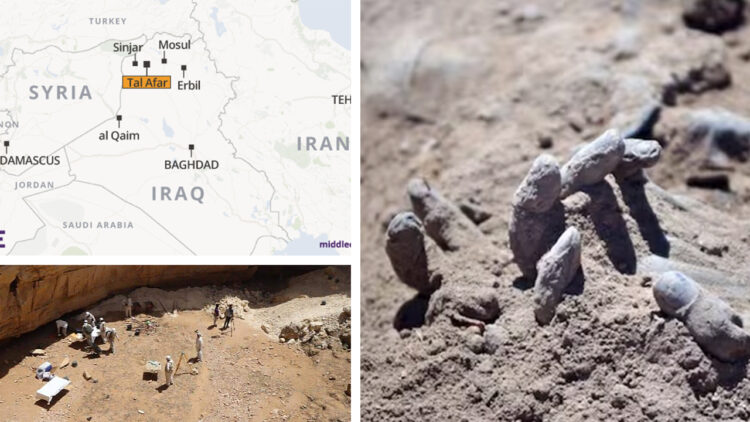
The site is one of many mass graves left by the group, which is notorious for its brutal regime of beheadings, torture and enslavement.
The search for more bodies continues and it remains unclear how many people were thrown into the pit. Witnesses have identified the victims as members of the Yazidi community, Shia Turkmen and security forces from Mosul (Mûsil). ISIS is known for its atrocities against these groups, particularly Yazidis in Iraqi Kurdistan’s Sinjar (Shengal).
Ahmad Esadi, of the Iraqi Martyrs Foundation, said the victims were not given proper burials but were thrown into pits 12 to 42 metres deep. “Some were found shot, while others had their throats slit,” Esadi said. Clothing found on the bodies suggests that the victims may have been Yazidi and Turkmen.
The bodies recovered from the site have been sent to forensic institutions for DNA testing and identification. ‘The Kora Eli Enter’ mass grave was discovered after ISIS regained control of the area in 2017, but efforts to exhume the bodies only began in May this year.
ISIS, also known as the Islamic State, once controlled large swathes of Syria and Iraq, leaving a trail of destruction and numerous mass graves in its wake. These graves, documented by the United Nations and various human rights organisations, include thousands of victims including Yazidis, Christians, Shia Muslims and Sunni Muslims who opposed ISIS. Notable mass graves have been found in Sinjar, Mosul, Raqqa and around Mount Sinjar.
Over 70 mass graves have been discovered in the region, believed to contain tens of thousands of bodies. Efforts to identify and exhume the bodies have been ongoing but challenging, involving forensic examinations, DNA testing and coordination with local and international organisations. The discovery of these graves has led to calls for accountability and justice, with international courts and Iraqi tribunals pursuing cases against ISIS members for war crimes and genocide. Humanitarian organisations continue to assist survivors and families of the victims.
This latest discovery underscores the lasting impact of ISIS’s reign of terror and the ongoing efforts to uncover the full extent of its crimes, ensure justice for victims and support affected communities.