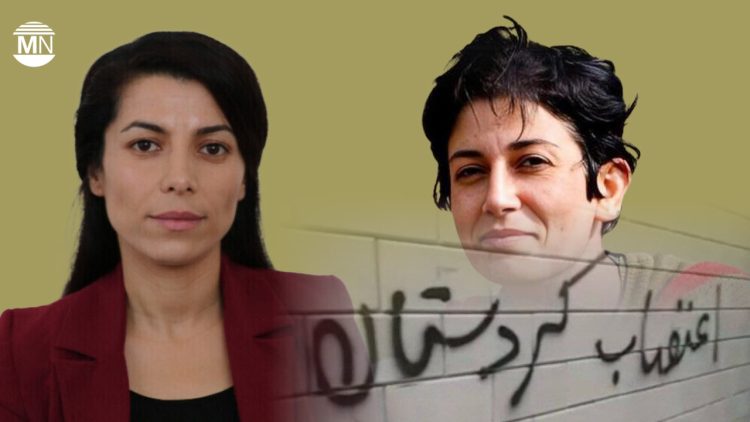
Kurds in Iranian Kurdistan (Rojhilat) united in an unprecedented general strike on 22 January, demanding the revocation of death sentences handed to Kurdish activists Pakhshan Azizi and Warisheh Moradi. The strike, initiated by six political parties and supported by independent figures, has demonstrated extraordinary solidarity across the region.
The Brussels-based Kurdistan National Congress (KNK) spearheaded the initiative, with major Kurdish political entities—including the Kurdistan Democratic Party of Iran (KDPI), Kurdistan Free Life Party (PJAK), the Kurdistan Freedom Party (PAK), and the three Komala parties, issuing a joint statement. The announcement, made on 18 January, urged unity among Kurds to oppose what they described as the Islamic Republic’s oppressive policies.
Images and videos shared widely on social media highlight the breadth of participation, spanning several provinces. Kermanshah (Kermashan) witnessed deserted streets and shuttered shops. In Sanandaj (Sine), the capital of Kurdistan Province, the main markets and public spaces were eerily empty, reflecting near-total compliance with the strike.
In Marivan (Merîwan), activists distributed leaflets encouraging participation, while footage captured the strikingly quiet streets. Other cities, including Baneh (Bane), Saqqez (Seqiz)—hometown of women’s rights icon Jina (Mahsa) Amini—Dehgolan (Dewulan), and Divandare (Dîwandere), also observed significant shutdowns. West Azerbaijan Province saw Mahabad (Mehabad) and Bukan (Bokan) join the movement, broadening its geographical impact.
The Iranian authorities responded by deploying security forces to monitor the situation, marking closed shops and sealing some businesses. Local sources reported an increased presence of security personnel in affected cities.
Prisoners in the women’s ward of Tehran’s Evin Prison also expressed solidarity by launching a hunger strike. Prominent detainee Golrokh Iraei wrote on her X (former Twitter) account: “Female prisoners in Evin, aligned with the 52nd week of the ‘Tuesdays No Execution’ campaign, stand in solidarity with the Kurdistan general strike. We are observing a hunger strike on Tuesday and Thursday.”
Meanwhile, an IRGC-affiliated news outlet claimed that Azizi’s execution had been postponed and that her lawyer was pursuing an appeal. The claim has not been independently verified, and Kurdish political parties have criticised it as an attempt to undermine the strike’s impact.
This strike marks one of the largest demonstrations of Kurdish solidarity in recent years, highlighting ongoing tensions between the Kurdish population and the Iranian government. The protest reflects growing frustration with what Kurdish leaders describe as systemic oppression and targeted violence.