

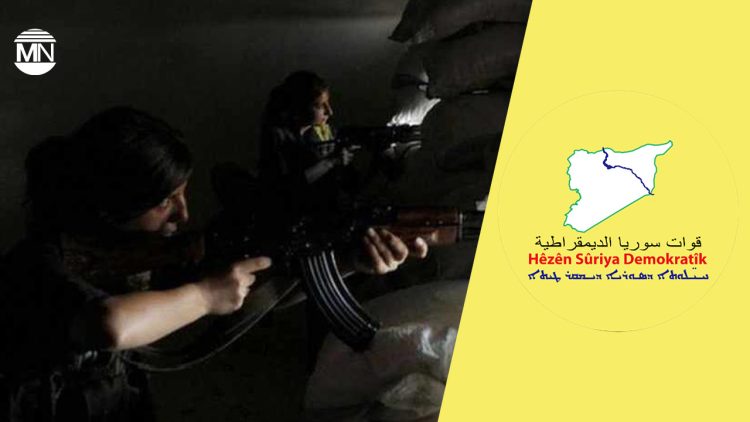
The Kurdish-led Syrian Democratic Forces (SDF) have moved their fight underground, relying on a vast network of tunnels as Turkish-backed factions ramp up their offensive in northern Syria, with Turkish drones and warplanes targeting their positions.
Speaking to The Guardian on Friday, Zinarin Kobane, the commander of the SDF’s Euphrates region, explained that the shift was a response to Turkey’s air superiority. “Most of our forces are currently concentrated in the tunnels,” she said. The SDF has been digging an elaborate underground network since Turkey’s 2019 invasion, allowing fighters to evade detection and launch surprise attacks.
The conflict reignited after Hay’at Tahrir al-Sham (HTS) toppled the Assad regime on 8 December, shattering the delicate balance in the region. The SDF quickly lost control of Manbij (Minbîc) and is now engaged in daily clashes near the Tishreen (Tişrîn) Dam, a key source of electricity for Kurdish-administered areas. “The dam is our first line of defence,” Kobane said. “If they break through, it opens the door to occupation.”
As battles rage, negotiations between the SDF and the new government in Damascus remain deadlocked. Mazloum Abdi, the SDF’s top commander, met Syrian interim president Ahmed al-Sharaa (al-Julani) in January, describing the talks as “positive” but warning that Turkish intervention was undermining the process. Damascus demands the SDF’s full integration into the Syrian army, while the Kurdish leadership insists on maintaining autonomy within a decentralised Syria.
Related Articles:
Ankara’s ambitions in Syria cause concern, says exiled journalist

Civilians in northern Syria continue to protect Tishreen Dam from Turkish attacks for 45 days
The prospect of a US troop withdrawal further complicates the situation. The United States still has about 2,000 soldiers in north-east Syria, supporting the SDF in counterterrorism operations. However, uncertainty surrounding US policy has left Kurdish leaders uneasy, recalling how the abrupt US withdrawal in 2019 exposed them to Turkish attacks. Abdi warned that a pullout could create a security vacuum, allowing Islamic State (ISIS) cells to resurface and jeopardising the region’s stability.
In Kobani (Kobanê), fears of a Turkish offensive loom large. Drone strikes have already disrupted daily life, and infrastructure attacks have left civilians without water and electricity for weeks. “Every day, the drones are above our heads,” said Fidan Shamsi, an 18-year-old traffic officer who survived a drone attack. “If they attack Kobani, they won’t spare anyone.”


