

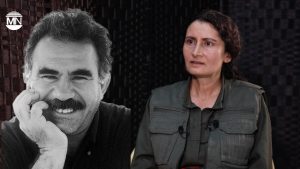
“The isolation imposed on Rêber Apo [Abdullah Öcalan] is a crime against humanity,” said Besê Hozat, Co-chair of the Kurdistan Democratic Communities Union (KCK), as she criticised Turkey’s lack of progress in addressing the Kurdish question. Speaking on Medya Haber TV on Monday, Hozat stressed that Öcalan, who has been held in İmralı Prison for over 25 years, much of that time in strict isolation, must be granted the right to communicate freely and work on a democratic solution.
Hozat drew comparisons between Öcalan’s situation and that of South African leader Nelson Mandela while he was in prison on Robbin Island. “How was Mandela made able to play his role? His isolation was lifted, and he was given the freedom to meet [with others], communicate and negotiate. This paved the way for a peaceful resolution,” she said, urging Turkish authorities to follow similar steps to foster a meaningful peace process.
The Kurdish question, a longstanding conflict centred on Kurdish rights and autonomy, remains a contentious issue in Turkey. Öcalan, the leader of the Kurdistan Workers’ Party (PKK), has been a pivotal figure in these discussions. Hozat criticised the Turkish government for failing to support these initiatives, though there have been moments of optimism. “The government feeds on war, chaos and polarisation,” she said, accusing Ankara of sabotaging democratic solutions and intensifying its military campaigns against Kurdish regions.
According to Hozat, the broader geopolitical dynamics also play a role in shaping Turkey’s stance. She accused Turkey of waging a “genocidal war” in North and East Syria, targeting Kurdish civilians and infrastructure. “How can one talk about peace when a genocidal war is ongoing? The Turkish state is driving the remnants of ISIS against the Kurds,” Hozat alleged, calling on international powers, including the United States, Britain and France, to take a clear stance.
Hozat also highlighted the role of women in the Kurdish liberation movement. “Women are the foundation of society. Our struggle is a woman-centred struggle. If this war ends, women will have the most to gain,” she said, urging Kurdish women and democratic forces in Turkey to unite in their efforts for peace and justice.
The KCK leader expressed optimism about Öcalan’s ongoing efforts in the face of the challenges. “He works 24/7 for a democratic solution to the Kurdish question and the democratisation of Turkey,” she said, adding that meaningful progress requires the lifting of the isolation.
The isolation imposed on Öcalan has been condemned by international human rights organisations. The European Court of Human Rights (ECtHR) has ruled that Turkey must make legal changes to address Öcalan’s rights, including his ability to exercise the “Right to Hope.” The Committee of Ministers of the Council of Europe has given Turkey until this year to implement these changes.
As discussions about the Kurdish question continue, Hozat’s remarks underline the urgency of addressing Öcalan’s isolation and pursuing democratic reforms to resolve decades of conflict.
Read the full interview here:


