

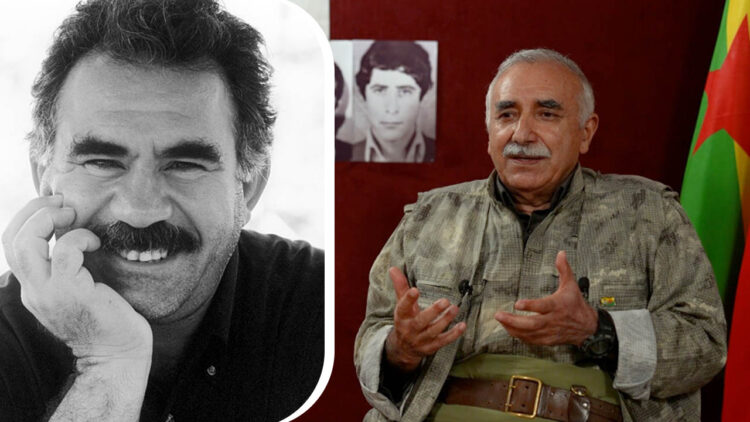
Kurdistan Workers’ Party (PKK) commander Murat Karayılan has reiterated that Abdullah Öcalan, the imprisoned co-founder of the PKK, is central to any solution to the Kurdish question in Turkey. Speaking on the occasion of the party’s 46th anniversary, Karayılan criticised the Turkish government’s continued restrictions on Öcalan and accused Ankara of exploiting dialogue for tactical gains.
Karayılan condemned the renewed bans on visits by Öcalan’s family and lawyers as a deliberate attempt to stifle progress. “This method of putting pressure on Leader Apo [Öcalan] is neither ethical nor legal. It undermines trust and is completely inhumane,” he said in a statement. “If this oppressive approach continues, the consequences will be severe.”
The commander also addressed recent comments by Nationalist Movement Party (MHP) leader Devlet Bahçeli, whose call for dialogue was interpreted by the PKK as an acknowledgment of the growing internal challenges facing the Turkish state. However, Karayılan criticised the lack of follow-up, accusing the government of failing to take “concrete steps” to initiate a meaningful process. “Rumours about Ocalan sending messages to the PKK are false propaganda aimed at creating confusion,” he said.
Karayılan argued that the Kurdish question requires substantial legal and constitutional reforms. “This is Turkey’s most fundamental and serious problem,” he said, adding that empty rhetoric cannot solve a decades-long conflict. He accused Ankara of sending mixed signals, citing intensified military operations and the appointment of trustees to Kurdish-run municipalities.
“The Kurdish question cannot be solved by superficial overtures,” Karayılan said. “Without real steps, the government’s rhetoric remains unconvincing.”
Karayılan reaffirmed the PKK’s commitment to resistance, describing armed struggle as a response to systemic oppression. “As long as the state’s genocidal policy continues, so will the guerrilla,” he said, portraying the PKK as a vital force in the defence of Kurdish identity and rights.
He linked the Kurdish struggle to Turkey’s wider socio-political instability, citing economic and political crises as consequences of prioritising military spending over public welfare. “If the government had succeeded in eliminating us, they wouldn’t be in this turmoil,” he claimed.
Karayılan stressed Öcalan’s willingness and ability to contribute to a possible peace process. “Önder [Leader] Apo has a historical responsibility and is ready to lead a path to democracy and freedom for all the peoples of the region,” he said. He urged PKK supporters and the Kurdish public to step up efforts to strengthen Öcalan’s position, describing the ongoing campaign for his freedom as a crucial step towards resolving the Kurdish question.


