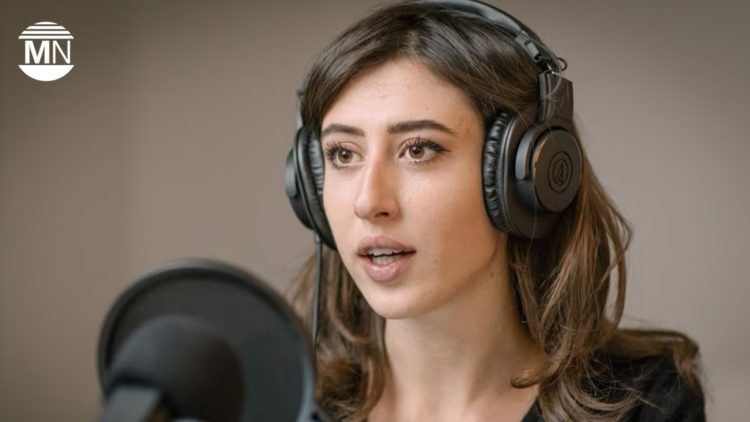
According to published reports, Cecilia Sala, a journalist from Italian newspaper Il Foglio, who travelled to Iran with a press visa, was arrested on 19 December by Iranian security agents. The government of Iran, in violation of the laws of freedom of expression and human rights, has not yet provided an explanation regarding the reasons for her arrest and detention in solitary confinement at the notorious Evin prison.
In response to this egregious action, press freedom organisations—including the Committee to Protect Journalists (CPJ), Reporters Without Borders (RSF) and the organisers of the International Journalism Festival (IJF)—asserted on 31 December that Sala’s arrest reflects a systematic suppression of independent journalism in Iran. They underscored Iran’s willingness to target both foreign and domestic reporters as a means to stifle critical reporting of the regime.
CPJ CEO Jodie Ginsberg stated that Iran has a long and ignominious history of jailing journalists, as well as of targeting reporters and their families at home and abroad. “Sala’s arrest is a powerful reminder of the daily threats faced by those reporting in and about Iran, and she and all those wrongfully detained by Iran should be released immediately,” she said.
RSF Director General Thibaut Bruttin added, ‘The detention of Cecilia Sala, without any reason having been officially communicated by the Iranian authorities, and despite the fact that the journalist had a valid visa, presents all the characteristics of arbitrary detention. We are also gravely concerned about her conditions of detention, as she is held in solitary confinement in Evin prison—infamous for being the cruel place where free voices critical of the regime are detained.”
On Friday 27 December, Italian Foreign Minister Antonio Tajani issued a statement confirming the arrest of Sala. The announcement revealed that Sala had been held in solitary confinement for nine days prior to the public disclosure of her detention. While the specific reasons for Sala’s arrest remain undisclosed and no formal charges have been filed, the Italian Foreign Ministry has been actively engaged in the case. The ministry reported that “all possible contacts” have been established with Sala, and the Italian Ambassador to Tehran, Paola Amadei, has personally visited her in prison to assess her detention conditions. This diplomatic intervention underscores the gravity of the situation and Italy’s commitment to resolving the matter.
Tajani has announced that Sala’s case is “complicated”, but he expressed hope that he will be able to return the 29-year-old journalist home soon.
Before her arrest, Sala had published reports on socio-political developments in Iran, including changes in women’s clothing and a reduction in fear of security officers.
Her arrest is yet another example of the repression of journalists in Iran, and has been widely reported internationally. There have been recent reports of the detention of two Iranians accused of transferring sensitive technologies to the Islamic Republic of Iran by the United States, and the arrest of a 38-year-old Iranian at the Milan airport on similar charges. Therefore, it seems likely that the detention of Sala may be an attempt to use her as capital to secure their extradition.
Iran is one of the world’s leading jailers of journalists. Preliminary figures from the CPJ showed that there were 16 journalists in prison in Iran as of 1 December 2024, which would make the country the seventh largest jailer of journalists worldwide. The arrest of Sala and her detention in the harsh conditions of Evin prison have once again demonstrated the continued violations of human rights and the suppression of basic freedoms in Iran.