In the early hours of Tuesday, 18 March, Israeli forces initiated a series of airstrikes targeting multiple locations across the Gaza Strip, including Gaza City, Khan Younis, and Deir al-Balah. The Gaza health ministry reported that these strikes resulted in at least 326 fatalities, with many victims being women and children. This abrupt escalation effectively ended the fragile ceasefire that had been in place since January.
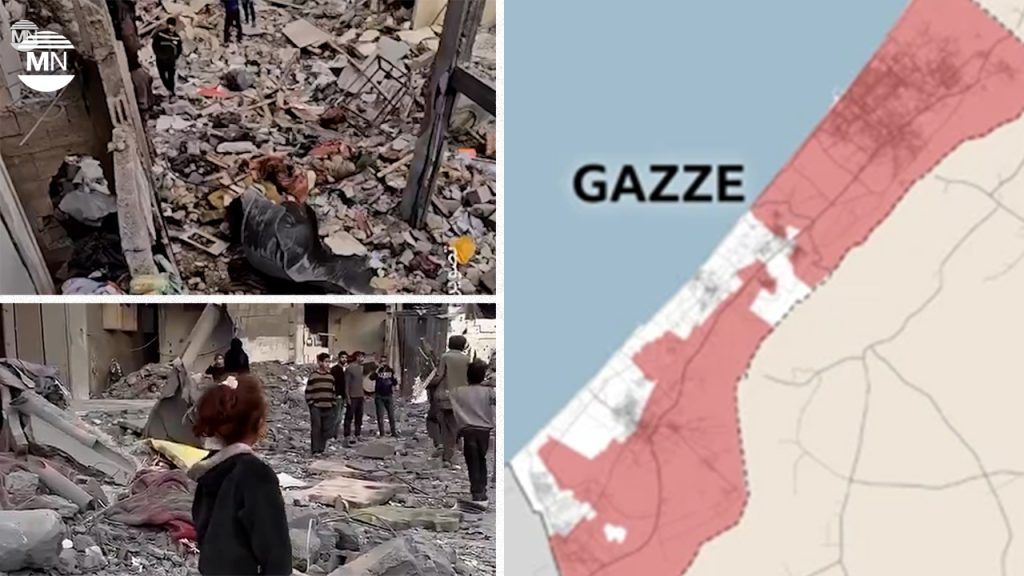
Israeli Prime Minister Benjamin Netanyahu stated that the military had been instructed to take “strong action” against Hamas due to the group’s refusal to release Israeli hostages and its rejection of ceasefire proposals. Netanyahu’s office declared, “Israel will, from now on, act against Hamas with increasing military strength.” Defence Minister Israel Katz warned that “the gates of hell will open in Gaza” if Hamas did not release all remaining hostages, promising to hit Hamas with unprecedented force.
The Israeli Defence Forces (IDF) indicated that the current air offensive would persist as long as necessary and could extend beyond airstrikes, suggesting the potential involvement of ground troops. This development has raised alarms about a possible full-scale ground invasion, further exacerbating the humanitarian crisis in Gaza.
The remaining hospitals in Gaza, already strained by over a year of conflict, are overwhelmed by the influx of casualties. Medical facilities, including those in Khan Younis, al-Aqsa, and al-Ahli, have reported receiving scores of dead and wounded individuals. Witnesses describe harrowing scenes with “body parts, corpses, and the injured filling the floors of the hospitals”. The Palestinian Red Crescent reported that its teams dealt with 86 killed and 134 wounded, with others brought to hospitals by private cars.
The ceasefire, established in January, initially involved the exchange of 25 living Israeli hostages and the remains of eight deceased Israelis for approximately 1,900 Palestinian prisoners held in Israeli jails. However, disputes arose regarding the second phase of the ceasefire, which was to include a total Israeli withdrawal from Gaza and the release of the remaining 59 hostages. Israel, supported by the United States, insisted on the return of all remaining hostages before proceeding with further prisoner releases and extending the truce.
Hamas officials accused Israel of violating the ceasefire agreement and escalating the conflict. Taher Nunu, a Hamas representative, stated that the international community faced “a moral test” and must decide whether to “allow the return of the crimes committed by the occupation army or enforce a commitment to ending the aggression and war against innocent people in Gaza”.
The renewed hostilities have drawn international concern. The Kremlin expressed alarm over the significant civilian casualties resulting from the Israeli airstrikes. Kremlin spokesperson Dmitry Peskov highlighted the dangers of the escalating situation and noted the alarming reports of civilian deaths, stating that Russia is closely monitoring developments and desires a return to peace. The United Nations’ Humanitarian Coordinator for the Occupied Palestinian Territory called for the immediate reinstatement of the ceasefire, describing the situation as “unconscionable”.
The conflict’s resurgence has also intensified tensions across the Middle East, with the violence spreading to Lebanon, Yemen, and Iraq. The international community is urging both parties to exercise restraint and return to negotiations to prevent further escalation and address the dire humanitarian needs in Gaza.