

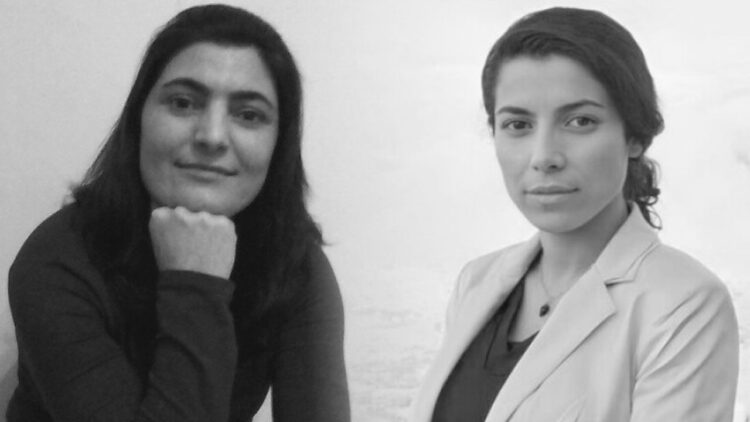
Civil activists are increasingly concerned over the fate of two Kurdish political prisoners in Iran. Zeynab Jalalian continues to face intense pressure to provide televised confessions, while Warisheh Moradi’s condition has remained unknown for the past two months.
Zeynab Jalalian, the only woman Kurdish political prisoner in Iran serving a life sentence, is being denied medical treatment due to her refusal to make a televised confession, according to the Kurdistan Human Rights Network (KHRN). She suffers from heart and eye diseases, gastrointestinal issues, and severe pain in her right side, exacerberated by dire prison conditions and the lack of access to healthcare.
Jalalian spent the last two weeks in Yazd prison hospital but was returned without specialised examinations or treatment, and a request for a transfer to a medical centre outside the prison has been denied by intelligence service officials.
Over the last 17 years, Jalalian has been transferred to more than five prisons across different Iranian cities.
Meanwhile, Warisheh Moradi, a member of the East Kurdistan Free Women Society (KJAR), another Kurdish political prisoner who has been in Tehran’s Evin Prison for almost a year, was again transferred to the solitary cell under orders of the notorious Judge Abolqasem Salavati, severing communication with her family entirely for the past two months.
Evin Prison’s notorious Ward 209, where Moradi is being held in isolation, is under the control of the Iran’s Intelligence Ministry, and according to eyewitnesses and human rights organisations, most of the country’s political prisoners are kept there in conditions that violate human rights. Additionally, her lawyers have been informed that they no longer have the right to access her file.
Human rights activists’ concerns have heightened over the fate of the two Kurdish women prisoners following a death sentence handed down to female political activist Sharifeh Mohammadi in a court in Rasht, northern Iran, earlier this month.


