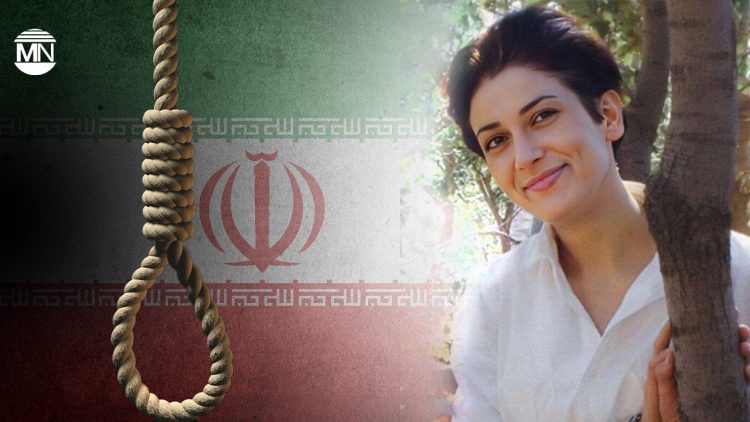
On 6 February, Amir Raisian, the lawyer of Pakhshan Azizi, a Kurdish women political prisoner currently in Evin Prison, confirmed to Shargh Daily that the Ninth Branch of Iran’s Supreme Court had rejected his client’s request for a retrial, citing “substantive flaws” in the case. Raisian expressed concern over the imminent risk of execution and stated they would seek a new retrial under Article 477 of the Criminal Procedure Code to stop the sentence.
Azizi, who was sentenced to death on charges of “armed rebellion” under Article 287 of Iran’s Islamic Penal Code, also received additional prison time for alleged membership in two groups deemed hostile by the regime: the Democratic Party of Iranian Kurdistan and the Kurdistan Free Life Party (PJAK). The Iranian Government considers PJAK to be a faction of the Kurdistan Workers’ Party (PKK). Raisian noted that the court had made errors in the case, including confusing the Free Women’s Society of East Kurdistan (KJAR) group with ISIS, leading to the rejection of the retrial and the upholding of her death sentence.
Amnesty International issued an urgent appeal on 6 February, urging global action to halt Azizi’s execution. The organisation’s deputy director for the Middle East and North Africa condemned the trial as “grossly unfair”, stating that Azizi had been arbitrarily detained and convicted.
The Iranian Human Rights Organisation also raised alarms about Azizi’s case, connecting her potential execution to the government’s ongoing repression following the “Jin, Jiyan, Azadi” (Woman, Life, Freedom) protests. The organisation highlighted a troubling rise in executions, especially of women, over the past year. Mahmoud Amiri-Moghaddam, the organisation’s director, condemned the government’s reliance on executions as tools of control, calling the death sentence “lacking any legal basis”.
Nobel laureate Narges Mohammadi, currently on temporary release from prison, condemned the verdict, suggesting it was part of the regime’s crackdown on women and a retaliation against the “Jin, Jiyan, Azadi” movement. On Instagram, she warned:
“By executing a female political prisoner, the Islamic Republic seeks to instil fear and exact vengeance on the Iranian people.”
Earlier, PJAK issued a strong warning against the execution of Azizi, labelling it a “red line” that would not be tolerated.
In response to the death sentences of Azizi and fellow Kurdish prisoner Warisheh Moradi, Kurds in Iranian Kurdistan staged a historic general strike on 22 January. The strike, backed by six political parties and independent figures, called for the immediate revocation of their sentences.