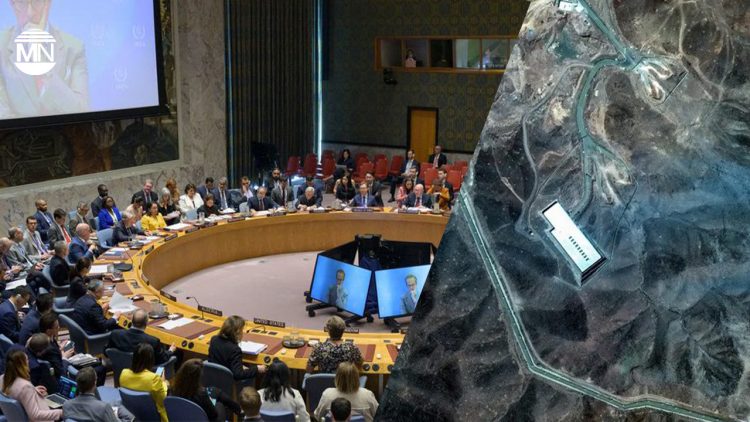
Iran has vowed a “decisive response” to the United States following its airstrikes on Iranian nuclear sites over the weekend, while refraining — for now — from retaliating directly against US military assets. The situation remains volatile amid international calls for restraint, surging oil prices, and confused messaging from Washington.
On 23 June, senior Iranian commanders and officials renewed their warnings to Washington, accusing President Donald Trump of “waging war under an absurd pretext” and threatening consequences through “targeted operations”. Speaking in English, Islamic Revolutionary Guard Corps spokesperson Ebrahim Zolfaghari warned, “Mr Trump, the gambler. You may start this war – but we will be the ones to finish it.”
Tehran has so far launched missiles at Israeli targets in Tel Aviv. However, Iran has not acted on its more consequential threats, such as targeting US bases in the region or closing the Strait of Hormuz, a narrow maritime passage critical to global oil shipments.
Iran’s foreign minister Abbas Araghchi is currently in Moscow for high-level talks with Russian President Vladimir Putin, while European Union foreign ministers meet in Brussels and the UN Security Council convenes for a second emergency session in New York. A statement jointly issued by UK Prime Minister Keir Starmer, French President Emmanuel Macron, and German Chancellor Friedrich Merz called on Iran to return to nuclear negotiations and warned against any further escalation.
“We urge Iran not to take any further action that could destabilise the region,” the statement read. The European leaders emphasised that Iran must never be allowed to acquire a nuclear weapon, reaffirming their commitment to Israel’s security and regional stability.
Confusion in Washington deepened after Trump, via his social media platform Truth Social, appeared to endorse regime change in Iran. He posted: “It’s not politically correct to use the term, “Regime Change,” but if the current Iranian Regime is unable to MAKE IRAN GREAT AGAIN, why wouldn’t there be a Regime change??? MIGA!!!”
Trump’s comments heavily contradicted earlier assurances from US Vice-President JD Vance and Defence Secretary Pete Hegseth, who stated that the operation was aimed solely at halting Iran’s nuclear advancement.
Israel, which initiated airstrikes on Iranian military infrastructure on 13 June, claims to have destroyed multiple aircraft and radar facilities in western and central Iran. In return, Iran has launched limited missile and drone attacks on Israeli targets, but these have reportedly been intercepted with US assistance.
Airlines including British Airways have suspended flights to key Gulf cities such as Dubai, Riyadh and Doha due to security concerns, while oil prices climbed to their highest level since January. Brent crude futures reached $78.12 per barrel in early trading.
While no off-site radiation has been detected following the strikes, the International Atomic Energy Agency said it has not been able to fully assess the damage to underground facilities. Iranian officials insist that much of the country’s highly enriched uranium had been moved before the attack, though this claim remains unverified.
The US has placed over 40,000 troops in the region on heightened alert, and the State Department has issued a worldwide caution alert for American citizens. Military analysts warn that Iran could respond via its regional proxies, such as Kata’ib Hezbollah in Iraq or the Houthis in Yemen.