

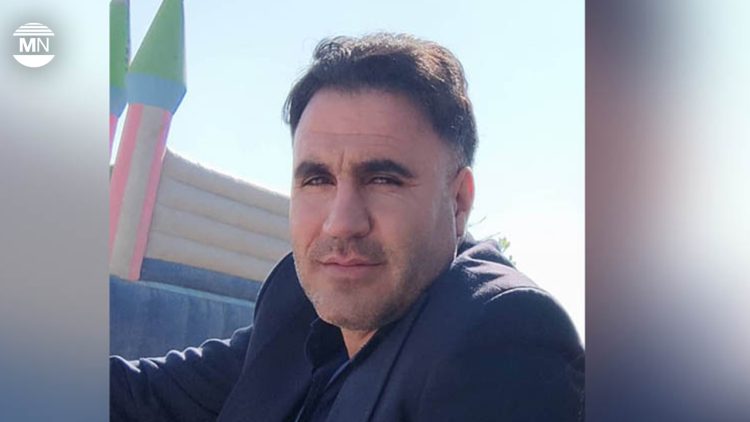
Hamid Huseyin Nejad, a Kurdish political prisoner sentenced to death following a disputed trial marked by allegations of torture, is due to be executed in Iran on Friday, as his family gathers outside the prison in protest and his brother reportedly attempts suicide.
Nejad, a 39-year-old Kurdish man from Urmia (Urmiyê) in Iranian Kurdistan, has been transferred to solitary confinement in Urmia Central Prison ahead of his scheduled execution on 18 April, the Kurdistan Human Rights Network (KHRN) reported.
Nejad was arrested on 13 April 2024 and held at a Ministry of Intelligence facility in Orumiyeh, West Azerbaijan Province. According to KHRN, he was subjected to 11 months of torture aimed at extracting a confession linking him to a deadly clash between Kurdistan Workers’ Party (PKK) forces and Iranian border guards that resulted in the deaths of seven guards.
The rights group said Nejad was forced to sign pre-written confessions, despite being “illiterate and unable to read the contents”. He has consistently denied the charges, stating that he was in Turkey with his family on the day of the incident and had evidence to prove it.
“He had an exit stamp in his passport and asked the authorities to check surveillance footage and his phone’s location data,” KHRN reported Nejad’s legal team as saying. “[Those] requests that he said were ignored by the judicial and security authorities.”
Nejad was sentenced to death in July 2024 on the charge of baghi (armed insurrection). His sentence was upheld on 27 March 2025. Despite this, his lawyer told KHRN that he is “preparing to file a retrial petition in the coming days.”
His family was granted a final visit to him on 17 April. “He was handcuffed and shackled,” KHRN reported. His relatives have since staged a vigil outside the prison. His younger brother, upon learning of the imminent execution, reportedly attempted suicide.
The case has drawn sharp criticism from human rights advocates, who accuse Iranian authorities of relying on coerced confessions and denying basic due process rights.
Neither Iranian state authorities nor the judiciary have responded to the claims.


