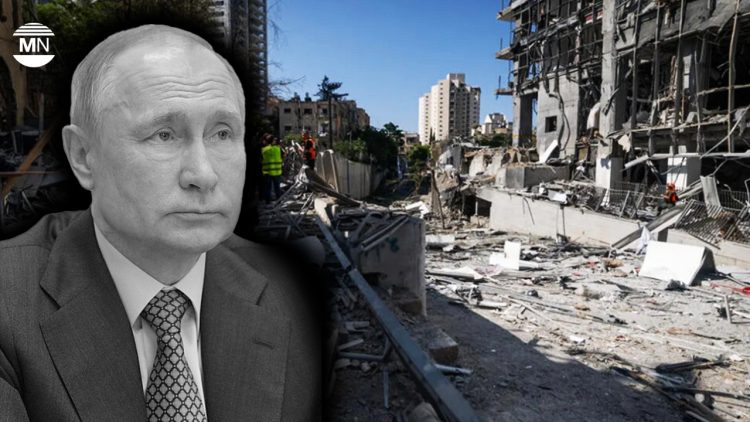
The Iran-Israel conflict entered its seventh day on Thursday, marked by escalating retaliatory strikes from both countries. With mounting casualties and repeated targeting of strategic infrastructure, regional tensions continue to rise.
Haaretz reported that 76 people were wounded in Iran’s missile strike on central and southern Israel on Thursday morning, citing the emergency service Magen David Adom. Three of the injured were seriously hurt, two were moderately injured, and 40 sustained light wounds from shrapnel and blast waves. An additional 31 people were injured while seeking shelter during air-raid sirens. The barrage hit Soroka Medical Center in Be’er Sheva directly. Two buildings in Holon were hit, causing collateral damage, while four buildings in Ramat Gan were damaged and nearby structures were evacuated. Several homes in Jaffa were also affected.
Fox News reported that more than 100 people were injured in separate incidents following the striking of over 25 Iranian missiles on central and southern Israel. The hospital in Be’er Sheva reportedly sustained major structural damage in a direct hit, injuring up to 40 people. Search and rescue operations continued amid ongoing alerts and cross-border tensions.
Avigdor Lieberman, the former Israeli Defence Minister and leader of the nationalist Israel Our Home party, has reportedly called for intensified military action in response to Iran’s missile attacks. In a statement shared by Iran International on Thursday, he said: “Imagine what Iran could do with nuclear weapons. This must continue until the nuclear programme has been completely destroyed, the Iranian government has been overthrown, and the missile stockpile has been completely destroyed.”
Amid fears of a broader escalation, international concern is also growing over Israel’s strikes on Iran’s nuclear facilities. According to a Reuters report, significant damage has been inflicted on infrastructure central to Iran’s uranium enrichment programme. The Natanz Pilot Fuel Enrichment Plant, which enriches uranium to 60%, has reportedly been destroyed. In Isfahan, four buildings were damaged, including the Uranium Conversion Facility and a uranium metal research site. The Khondab nuclear reactor in Arak was also hit. Of all the sites, Iran’s most heavily fortified facility, the Fordow facility, sustained little or no visible damage. Reuters also reported that at least 14 Iranian nuclear scientists had been killed since Friday, nine of whom were named by Israeli forces. While these losses may impede progress, Western officials say that Iran’s nuclear knowledge is largely irreversible.
As the Iran–Israel conflict deepens, Russia has called for restraint, emphasising the importance of diplomatic solutions over military escalation. Speaking to senior editors at the St. Petersburg Economic Forum, President Vladimir Putin declined to comment on speculation that Israel or the United States might target Iran’s Supreme Leader. He stated: “I don’t even want to discuss this possibility.” He went on to describe how Iranian society is consolidating around its leadership, and called for a resolution that would guarantee both Iran’s right to peaceful nuclear energy and Israel’s security. Putin confirmed that Russian specialists remain active at Iran’s Bushehr nuclear plant, stating, “We’re not leaving”, and noting that Iran has not requested additional support. He also said that Tehran had not pursued previous Russian offers to cooperate on air defence systems.
With the conflict now in its second week, the intensifying exchanges between Iran and Israel are causing growing international concern. With sensitive infrastructure now being targeted explicitly and rhetoric escalating, regional actors and global powers alike are under increasing pressure to prevent the wider destabilisation of the Middle East.