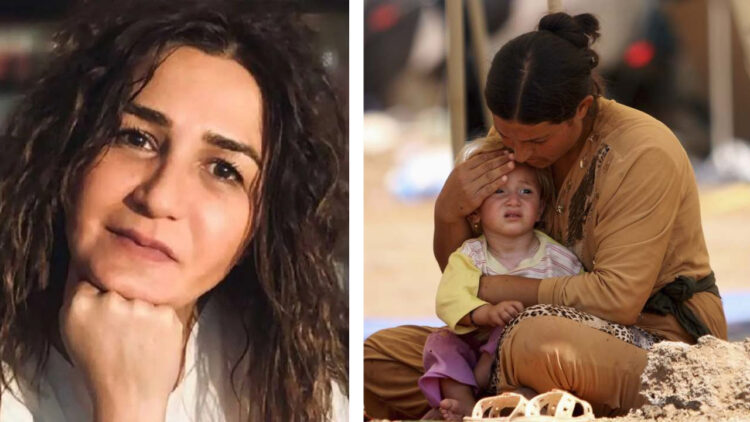
Yazidi organisations have called for urgent international support to create a “centralised coordination” for locating and rescuing Yazidis held by ISIS, according to a special report by Hale Gönültaş of ArtıGerçek, released on Saturday 3 August. The report highlights the dire situation of Yazidis who have been missing since ISIS’s assault on their homeland in Sinjar (Şengal), Iraq in August 2014.
The report notes that between August 2014 and 2017, around 10,000 Yazidis were killed and over 10,000 women and girls enslaved by ISIS, a higher figure than previously thought. The majority of the Yazidi population of the city, which constituted 71% of the global Yazidi community, was displaced.
On the 10th anniversary of the genocide, organisations state that the lack of international action has led survivors to feel abandoned. Families and survivors continue to endure unresolved grief and trauma.
The report, produced by the Yazidi Freedom Foundation, the Global Yazidi Organisation Yazda and the Sinjar Academy, stresses the need for a centralised international effort to identify and rescue Yazidis held captive. It outlines necessary actions for pre- and post-rescue operations.
Key recommendations include:
– Funding for rescue operations: Adequate financial support is needed for personnel involved in locating and rescuing missing Yazidis. International backing is essential for these operations.
– Enhanced security measures: Local security forces should collaborate in high-risk situations to ensure the safety of rescue operations. Additional security support is needed for field personnel in dangerous areas.
– Use of technology: Advanced technology such as satellite imagery, drones and data analysis should be used to locate and rescue Yazidis.
The report also addresses the legal and social barriers faced by Yazidi women and children born from sexual violence suffered in ISIS captivity. The Yazidi Freedom Foundation’s report highlights the severe challenges faced by these children, who are often not accepted within the Yazidi community.
Many Yazidi mothers, despite opportunities for rescue, have chosen to remain with their children in captivity due to uncertainty about the their children’s fate. In Turkey, some rescue operations reveal that Yazidi mothers refuse to be separated from children born from sexual violence.
Another critical issue is the risk of honour-based violence faced by Yazidi women who return with children born from sexual violence. The report warns that these women often face severe pressure to abandon their children, placing them at risk of honour killings, particularly in isolated regions like Sinjar.
The report also criticises the Iraqi government’s practice of registering children born from ISIS captivity as Muslims, which jeopardises their safety. The Yazidi Freedom Foundation is working to facilitate the safe return of Yazidi women and children to Iraq, offering secure housing and support.
Additionally, the report highlights the plight of Yazidis in camps in northern Syria, where many remain trapped. It is believed that there are Yazidi children abducted by ISIS who have lost their language and identity held in detention centres in North and East Syria. Identification and rescue of these children remain challenging due to ISIS members having threatened their families in Iraq with death if their identities are revealed.