

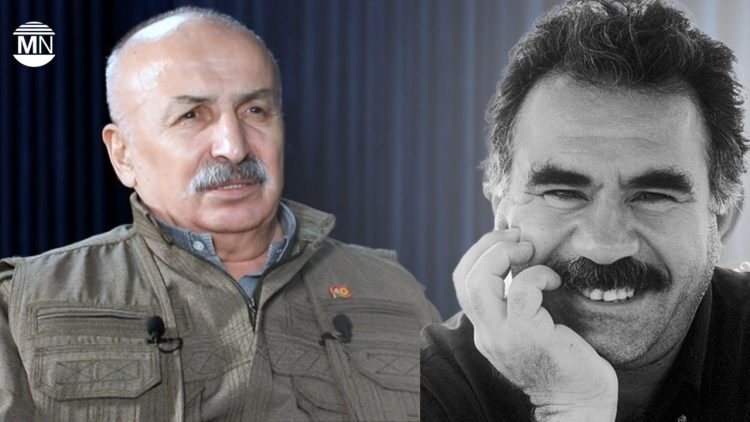
‘Human rights are non-negotiable,’ KCK calls for end to isolation of Abdullah Öcalan
🔴’Human rights are not negotiable,’ says KCK’s Mustafa Karasu, urging Turkey to lift the isolation imposed on jailed Kurdish leader Abdullah Öcalan. #MustafaKarasu I #KCK I #PKK I… pic.twitter.com/ql95LWk85I
— MedyaNews (@medyanews_) January 8, 2025
“Human rights are not negotiable,” declared Kurdistan Communities Union (KCK) Executive Council Member Mustafa Karasu, as he called on Turkey to lift the isolation imposed on Abdullah Öcalan, the imprisoned Kurdistan Workers’ Party (PKK) leader. In an exclusive interview with Medya Haber TV on Monday ahead of the 12th anniversary of the triple murder of Kurdish activists in Paris known to the Kurds as the Paris massacre, Karasu highlighted the essential nature of Öcalan’s role in resolving the Kurdish question and fostering democratic transformation in Turkey.
“There can be no negotiation about the question of whether or not Kurds may have education in the mother tongue, whether or not they are allowed to administer themselves, or whether or not they exist! These are the natural rights of the Kurds,” Karasu said.
Karasu has been a significant figure in the Kurdish resistance movements. During his imprisonment in Diyarbakır (Amed) Prison in the 1980s, he joined the 14 July Death Fast of 1982, a pivotal protest against severe torture and repression. The resistance, which became a historic symbol of defiance, claimed the lives of the prominent figures Kemal Pir, Mehmet Hayri Durmuş, Akif Yılmaz and Ali Çiçek.
Karasu noted that Öcalan’s role is central to a peaceful and democratic resolution. “[Our] leader Öcalan is trying to solve the Kurdish question within a reasonable framework, within a democratic framework, on the basis of the brotherhood of the peoples of Turkey. He has devoted his whole life to this,” he said.
The isolation imposed on Öcalan remains a key obstacle, Karasu argued. “One meeting is not enough. The isolation continues. He is not allowed to meet with his lawyers. He is not allowed to meet with his family. Why?” he asked, stressing that any true progress will require lifting the restrictions entirely.
The interview takes place as Turkey faces growing pressure to address the Kurdish question. Karasu expressed scepticism about the state’s intentions, warning against misplaced optimism. “The policies of the state are clear. Its policies against the Kurds are clear. The 26-year persecution of leader Öcalan is clear,” he said.
Karasu linked Öcalan’s contributions to broader struggles for human rights and democratisation, recalling the missed opportunities of the Dolmabahçe Agreement in 2015, which outlined a roadmap for peace talks between the Turkish state and Kurdish representatives, but was abandoned shortly afterwards by the Turkish government. “He [Öcalan] evaluates the historical process, he evaluates the political developments of today, and accordingly, he proposes the right approach, whatever it may be,” said Karasu .
Reflecting on the forthcoming anniversary of the Paris massacre, Karasu commemorated Kurdish activists Sakine Cansız, Fidan Doğan and Leyla Şaylemez, who were assassinated in 2013, and condemned the killings as part of a broader strategy to suppress Kurdish resistance. “Sara’s [Sakine]’s life, in a historical aspect, representing not only the history of women’s struggle for freedom in Kurdistan but the struggle and history for women’s liberation in general,” he said.
Karasu also criticised Turkey’s regional policies, accusing the state of destabilising Syria and using proxy forces to suppress Kurdish autonomy. “The Turkish state’s hostility towards Kurds extends beyond its borders, aiming to destabilise democratic systems,” he stated.
Despite these challenges, Karasu urged continued resistance and international solidarity. “The struggle should not stop. The global campaign for his [Öcalan’s] freedom and Kurdish rights must intensify,” he said, highlighting Öcalan’s importance as a unifying figure for progress.


