

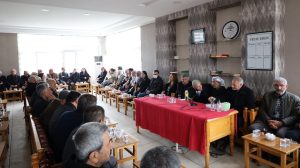
A memorial for veteran journalist Aziz Köylüoğlu, who was killed in a Turkish drone strike on 27 January in Ranya, a district of Sulaymaniyah (Silêmanî) in the Kurdistan Region of Iraq (KRI), has garnered widespread solidarity. The commemoration event, held at Kulplular Yasevi in the Bağlar (Rezan) district of Diyarbakır (Amed) from 10-12 February, was organised by Köylüoğlu’s family and members of the Free Press community.
Representatives from the Peoples’ Equality and Democracy Party (DEM Party), the Democratic Regions Party (DBP), the Free Women’s Movement (Tevgera Jinen Azad – TJA), and the Solidarity Association for the Families of the Missing and Martyrs (MEBYA-DER) paid their respects alongside crowds of citizens, underscoring Köylüoğlu’s impact on the Kurdish community and the broader journalistic sphere.
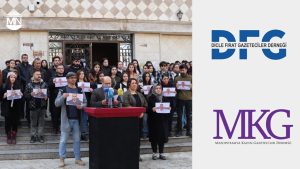
Köylüoğlu’s death has sparked outrage among journalist organisations and human rights groups. The Dicle Fırat Journalists Association (DFG), Mezopotamya Women Journalists Association (MKG), and the Free Press Union (YRA) condemned the attack, labelling it a direct assault on press freedom. According to statements from these organisations, the Turkish drone strike specifically targeted Köylüoğlu for his role in exposing the Turkish state’s military activities in Iraqi Kurdistan and North and East Syria (Rojava).
The YRA highlighted Köylüoğlu’s pivotal role in developing press initiatives in North and East Syria, noting that he educated hundreds of young journalists and contributed significantly to the documentation of the Rojava Revolution and Turkish military incursions, including the 2018 occupation of Afrin (Efrîn).
Biography and Legacy
Born in 1976 in Diyarbakır, Aziz Köylüoğlu grew up in a patriotic Kurdish family and faced state oppression early in life. His journalism career began in 2000, and over the years, he held various roles—reporter, cameraman, and chief editor—across media platforms spanning newspapers, television, and digital outlets. His work covered regions like Erbil (Hewlêr), Sulaymaniyah (Silêmanî), Kirkuk (Kerkûk), and Makhmur (Maxmûr) in Iraqi Kurdistan, as well as North and East Syria, from Derik (Dêrik) to Afrin.
Köylüoğlu was also a prominent contributor to Medya News, offering in-depth analyses on Iraqi Kurdistan and the Turkish state’s military operations. His fearless reporting often criticised the Kurdistan Regional Government’s (KRG) collaboration with Turkey and exposed systemic corruption within the KRG.
Aziz Köylüoğlu’s career reflects the broader history of Kurdish journalism—a field marked by resilience in the face of censorship, violence, and political pressure. For decades, Kurdish journalists have risked their lives to document oppression and share the Kurdish people’s struggle for self-determination. Köylüoğlu’s dedication to exposing injustice and fostering a free press positioned him as a key figure within this tradition.
His death is the latest in a troubling series of targeted killings of Kurdish journalists. In the past six months alone, five journalists, including Gulîstan Tara, Hêro Bahadîn, Cîhan Bilgin, and Nazım Daştan, have been killed in drone strikes. Köylüoğlu had previously reported on the deaths of Tara and Bahadîn, underscoring the risks faced by Kurdish journalists and their unwavering commitment to truth.


