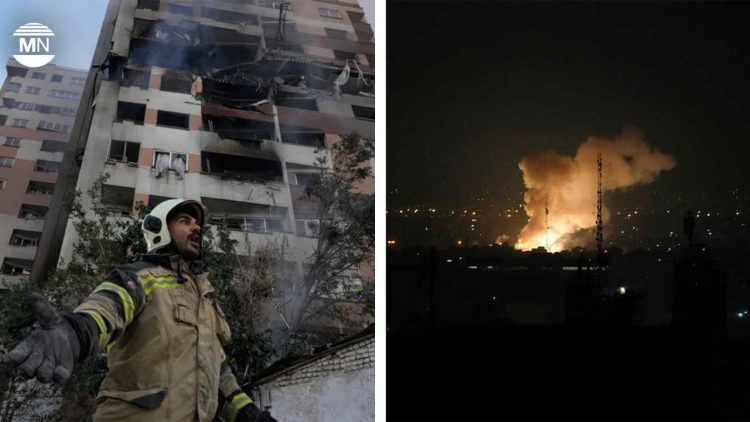
In the early hours of Friday, Israel launched a series of airstrikes targeting key nuclear and military sites in Iran, killing several senior Iranian commanders and nuclear scientists. The attacks mark a significant escalation in the ongoing regional tensions and have triggered a wave of global reactions. Governments and international organisations worldwide have issued statements, expressing concerns about the potential for wider conflict and urging all parties to exercise restraint.
Global reactions to the strikes have been swift and wide-ranging. NATO Secretary‑General Mark Rutte described the situation as “crucial” for allies of Israel to work immediately towards de‑escalation, emphasising that “restraint must prevail”.
Germany’s Chancellor Friedrich Merz confirmed earlier that he was informed of the attack by Israeli Prime Minister Benjamin Netanyahu beforehand, expressing concern over escalating tensions while affirming Israel’s right to self-defence.
According to official statements reported by Al Jazeera, global reactions to Israel’s strikes on Iran have been widespread and predominantly condemnatory. Countries and regions including Iraq, Oman, Turkey, Saudi Arabia, Qatar, the United Arab Emirates, Jordan, Yemen’s Houthis, Palestine’s Hamas, Pakistan, Indonesia, Japan, the African Union, and Afghanistan’s Taliban authorities strongly condemned the attacks as violations of international law, threats to regional stability, and provocations likely to escalate conflict. Russia and China expressed serious concern over the sharp escalation and potential grave consequences, with China offering to mediate. The European Union’s foreign policy chief, Kaja Kallas, urged all parties to exercise restraint and prioritise diplomacy. European countries such as France reaffirmed Israel’s right to self-defence while calling for restraint, and the United Kingdom’s Prime Minister Keir Starmer called for calm and a return to dialogue. The Czech Republic’s foreign minister described Israel’s actions as a reasonable reaction to threats posed by Iran. Australia and New Zealand voiced alarm and urged restraint, warning against miscalculation and further military action.
Meanwhile, UN Secretary-General António Guterres condemned the military escalation, particularly attacks on nuclear sites, and urged maximum restraint. The head of the International Atomic Energy Agency (IAEA), Rafael Grossi, stated that nuclear facilities “must never be attacked” and called “on all parties to exercise maximum restraint to avoid further escalation” following the Israeli strikes on Iran. He described the situation as “deeply concerning” and reiterated that “any military action that jeopardizes the safety and security of nuclear facilities risks grave consequences for the people of Iran, the region, and beyond,” according to a statement he made to IAEA board members.
European Union leaders have urgently called for restraint. European Commission President Ursula von der Leyen described the reports from the Middle East as “deeply alarming” and urged all parties to “exercise maximum restraint, de-escalate immediately and refrain from retaliation”. Meanwhile, Antonio Costa, President of the European Council, reinforced the call for calm, stressing that escalating violence in the region threatens not only local but also global stability. Costa emphasised the EU’s commitment to supporting diplomatic efforts aimed at reducing tensions and preventing further conflict.
India has also expressed deep concern over the escalating conflict between Israel and Iran. The Ministry of External Affairs issued a statement urging both nations to exercise restraint and avoid actions that could further heighten tensions. Emphasising the importance of peace and stability in the Middle East, India reiterated its consistent position advocating for diplomacy and dialogue to resolve disputes. In response to the strikes, the Indian Embassy in Tehran has advised Indian citizens in the region to remain vigilant, exercise caution, and avoid non-essential travel to ensure their safety amid the rising instability.
Following widespread global condemnation and calls for restraint, Tehran formally requested an emergency session of the United Nations Security Council. In a letter submitted by its Permanent Mission to the UN, Iran condemned the Israeli strikes as violations of its sovereignty and breaches of international law, characterizing the attacks as a “declaration of war”. The Iranian government vowed to respond “decisively, proportionately, and deterrently” at a time and place of its choosing. The Security Council is scheduled to convene on Friday to address the escalating situation, reflecting heightened international concern over tensions in the Middle East.