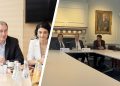
Jan van Aken, co-chair of Germany’s Die Linke (The Left), has shared his perspective on Kurdish leader Abdullah Öcalan’s historic call for peace, in an exclusive interview with Medya News. Van Aken, who has been a vocal proponent of delisting the Kurdistan Workers’ Party (PKK) and supporting peace talks, was hopeful that this moment could be a turning point—if international actors step up and push for real change, and highlighted that the root causes of the Kurdish issue must be addressed for a lasting solution.
After Öcalan’s call was made public on 27 February, Van Aken took to X to demand the delisting of the PKK in Germany, the release of Öcalan, and direct German involvement in peace negotiations. In an unexpected move, the German Foreign Ministry responded, in line with his position.
International actors, particularly the EU and Germany, play a crucial role in facilitating a lasting peace process between Turkey and the PKK, Van Aken said, stressing that direct engagement with both sides is essential, for meaningful dialogue. He argued that Germany should make its stance clear by halting arms sales to Turkey as a condition for peace.
“It's very important that external players, like the EU or the German government, directly interact with the two sides, with the Kurdish and the Turkish sides. And I think a lot of - I wouldn't call it pressure - but a lot of interaction from the German government with the Turkish government might be needed,” he said, stressing, “The arms sales from Germany to Turkey should be stopped under the condition that there is now the opportunity for peace.”
Van Aken also stated that delisting the PKK as a terrorist organisation would send a “very clear signal” to Turkey that Europe is serious about supporting the peace process. He urged European governments to take a clear stance that future cooperation with Turkey depends on a commitment to resolving the conflict.
“Strong signals that a future cooperation between the European and the Turkish government needs this peace process, would help a lot,” he stated.
Van Aken pointed to the roles of the new Syrian government, the Iraqi central government, and the Barzani-led administration in northern Iraq, to facilitate a meaningful peace process between Turkey and the PKK, all of which have a stake in Kurdish affairs and regional stability.
However, he stressed that Germany and the European Union are particularly well-positioned to facilitate dialogue due to their strong diplomatic and economic ties with Turkey.
“In peace process, you always need these outside forces that push you over the line, that can make offers also to facilitate the peace process,” Jan said.
A true peace process must address not only disarmament but also the root causes of conflict, he emphasised, particularly the economic and social injustices faced by Kurds.
“Sometimes the peace process is not only about stop shooting; it's also about the root causes for the conflict, and how you can alleviate these. So, what can you do to tackle social injustice towards the Kurds? And this usually means jobs and money.”
Jan concluded by expressing hope that this peace process “will not only lead to peace, but for just peace for the Kurdish movement.”